
The Story feels personal. Having grown up on the outskirts of Durham, I first remember visiting what was then the museum in the old Durham Light Infantry (DLI) Museum.
Many years later, I briefly curated this collection. I have deep family ties to the county on my mum’s side through generations who mined its coal, drove its buses and treated its sick. This story is therefore not just the story of Durham, it is mine as well.
I’ve always found it strange that, despite its history and past industrial wealth, Durham has never had a civic museum to tell its story. Instead, this has been fragmented between the old DLI Museum, the County Durham Archives, Durham University and the Cathedral Museum. It has never felt satisfying for the local community. The Story feels like a way to fix this.
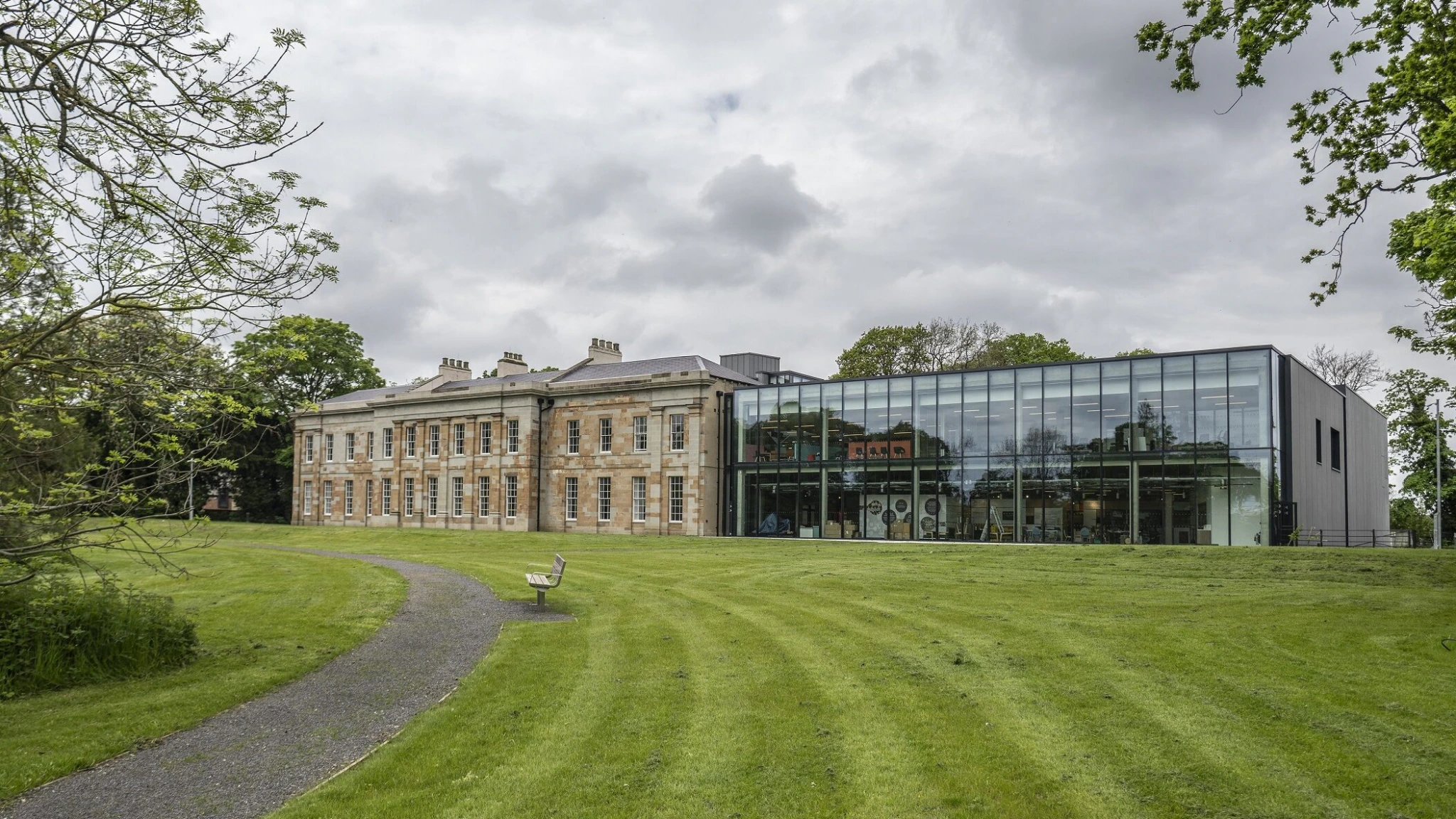
The Story is housed in a new purpose-built archive and collections centre on the old Mount Oswald’s golf club. It brings together three council services in one building – the museum, the County Durham Archives and registry office.
While these council services don’t often make natural bedfellows, combining them here works. In the middle of a housing estate, there isn’t an obvious sense of place to The Story.
By framing this mix of services as a chance to create a living, breathing history that the people of Durham are intrinsically part of (by virtue of registering their births, marriages and deaths here) the site makes sense.
Advertisement
What The Story is trying to achieve is not easy. As well as combining three council services, it is also bringing together five collections – County Durham Archives, archaeological artefacts from the Historic Environment Record, DLI collection, Local Studies collection and Historic Registration collection of births, deaths and marriages.
With objects and records from each, Durham’s history is told from Roman times to the present day. Through broad themes around making a living, making connections and living together, the museum paints an enlightening picture of the city as a centre of technological innovation, social change and culture.
These include the world’s second iron bridge and the world’s first steam-powered railway for passengers rather than commercial goods. I felt a renewed sense of civic pride reading this history.
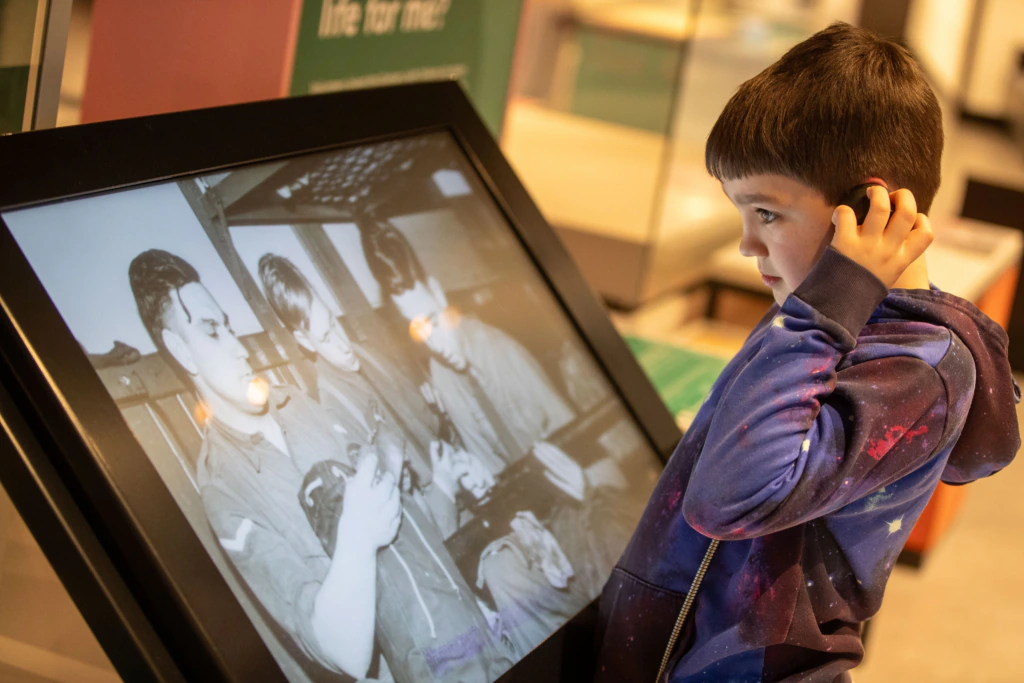
However, at times, the five collections that make up the museum feel ill at ease with each other. With the DLI collection being by far the greatest in terms of objects, the centre of gravity of the museum is naturally pulled towards this story. The regiment’s history here has an outsized presence related to its actual impact on the character of the county.
This is a shame because I think the space it took up could have been used to further explore the region’s mining heritage and the aftermath of the pit closures.
Advertisement
Troublesome gap years
The Historic Environment Record collection feels oddly separate. Through some beautifully complete Roman and pottery finds, it tells the story of Binchester Roman Fort. Yet this has the effect of creating a near 2,000-year gap in the story between where that collection ends and the DLI’s begins. While this “in-between” history is told elsewhere in the city centre, it feels notable that this gap wasn’t filled by either the history of the cathedral or the university.
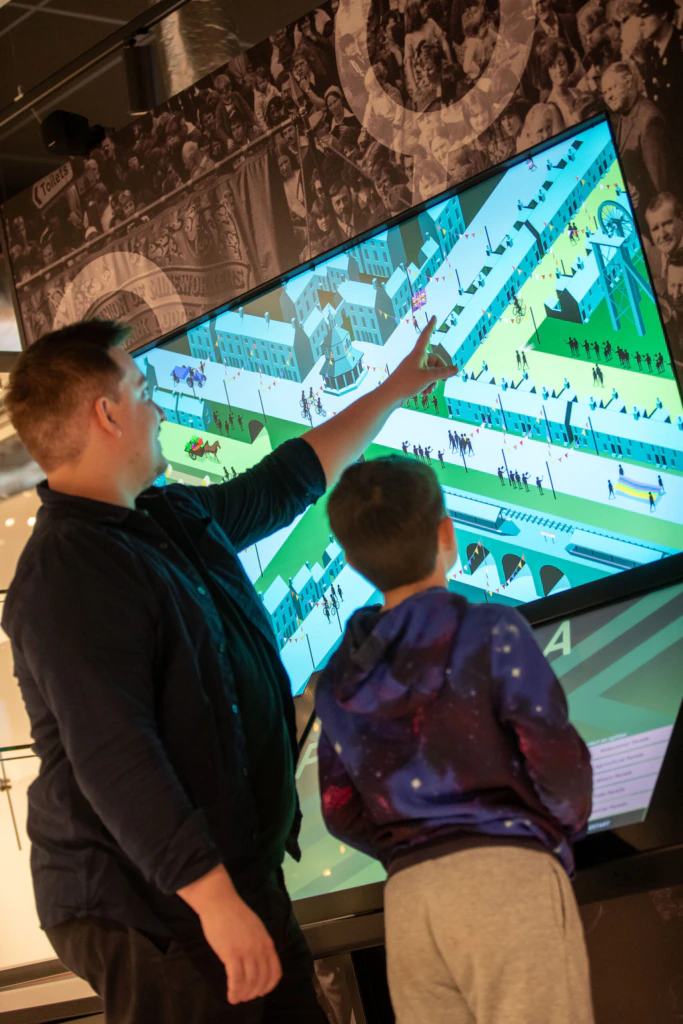
The glue that holds The Story together is without doubt the County Durham Archives. Wider in its breadth than the other collections, it was the part that for me really told the story of the people of Durham.
Flicking through old photographs of the nearby town of Consett with my mum, she recounted memories of the steelworks and spending time in the bandstand at the park. I discovered that Lord Byron married Annabella Milbanke in the harbour town of Seaham and that Stan Laurel – of the comedy duo Laurel and Hardy – was baptised in Bishop Auckland.
This material humanised the interpretation while also placing Durham at the centre of a bigger story.
Advertisement
The Story was a very personal experience for me. On entering the downstairs gallery that makes up the museum, I was greeted by a revolving cast of characters from the county’s past. It was like being met by old friends from my childhood. It was especially meaningful to see the story of Mustapha (known as Jimmy Durham), whose history as a Black Victorian soldier I know well.
Taken by the Durham Light Infantry from his home in Sudan after the Battle of Ginnis in 1885, Mustapha was brought up as the “regimental pet”.
He was taken to Durham as a child and at 14 became the first Black person to join the British Army as a fully enlisted soldier. At 27, he died in Ireland from pneumonia.
Sensitive storytelling
Mustapha’s story is a difficult one and I was pleased to see the interpretation acknowledge as much. I also appreciated the recognition of the regiment’s role as part of a force of occupation in India.
Yet as far as I could see, Mustapha’s exceptional story was the only one from a non-white perspective. I appreciate County Durham is by no means the most ethnically diverse place in the country, but I can’t believe Mustapha’s story is the only one about people of colour.
While there is a lot to like about The Story Durham, it is its framing as a living, breathing museum that left me a little disappointed. While it is an admirable ambition, it never quite manages to pull it off.
Outside of a small reference to the Hitachi Factory in Newton Aycliffe, it feels like The Story ends where its collections do. While it does a decent job of capturing the past, it is the story of the people of Durham today, with all their challenges and complexities, that feels missing.
Jamie Taylor is the director of collections, programmes and learning at the Thackray Museum of Medicine in Leeds
Project data
Cost
£23m
Main funders
Durham County Council; European Regional Development Fund; National Lottery Heritage Fund; Wolfson Foundation
Principal contractor, fit out and build
Elmwood Projects
Exhibition design
Mather & Co
Hands-on tactile features
Aivaf
AV interactive software
AY-PE
AV interactive hardware
Heritage Interactive
Object mounting
Colin Lindley Object and Artefact Display
Graphics and object labels
Media Co
Object replicas, archival replica printing
Sirius
Exhibition lighting
Fusion
Display cases
Click Netherfield
External groundworks
LRT Groundworks
Rotating totems
Aivaf
Exhibitions
Welcome to our County: The Children of Yesterday and Tomorrow, until 5 May
Admission
Free


