This substantial account of painting conservation from the 16th century until now begins with a frank admission. Co-editor Jane Martineau’s “profound ignorance of the history of conservation” was the catalyst for the book, which brings together a series of expert articles she commissioned for the Burlington Magazine between 2016 and 2022.
From essays on the conservation histories of individual works to assessments of notable careers, the 17 articles broadly and idiosyncratically elucidate ways in which the care of paintings has been approached over 450 years.
Martineau is too hard on herself. As the lack of conservation literature aimed at art historians and other interested readers indicates, she is far from alone in her self-proclaimed ignorance.
Alessandro Conti’s History of the Restoration and Conservation of Works of Art, still the go-to reference work, was completed in 1988, but not available in English until 2007. Since then, Paul Taylor’s Condition: The Aging of Art (2015), exploring questions of conservation from the viewer’s perspective, has been a valuable addition.
Initiatives such as University College London’s pioneering History of Art with Material Studies course, started in the 1990s, trains art historians to consider works of art as physical objects that are decades old. Yet, the scientific and artisanal overtones of “technical art history” continue to push it beyond the scope of much art historical discourse.
The result is that museum labels often skip over the illegibility of a degraded painting, but the same institutions trumpet a cleaned painting “returned to its original state”.
Advertisement
The revelatory effects claimed by cleaning campaigns contrast with the deliberate neutrality of the term “conservator”, which has taken over from the more interventionist “restorer”, and locates the care of ageing paintings within the ambit of objectivity and reason.
On that basis, the picture that emerges from this book is sobering, and chapters on Rembrandt van Rijn’s 1642 painting The Night Watch, and the Ghent Altarpiece, completed in 1432 by the Van Eyck brothers, show how highly prized artworks have been vulnerable to damage by well-meant meddling as much as by time.
Ethics and aesthetics are never static, and just as the Ghent Altarpiece was overpainted within its first 100 years for reasons that remain unclear, The Night Watch was not only cut down in 1715 so that it could be moved to a new setting, but often revarnished to maintain and enhance the “golden-brown gallery tone” favoured in the 19th century.
Not one to mince her words, Martineau says: “Aesthetic fashion has affected a work’s appearance as much as the inevitable changes made by the passage of time.”
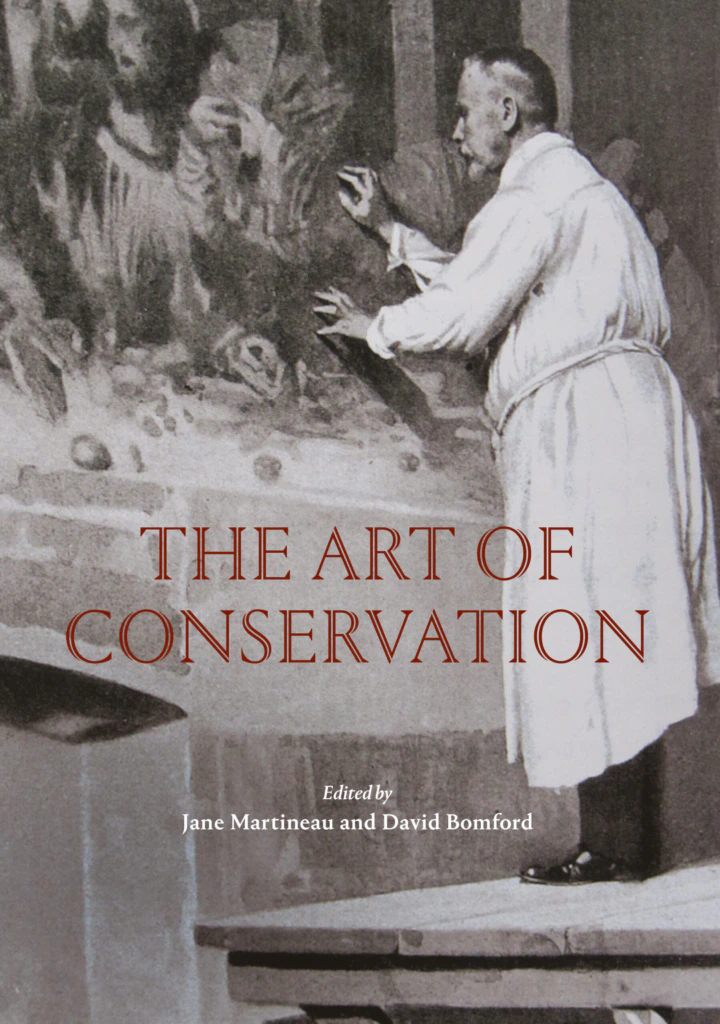
£75, The Burlington Press
ISBN 978-1-916237-84-1
Among several profiles of notable individuals, art historian Ulrike Kern’s piece on the 17th-century royal physician Theodore de Mayerne reveals that his prescriptions for the king’s pictures were as appalling as his medical treatments.
Advertisement
Exposing a painting to sunlight to refresh the colours was among his least outrageous advice; elsewhere he recommends cleaning by pouring glue over a painting, leaving it to dry and then lifting it off, cautioning the reader to “see if it can come off without damaging the piece”.
Little wonder that early picture restorers often veiled their work in secrecy. Art historian Ann Massing describes how “restorer” Robert Picault made his reputation (and fortune) by transferring Louis XV’s paintings onto new canvases. The secrecy surrounding his technique was finally understood in the 20th century, as a “simple enough, but horrific”, deployment of nitric acid, spatulas and glue.
The factionalism and secrecy of the maverick alchemists was not entirely eradicated by the advent of public museums with their scientific departments. Even today, practices are often divided along institutional and cultural lines, and notably between Italian and Anglo-Saxon approaches.
The book closes on the challenges of 20th-century paintings, which involve working not only with new materials, but sometimes living artists. It won’t replace Conti’s more conventional history, but is a thought-provoking contribution to the literature.
Crucially, it should attract readers from beyond the conservation community. The next volume could look at regulation of the conservation industry and new non- invasive restoration methods.
Florence Hallett is a critic and journalist, and a regular contributor to the inews, the New European and the Art Newspaper