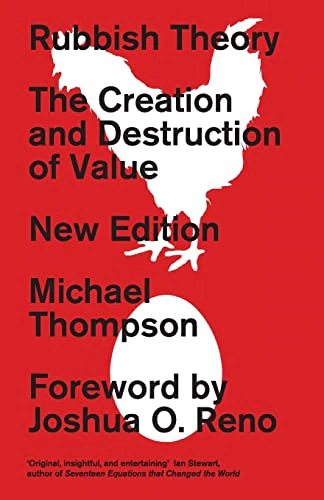
How does an old banger become a classic car, or a rat-infested slum become
our glorious heritage? The awesomely titled 1979 book Rubbish Theory suggests some answers.
I first read it while on a post-doctoral research project on 18th-century science. I was miserable and ill, so the fact that it was written by someone clearly ambivalent about the value of academia (and museums) was appealing.
Its attention to property is important. If we in museums are interested in how value is made and policed, then today’s catastrophe of house prices and rents provides the most important and invariably appalling examples.
A key appeal was the book’s emphasis on the arbitrariness of value. If anything can be made valuable, then anything can be made valueless. He is not just interested in how things become special, but also the reverse.
Jennie Morgan and Sharon Macdonald’s research into “de-growing” collections highlights that museums must engage with de-accessioning
and disposal practice. Other more radical forms of collections engagement might teach us something about valuing, but also de-valuing.
Statue-toppling as rubbish creation should be embraced – sometimes it is right. And sometimes just to break things is right, so a theory of breakages would be useful.
Nicky Reeves is the curator of scientific and medical history collections, The Hunterian, University of Glasgow