A lot of time and money is spent attempting to get eyeballs on institutions’ websites. We don’t just pop opening times and exhibitions on there, we also blog, create education resources and publish extensive archives and image libraries.
We want the world to see and engage with our collections, and we work hard to make our online presences as inspiring as actual museums.
Of course, then the hard work really begins – trying to get people in front of the content we have created. We’d like to think that everyone is coming to our sites because they have suddenly realised they need to explore them.
Of course, the reality is that the majority of our organisations’ online users come to our sites after seeing the museum’s content in other places, such as Google, Facebook, Instagram or Twitter, and their interest is piqued.
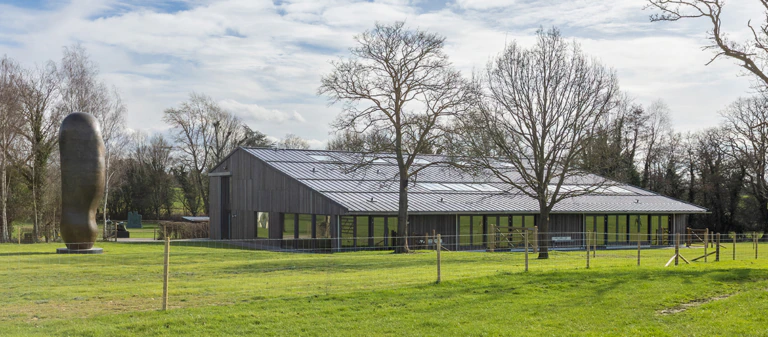
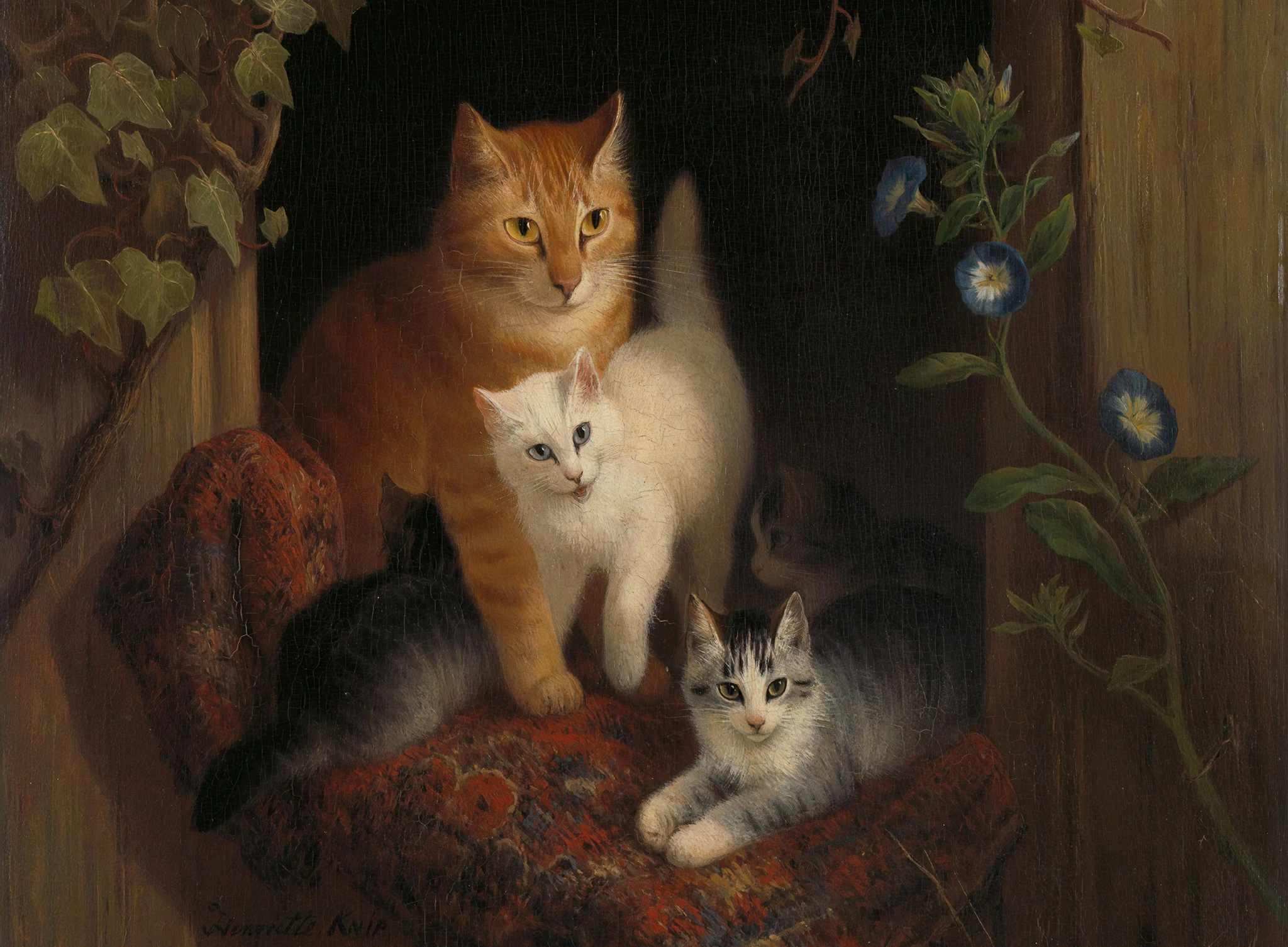
Other platforms are, of course, available, and one that some museums and cultural organisations are beginning to look at is Unsplash – one of largest photo-sharing platforms in the world. Unsplash reports 60 million image downloads each month by a healthy audience of some 300 million users.
Each institution has shared a selection of their archives on the platform – images that can be used for both commercial and non-commercial purposes. It is expected that the photographs will be used thousands of times, therefore bringing new audiences to their collections.
Rachel Ellis is a director of Thirty-8 Digital
Instagram | Musée d’Orsay, Paris
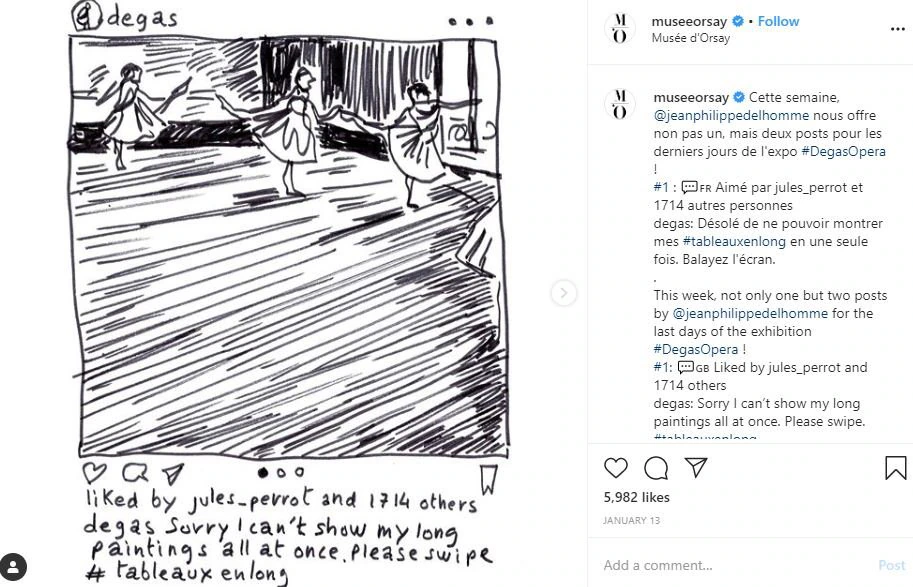
What should a museum be posting on Instagram? Is it enough to just pop an image of something visually appealing from the collection on there daily? What kinds of posts create new followers and new types of engagement? The only way to find out is to switch it up from time to time and see what happens. On a recent trip to Paris, I noticed the Musée d’Orsay has been doing just that. In among the usual Instagram fodder I spotted some hand-drawn cartoons that looked like a spoof of its collection. On closer inspection I worked out that it was a series of cartoons that imagines the social-media accounts of famous historical artists, whose work is represented in the museum’s collection. It’s a lovely idea, imagining what the likes of Degas might post on Instagram when they should have been getting on with their latest painting. It makes the artists seem more like us than we imagine – more real.
The cartoons are drawn by the French illustrator Jean-Philippe Delhomme, who is the museum’s new Instagram artist in residence, and posted every Monday. The museum says the residency is designed to bring more visibility to artists from centuries ago – it certainly does that and more. It allows the museum and its collection to be represented by independent eyes. The posts are witty and make a domineering monolith of a museum seem more friendly, which can only help it build a better connection with its audiences. RE
Website | Off the shelf, New South Wales State Library, Sydney
Advertisement
Giving access to the reams of stuff that lurk behind the scenes of museums and libraries is often used to hook audiences to explore further, either in the real world or online.
The New South Wales State Library in Sydney has designed a digital experience that does both – an on-gallery digital exploration of the books that are housed under the feet of library visitors in miles of underground book stacks, and a web version of the experience.
Off the Shelf is designed to allow library users to “uncover the many intriguing, perplexing and playful volumes waiting to be read”. It’s a way of getting books off the shelves and into the hands of readers. Despite living thousands of miles away, I liked the simplicity of the web version.
If you’re into browsing in bookshops and libraries, you’ll love this. It’s a lesson in how you can choose a small part of your collection and produce something simple but playful. The way the books fall against each other, for example, is subtle but lovely – and through these gentle interactions, the experience makes you stop and consider some of the things that libraries, and books, can make us think and feel. RE