If there is anything that binds the huge multiplicity of museums across the world, then it is the three assets that we all have in common: spaces, collections and people. The best work happens when a museum seeks new ways to make all three work together effectively.
Derby Museums has been skilled at seeking these new ways for a long time. The success of the Notice Nature Feel Joy gallery, which opened in 2015 at Derby Museum and Art Gallery and redisplayed its natural history collection through an ambitious co-production process, has been a interesting case study to follow.
Following the success of that project, the museum’s next opportunity for development lay in its world cultures collection, the majority of which was held in store with no established gallery.
The removal of the previous natural history gallery also presented a new space to develop in the building. A clever and well-planned combination of grants from DCMS Wolfson and the Esmée Fairbairn Collections Fund (managed by the Museums Association) presented the opportunity to transform the physical space, while also researching and developing the collection that would eventually be displayed there.
The resultant gallery is a brilliant, light space, bustling with objects and life. The project has presented big questions to the organisation about display, research and ethics. These have been addressed directly and sympathetically.
Much of our current understanding of the process of co-production is a result of past work at Derby Museums. Its Human Centred Design handbook (available on the museum website) is essential for any museum wishing to work with their communities. The museum applied these principles to the development of this gallery, while refining the process to suit the collection and the space.
All encompassing
The project team started the process by asking the same question of current visitors: “What three things across the world do we all experience?” The same question was asked on a project-linked Twitter account, and to the public across different areas of the city.
The Twitter account, alongside a feed on Tumblr, documented the whole process in a public way. The gathered responses shaped the direction of the project, the most frequently repeated answers forming the seven areas of the finished gallery: Consume, Believe, Conflict, Furnish, Adorn, Create and Communicate. This process shows a fundamental divergence from traditional world cultures displays – seeking to show what makes us the same rather than different.
This inclusive, empathetic approach is best reflected in the language used across the interpretation. The labels are deliberately minimal – describing only what you’re looking at and where it’s from. Any further information is in the written gallery guides. This approach was decided, along with everything else about the gallery, after testing and consultation with the public.
Big issues
There is space for playfulness – a group of bronze figures from Benin are displayed alongside a Derby porcelain figure, showing how objects made thousands of miles away can look so similar to those made far closer to home.
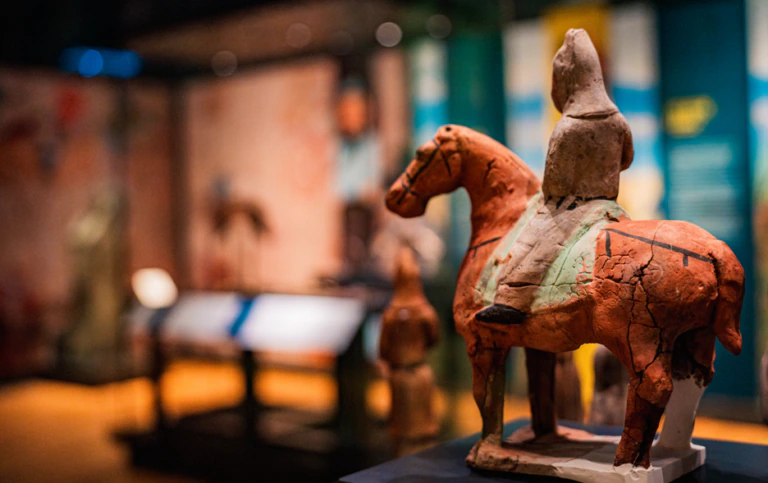
Much of the material on display will be familiar to curators of local authority world cultures collections. A large proportion of the collection is from former colonial countries, collected around the late-Victorian period. Many are displayed still bearing historic labels. There are a few objects with the sufficient visual power to be a statement in their own right. The joy is to be found in connections: between the objects, and with ourselves.
The presentation of the objects makes these connections sing. Much is on open display, and the cases have been deliberately built at different heights. It is clear how much consideration has gone into how the objects are spread across the display. Each object has been placed thoughtfully.
The vinyl labels are applied directly onto the surface, so there are fewer textures to detract from the objects. Examples of the many words gathered from the public are reproduced in beautiful woodcut panels, reinforcing the atmosphere of universality. The result looks effortlessly clear and inviting, and contributes to the feeling of inclusivity and openness across the gallery.
A great example is in the display of objects of religious significance. The advantages of a broad collection are showcased by displaying objects used in worship across the world alongside each other. I was disappointed not to see this replicated in the Communicate section, in which a large wall space displayed very few objects. This absence emphasises the depth of the rest of the gallery.
The room itself has been utterly transformed. The original late-19th century fabric has been revealed behind later, darker panelling. The white walls and high windows now fill the gallery with light. The new openness to be found in the room reflects, and is reflected by, all the other elements in the space.
This gallery is a triumph. The museum has taken a collection gathered from across the world and grounded it in the reflections of its audience. The result is driven by empathy, curiosity and kindness. The combined effect is to speak of what we all share, while celebrating the joy to be found in difference.
Simon Brown is the curator of Newstead Abbey and project curator at the National Justice Museum, both in Nottingham
Derby Museums has been skilled at seeking these new ways for a long time. The success of the Notice Nature Feel Joy gallery, which opened in 2015 at Derby Museum and Art Gallery and redisplayed its natural history collection through an ambitious co-production process, has been a interesting case study to follow.
Following the success of that project, the museum’s next opportunity for development lay in its world cultures collection, the majority of which was held in store with no established gallery.
The removal of the previous natural history gallery also presented a new space to develop in the building. A clever and well-planned combination of grants from DCMS Wolfson and the Esmée Fairbairn Collections Fund (managed by the Museums Association) presented the opportunity to transform the physical space, while also researching and developing the collection that would eventually be displayed there.
The resultant gallery is a brilliant, light space, bustling with objects and life. The project has presented big questions to the organisation about display, research and ethics. These have been addressed directly and sympathetically.
Much of our current understanding of the process of co-production is a result of past work at Derby Museums. Its Human Centred Design handbook (available on the museum website) is essential for any museum wishing to work with their communities. The museum applied these principles to the development of this gallery, while refining the process to suit the collection and the space.
All encompassing
The project team started the process by asking the same question of current visitors: “What three things across the world do we all experience?” The same question was asked on a project-linked Twitter account, and to the public across different areas of the city.
The Twitter account, alongside a feed on Tumblr, documented the whole process in a public way. The gathered responses shaped the direction of the project, the most frequently repeated answers forming the seven areas of the finished gallery: Consume, Believe, Conflict, Furnish, Adorn, Create and Communicate. This process shows a fundamental divergence from traditional world cultures displays – seeking to show what makes us the same rather than different.
This inclusive, empathetic approach is best reflected in the language used across the interpretation. The labels are deliberately minimal – describing only what you’re looking at and where it’s from. Any further information is in the written gallery guides. This approach was decided, along with everything else about the gallery, after testing and consultation with the public.
The nature of the language itself is open and inclusive. Panels introducing each section describe the unique qualities of the objects without sensationalising or other-ing the people that made or used them.
Visitors are asked open-ended questions, and the interpretation offers no judgement, being clear to speak of any tension and including visitors in the discussion. The introductory panel in particular is a masterclass in discussing potentially difficult subjects with humility and empathy.
The subject with the potential to overshadow any world cultures gallery is, of course, that of the British empire. Among the objects on display are sacred figures looted by British soldiers in Ghana, and manillas, a form of metal money used as currency in the transatlantic slave trade.
The museum has not sought to hide the provenance of these objects; instead, it invites visitors to consider the issues in an open way. Discussion is ongoing with the Ghana Museums and Monuments Board about where these sacred Ghanaian objects should reside permanently.
Big issues
There is space for playfulness – a group of bronze figures from Benin are displayed alongside a Derby porcelain figure, showing how objects made thousands of miles away can look so similar to those made far closer to home.
Much of the material on display will be familiar to curators of local authority world cultures collections. A large proportion of the collection is from former colonial countries, collected around the late-Victorian period. Many are displayed still bearing historic labels. There are a few objects with the sufficient visual power to be a statement in their own right. The joy is to be found in connections: between the objects, and with ourselves.
The presentation of the objects makes these connections sing. Much is on open display, and the cases have been deliberately built at different heights. It is clear how much consideration has gone into how the objects are spread across the display. Each object has been placed thoughtfully.
The vinyl labels are applied directly onto the surface, so there are fewer textures to detract from the objects. Examples of the many words gathered from the public are reproduced in beautiful woodcut panels, reinforcing the atmosphere of universality. The result looks effortlessly clear and inviting, and contributes to the feeling of inclusivity and openness across the gallery.
A great example is in the display of objects of religious significance. The advantages of a broad collection are showcased by displaying objects used in worship across the world alongside each other. I was disappointed not to see this replicated in the Communicate section, in which a large wall space displayed very few objects. This absence emphasises the depth of the rest of the gallery.
The room itself has been utterly transformed. The original late-19th century fabric has been revealed behind later, darker panelling. The white walls and high windows now fill the gallery with light. The new openness to be found in the room reflects, and is reflected by, all the other elements in the space.
This gallery is a triumph. The museum has taken a collection gathered from across the world and grounded it in the reflections of its audience. The result is driven by empathy, curiosity and kindness. The combined effect is to speak of what we all share, while celebrating the joy to be found in difference.
Simon Brown is the curator of Newstead Abbey and project curator at the National Justice Museum, both in Nottingham
Project data
- Cost £150,000 for capital works; £77,637 for Community Collections Programme
- Main funders DCMS Wolfson; Arts Council England; Esmée Fairburn Collections Fund
- Exhibition design Community Co-producers; Derby Museum; Leach Studio
- Graphic design Leach Studio; Derby Museum
- Interpretation Community Co-producers; Derby Museum
- Interactives Community co-producers; Derby Museum
- AV Derby Museum; Poetical Machines
- Film V21 Productions
- Lighting Derby Museum
- Display cases Leach Studio and in-house team
- Admission Free