“A century ago, Edward Johnston created the famous London Underground typeface and, along with it, one of the first examples of what we now call corporate identity, or branding.
Around that time, a lot of companies were using the network and the trains and platforms were a jumble of different signage styles. The commercial manager Frank Pick thought the operation needed to show a more united front, so he decided to commission a typeface from Johnston.
As a lay person who travels a lot on the underground, I can see why it remains a work of genius. Johnston’s typeface provides reassurance to travellers. I think we can all get a little vulnerable when we’re moving around and this typeface is a modern classic: simple, elegant and authoritative.
Shortly before designing the typeface, Johnston had followed his friend and former pupil, the typographer and sculptor Eric Gill, to the village of Ditchling in East Sussex. Gill had moved to the edge of the village to set up his own artistic guild in the countryside where sculptors, painters and the like built their own houses and workshops and brewed beer in the South Downs, away from the mass-production mayhem of the city.
Also drawn here around that time were the three Bourne sisters, brought over from India by their parents who wanted them educated in England. Their father died shortly afterwards and the girls grew to see Johnston as a parental figure as they were roughly the same age as his own daughters.
Marjorie Bourne, the eldest, became one of his few private pupils and this notebook shows how they worked together. In it, Johnston shows Marjorie how to lay out a page properly and how to construct letter form; his comments reveal how warm and generous a teacher he was.
This particular page, which shows Marjorie following Johnston’s advice to design a poster advertising a concert in Ditchling, is particularly relevant to the current exhibition of Johnston’s work, to the village and to the museum.
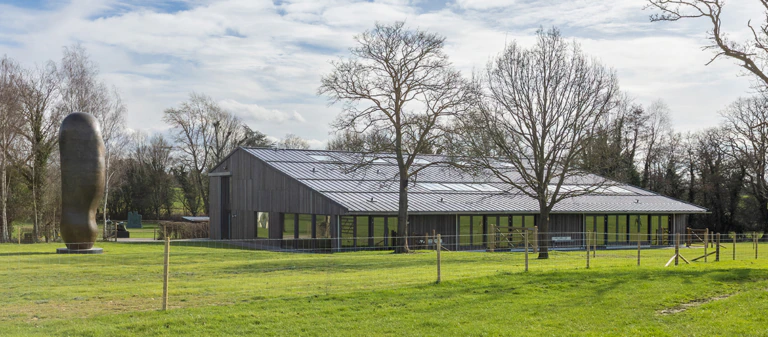
The museum was originally founded in an old school building in 1985 by the two younger Bourne – Hilary, then 76, and 78-year-old Joanna. It reopened three years ago in brand new premises and tells the story of the area’s significant arts and crafts heritage.
The remit of the redevelopment – brand new displays, storage and learning spaces, research room, shop and cafe – has been to present a sense of place in this tiny but notable village.
Making the transition from our old place has been tough, but worthwhile: we used to have to put umbrellas up indoors during the winter.”
Donna Steele is collections curator at Ditchling Museum of Art and Craft in East Sussex. Interview by John Holt. Underground: 100 years of Edward Johnston’s Lettering for London runs until 11 September
Around that time, a lot of companies were using the network and the trains and platforms were a jumble of different signage styles. The commercial manager Frank Pick thought the operation needed to show a more united front, so he decided to commission a typeface from Johnston.
As a lay person who travels a lot on the underground, I can see why it remains a work of genius. Johnston’s typeface provides reassurance to travellers. I think we can all get a little vulnerable when we’re moving around and this typeface is a modern classic: simple, elegant and authoritative.
Shortly before designing the typeface, Johnston had followed his friend and former pupil, the typographer and sculptor Eric Gill, to the village of Ditchling in East Sussex. Gill had moved to the edge of the village to set up his own artistic guild in the countryside where sculptors, painters and the like built their own houses and workshops and brewed beer in the South Downs, away from the mass-production mayhem of the city.
Also drawn here around that time were the three Bourne sisters, brought over from India by their parents who wanted them educated in England. Their father died shortly afterwards and the girls grew to see Johnston as a parental figure as they were roughly the same age as his own daughters.
Marjorie Bourne, the eldest, became one of his few private pupils and this notebook shows how they worked together. In it, Johnston shows Marjorie how to lay out a page properly and how to construct letter form; his comments reveal how warm and generous a teacher he was.
This particular page, which shows Marjorie following Johnston’s advice to design a poster advertising a concert in Ditchling, is particularly relevant to the current exhibition of Johnston’s work, to the village and to the museum.
The museum was originally founded in an old school building in 1985 by the two younger Bourne – Hilary, then 76, and 78-year-old Joanna. It reopened three years ago in brand new premises and tells the story of the area’s significant arts and crafts heritage.
The remit of the redevelopment – brand new displays, storage and learning spaces, research room, shop and cafe – has been to present a sense of place in this tiny but notable village.
Making the transition from our old place has been tough, but worthwhile: we used to have to put umbrellas up indoors during the winter.”
Donna Steele is collections curator at Ditchling Museum of Art and Craft in East Sussex. Interview by John Holt. Underground: 100 years of Edward Johnston’s Lettering for London runs until 11 September