By Stephen Wildman, Watts Gallery, £9.95, ISBN 978-0-9561022-4-9
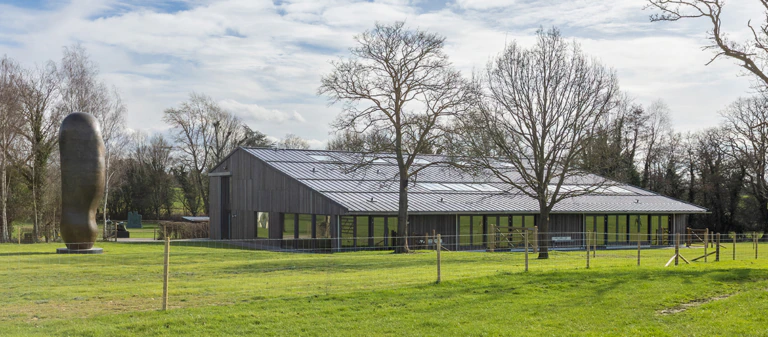
The Watts Gallery in Surrey is dedicated to preserving and displaying the work of the great Victorian painter GF Watts – a role it has played since Watts died in 1904.
More recently, following a thoroughgoing restoration completed in 2011, the gallery has also made much of the work of Watts’s second wife, Mary Fraser-Tytler, who was a great arts and crafts designer in her own right.
We are currently fundraising with the aim of bringing into our estate Limnerslease, the house built for George and Mary Watts at Compton in 1890-91.
Alongside these core activities, the gallery runs an ambitious temporary exhibitions programme in two modest but elegant rooms in the main gallery building.
Our reputation is for compact (they have been called boutique) exhibitions on themes relating to our collections, which make their case effectively and efficiently.
John Ruskin: Photographer & Draughtsman opened on 4 February (until 4 June) and explores the ways in which this great writer and artist used the traditional watercolour medium as well as the new-fangled daguerreotype to study the details of architecture and landscape in which he found beauty.
The exhibits have all been lent by the Ruskin Library at Lancaster University, and the exhibition has been selected by the library’s director, Stephen Wildman.
Daguerreotypes
The subject of Ruskin’s collection of daguerreotypes has been in the news in recent years following the wonderful discovery at a Lake District auction of almost all those plates that were not already part of the Lancaster collection.
This treasure trove has helped encourage new research, some of which we are presenting in the publication we have produced to accompany the exhibition.
For our Ruskin exhibition we have produced our own book with text by Wildman alongside reproductions of the photographs and watercolours.
It was especially important to create a satisfying visual record of the exhibition because of the challenges of viewing the daguerreotypes themselves.
Daguerreotypes, as unique, polished metal plates, are difficult to exhibit. We think we have succeeded, but the publication will allow visitors to pore over the images at leisure – just as Ruskin studied his collection of the originals through which the marvels of Europe were compressed into a box in his study.
Nicholas Tromans is the curator at the Watts Gallery in Compton, Surrey