Kenwood House is a marvel. Well known to the many thousands who come to Hampstead Heath each year, it has been under wraps for the past 18 months while vital conservation work has been carried out.
Now reopened, the place is an absolute triumph of thoughtful restoration and artful presentation. A visit is essential, and not just to be reacquainted with the many treasures of the Iveagh Bequest.
Both Kenwood and the heath that borders it have been the focus of conservationists’ attention for more than a century.
Two of the National Trust’s founders, Octavia Hill and Robert Hunter, joined the battle here in the 1880s to ensure that Hampstead Heath and its environs remained open in perpetuity, in the face of the very real prospect of enclosure and development.
Kenwood House was eventually saved only as a result of an appeal in the early 1920s, not long after most of its contents had been sold at auction and the grounds had been pegged out for building plots. (Many of the contents have subsequently been re-purchased and are once again on show.)
Kenwood might now legitimately be regarded as a national museum, of a similar ilk as the Wallace Collection in London or the Lady Lever Art Gallery on Merseyside.
Iveagh Bequest
Edward Cecil Guinness, the first Earl of Iveagh, bought the house in 1925 to show his collection of paintings by the likes of Rembrandt, Vermeer, Van Dyck, Reynolds, Gainsborough and Turner.
The house and its newly acquired contents were left to the nation on Iveagh’s death and safeguarded by an act of parliament of 1929, which ensures, for the public’s benefit, the preservation of “the atmosphere of a gentleman’s private park”.
With English Heritage now acting as the sole trustee of the Iveagh Bequest, the arrangement also guarantees the public free entry to Kenwood forever. The works on display are of global significance, and have been hung in line with Lord Iveagh’s original wishes.
Restoration
Kenwood can in this way be viewed as both a private domestic space and as a public gallery of pictures. It is perhaps appropriate, therefore, that the £5.95m restoration was funded from a mixture of private and public sources.
Principal among these was a £3.89m grant from the Heritage Lottery Fund, but generous support was also provided by the Wolfson Foundation, the Friends of Kenwood, the Kenwood Dairy Restoration Trust (for the work on the dairy) and many others.
It has been money extremely well spent. The roof has benefited from a complete overhaul using new Westmorland slates. Many of the windows have been repaired and made weatherproof and watertight.
This largely 18th-century mansion looks picture-perfect once again. Its creamy white classical exterior to the south is offset by a newly applied sandstone effect on the northern side, where visitors first access the building through the entrance hall.
Here, the intentions of the English Heritage team are immediately obvious. The room has been completely repainted in a beautiful pastel blue, replicating as closely as possible (after thorough research) the colour scheme originally envisaged by Robert Adam when he remodelled the house for Lord Mansfield in the 1760s and 1770s.
A fire in the grate welcomes visitors, whose eyes are drawn to a portrait of Mansfield before he became Lord Chief Justice. At once, you sense you are entering not a museum but a home, full of the pleasures, dramas and quotidian realities of family life.
The house is free flow, and is now more accessible than before. An early highlight is the library, which is one of the pinnacles of 18th-century architectural achievement. Like so much else at Kenwood, the room served both as a private gentleman’s study and as a public room for receiving guests.
Here, as throughout the house, visitors can sit on comfortable sturdy leather chairs and admire the astonishing quality of the artwork and the building’s conservation (including the over-painting of the gilding on the library’s ceiling, which was not part of Adam’s original design).
In other rooms, too, the Adam colour scheme has been recreated with loving attention to detail, in whites, blues and greens.
Stylish interpretation
Each room features rather stylish interpretation in the form of little bound explanatory guidebooks stacked into wooden desktop boxes. Printed postcards hidden in boxes and drawers provide further interpretation aimed primarily at younger audiences.
For family groups there is a trail identified by the discreet presence of “Mac the Dog”, a family hound whose paw prints can be clipped onto a trail guide as each room is discovered.
This and the Orangery (now a space for family activities) help to bring Kenwood to life for all age groups, although some of the wooden toys, such as the dial explaining different aspects of the Georgian building trade, looked a little too solid for young hands to manipulate freely.
Explaining Dido
It is possible too that some of the interpretation, in its bid for universal appeal, now errs on the side of over-simplification. There is much concerning Dido Elizabeth Belle, a favourite great-niece of Lord Mansfield who was the illegitimate product of a union between Mansfield’s nephew and a black slave (although the circumstances of Dido’s birth are never quite clearly stated).
Visitors are invited to recognise that Dido lived at Kenwood as a free woman and indeed that she inspired some of Mansfield’s more humane legal judgements on cases concerning the slave trade.
Missing from any of the displays, however, is the statement in an earlier edition of the Kenwood guidebook suggesting that Dido had a more “ambiguous and uncomfortable status” in the household.
This implies that she was neither a fully-fledged member of the family nor a domestic servant, but probably something in between.
Masterpiece
For all the splendour of Kenwood’s restoration, might uncertainties such as these have remained more fully on show, as if deliberately to jar with the glories of the splendid Georgian interiors?
But this is minor nit-picking when set against the brilliance of English Heritage’s achievement. Kenwood House now rivals the very paintings it contains, as a masterpiece restored to full glory.
Ben Cowell is the regional director, East of England, for the National Trust
Main house:
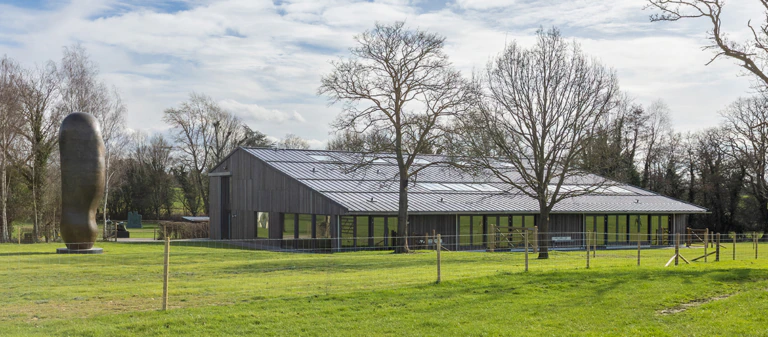
Kenwood Dairy:
One relatively simple element of the new interpretation at Kenwood House that has proved popular with our visitors are the room boxes.
Introducing interpretation into Kenwood’s important interiors required striking a fine balance. Wall labels are not appropriate, and we wanted a step-up from laminated sheets.
The interpretation needed to integrate with the interiors and our aim of making our visitors feel like guests of its 18th-century owner, Lord Mansfield.
Working with our designers, Acme, we explored various options. We finally decided to use original writing boxes, mostly late-19th and early-20th century. They were sourced individually by Acme and, as “found” pieces, each one is different, which suits Kenwood’s spaces.
They were rebuilt for stability and outfitted with leather coloured to match our themes. Some visitors felt nervous touching them, so we added embossed wording to entice them in, such as: “What is an Old Master painting? Look inside to find out.”
Within the boxes, visitors can find gorgeous hand-bound booklets, with 50 words on each painting. They can also delve further into the drawers for ephemera exploring our themes.
For example in the Breakfast Room box you can find a postcard showing the room in 1913, a portrait of the Russian aristocrats who once rented Kenwood, and close-ups of key paintings with activities for families. These can be browsed from the comfortable new visitor sofas, which really do make Kenwood feel like a home.
Cressida Finch is the interpretation manager for London and the south east at English Heritage
Now reopened, the place is an absolute triumph of thoughtful restoration and artful presentation. A visit is essential, and not just to be reacquainted with the many treasures of the Iveagh Bequest.
Both Kenwood and the heath that borders it have been the focus of conservationists’ attention for more than a century.
Two of the National Trust’s founders, Octavia Hill and Robert Hunter, joined the battle here in the 1880s to ensure that Hampstead Heath and its environs remained open in perpetuity, in the face of the very real prospect of enclosure and development.
Kenwood House was eventually saved only as a result of an appeal in the early 1920s, not long after most of its contents had been sold at auction and the grounds had been pegged out for building plots. (Many of the contents have subsequently been re-purchased and are once again on show.)
Kenwood might now legitimately be regarded as a national museum, of a similar ilk as the Wallace Collection in London or the Lady Lever Art Gallery on Merseyside.
Iveagh Bequest
Edward Cecil Guinness, the first Earl of Iveagh, bought the house in 1925 to show his collection of paintings by the likes of Rembrandt, Vermeer, Van Dyck, Reynolds, Gainsborough and Turner.
The house and its newly acquired contents were left to the nation on Iveagh’s death and safeguarded by an act of parliament of 1929, which ensures, for the public’s benefit, the preservation of “the atmosphere of a gentleman’s private park”.
With English Heritage now acting as the sole trustee of the Iveagh Bequest, the arrangement also guarantees the public free entry to Kenwood forever. The works on display are of global significance, and have been hung in line with Lord Iveagh’s original wishes.
Restoration
Kenwood can in this way be viewed as both a private domestic space and as a public gallery of pictures. It is perhaps appropriate, therefore, that the £5.95m restoration was funded from a mixture of private and public sources.
Principal among these was a £3.89m grant from the Heritage Lottery Fund, but generous support was also provided by the Wolfson Foundation, the Friends of Kenwood, the Kenwood Dairy Restoration Trust (for the work on the dairy) and many others.
It has been money extremely well spent. The roof has benefited from a complete overhaul using new Westmorland slates. Many of the windows have been repaired and made weatherproof and watertight.
This largely 18th-century mansion looks picture-perfect once again. Its creamy white classical exterior to the south is offset by a newly applied sandstone effect on the northern side, where visitors first access the building through the entrance hall.
Here, the intentions of the English Heritage team are immediately obvious. The room has been completely repainted in a beautiful pastel blue, replicating as closely as possible (after thorough research) the colour scheme originally envisaged by Robert Adam when he remodelled the house for Lord Mansfield in the 1760s and 1770s.
A fire in the grate welcomes visitors, whose eyes are drawn to a portrait of Mansfield before he became Lord Chief Justice. At once, you sense you are entering not a museum but a home, full of the pleasures, dramas and quotidian realities of family life.
The house is free flow, and is now more accessible than before. An early highlight is the library, which is one of the pinnacles of 18th-century architectural achievement. Like so much else at Kenwood, the room served both as a private gentleman’s study and as a public room for receiving guests.
Here, as throughout the house, visitors can sit on comfortable sturdy leather chairs and admire the astonishing quality of the artwork and the building’s conservation (including the over-painting of the gilding on the library’s ceiling, which was not part of Adam’s original design).
In other rooms, too, the Adam colour scheme has been recreated with loving attention to detail, in whites, blues and greens.
Stylish interpretation
Each room features rather stylish interpretation in the form of little bound explanatory guidebooks stacked into wooden desktop boxes. Printed postcards hidden in boxes and drawers provide further interpretation aimed primarily at younger audiences.
For family groups there is a trail identified by the discreet presence of “Mac the Dog”, a family hound whose paw prints can be clipped onto a trail guide as each room is discovered.
This and the Orangery (now a space for family activities) help to bring Kenwood to life for all age groups, although some of the wooden toys, such as the dial explaining different aspects of the Georgian building trade, looked a little too solid for young hands to manipulate freely.
Explaining Dido
It is possible too that some of the interpretation, in its bid for universal appeal, now errs on the side of over-simplification. There is much concerning Dido Elizabeth Belle, a favourite great-niece of Lord Mansfield who was the illegitimate product of a union between Mansfield’s nephew and a black slave (although the circumstances of Dido’s birth are never quite clearly stated).
Visitors are invited to recognise that Dido lived at Kenwood as a free woman and indeed that she inspired some of Mansfield’s more humane legal judgements on cases concerning the slave trade.
Missing from any of the displays, however, is the statement in an earlier edition of the Kenwood guidebook suggesting that Dido had a more “ambiguous and uncomfortable status” in the household.
This implies that she was neither a fully-fledged member of the family nor a domestic servant, but probably something in between.
Masterpiece
For all the splendour of Kenwood’s restoration, might uncertainties such as these have remained more fully on show, as if deliberately to jar with the glories of the splendid Georgian interiors?
But this is minor nit-picking when set against the brilliance of English Heritage’s achievement. Kenwood House now rivals the very paintings it contains, as a masterpiece restored to full glory.
Ben Cowell is the regional director, East of England, for the National Trust
Project data
- Cost £5.95m
- Main funders Heritage Lottery Fund £3.89m; Wolfson Foundation
- App Acoustiguide
Main house:
- Architect Carden & Godfrey
- Main contractor PAYE Stonework & Restoration
- Quantity surveyor Huntley Cartwright
- Historic interiors consultant (library) Richard Ireland
- Historic interiors consultant Edward Bulmer
- Specialist lighting Wilkinson; Raylight
- Building services consultant Martin Thomas Associates
Kenwood Dairy:
- Architect Ptolemy Dean
- Main contractor Fairhurst Ward Abbotts
- Quantity surveyor Press & Starkey
- Building services consultant Martin Thomas Associates
Focus on… Room discovery boxes
One relatively simple element of the new interpretation at Kenwood House that has proved popular with our visitors are the room boxes.
Introducing interpretation into Kenwood’s important interiors required striking a fine balance. Wall labels are not appropriate, and we wanted a step-up from laminated sheets.
The interpretation needed to integrate with the interiors and our aim of making our visitors feel like guests of its 18th-century owner, Lord Mansfield.
Working with our designers, Acme, we explored various options. We finally decided to use original writing boxes, mostly late-19th and early-20th century. They were sourced individually by Acme and, as “found” pieces, each one is different, which suits Kenwood’s spaces.
They were rebuilt for stability and outfitted with leather coloured to match our themes. Some visitors felt nervous touching them, so we added embossed wording to entice them in, such as: “What is an Old Master painting? Look inside to find out.”
Within the boxes, visitors can find gorgeous hand-bound booklets, with 50 words on each painting. They can also delve further into the drawers for ephemera exploring our themes.
For example in the Breakfast Room box you can find a postcard showing the room in 1913, a portrait of the Russian aristocrats who once rented Kenwood, and close-ups of key paintings with activities for families. These can be browsed from the comfortable new visitor sofas, which really do make Kenwood feel like a home.
Cressida Finch is the interpretation manager for London and the south east at English Heritage