Masterpieces is billed as a landmark exhibition and the most ambitious staged in the region.
It promises a wealth of stunning treasures, the best art of Norfolk and Suffolk throughout history and a celebration of the cultural achievements of East Anglia.
Further aims include demonstrating the importance of East Anglia in a national and international context as well as exploring the idea of the masterpiece.
The exhibition also marks the unveiling of the newly refurbished galleries at the Sainsbury Centre for Visual Arts and is a major part of the University of East Anglia’s 50th anniversary.
This is rather a lot to achieve all at once and the price paid is in a lack of focus in some areas.
This vast exhibition, featuring more than 270 works from the prehistoric period to the present day, can also be hard work for visitors.
Masterpieces covers a wide variety of media including painting, sculpture, ceramics, glass, furniture, architecture, photography, product and graphic design, textiles and fashion, jewellery and more.
The displays are spread across three main rooms and link-spaces such as corridors.
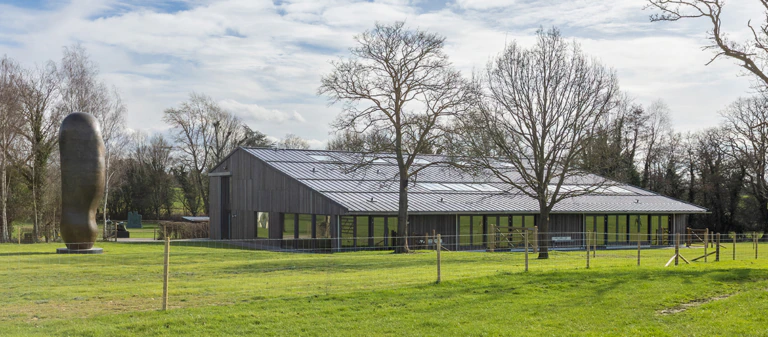
Three large works are also installed in other areas of the centre. The refurbished temporary exhibition suite by Foster and Partners feels crisp, clean and calm and for this show each main room is given its own identity to match the subjects inside.
Circulation is straightforward, with a welcome rest area about halfway around that includes daylight, seats and toilets.
Surprises on show
There are different visitor strategies for dealing with the exhibition. The most straightforward is simply to browse and this is rewarding in various ways.
Some visitors are obviously “treasure hunters”, successfully satisfying their appetite for famous artists/designers, well-known works and for finding the pieces included in the press and marketing.
With the range of material on offer, there are also lesser-known surprises. Visitors clearly enjoy debating personal discoveries, such as a Fabergé animal or a piece of Lowestoft porcelain.
Stories and first-hand accounts are sprinkled throughout the displays and this is another successful approach for engaging audiences and generating social activity among visitors. The authored labels are particularly helpful, giving personal views on the impact or context for an object.
I particularly liked John Hurt’s impressions of the painting Sylvan Solitude by Lorenz and the Bishop of Norwich’s insights into a late 14th-century altar panel.
The personal is also important to those of us with connections to East Anglia. Individual experience links us to particular places and so filters the way we engage with objects that also relate to those places.
Local knowledge clearly enriches understanding of most of the objects in Masterpieces, such as the sense of light and space in landscape paintings, Humphry Repton’s original designs for Sheringham estate, and objects from the grand houses.
Missing links
The exhibition works well where there is a clear association between object and place, satisfying regional visitors and enabling a wider exploration of influence and significance.
Yet connecting objects to a place is sometimes hard work. The selection criteria for the show are broad, possibly because of the attempt to show wider cultural achievement, importance and context.
The displays include items that were made in the region and where the region is the subject matter. It features works that were created by people who were born, lived or worked in Norfolk or Suffolk.
It also has items that were brought to the region or are associated with it. As a result, it is not always clear how particular pieces link to East Anglia. This is often left as assumed knowledge and seemed to even baffle some locals.
I can see that the 1970 Lotus Formula 1 car in the cafe was a popular exhibit, but I am still in the dark as to how it connects to the region.
The exhibition has 16 separate subjects, covering a wide variety of themes and classifications – by object type, subject, context, representation, origin, and so on. In some rooms the subjects are grouped into clusters on a particular theme.
In the first half of Masterpieces, many subjects are discrete and bear limited relation to what went before or comes after.
This makes it hard to gain an overall sense of a visitor journey through the displays. Where a relationship between subjects exists, it is not always explained fully.
The exhibition also uses chronology as an organising principle, but not to structure the whole exhibition. Instead, each subject has its own chronology. Occasionally the show’s chronology is broken within a subject for a special feature or topic.
Subject matter
The design and layout of the displays sometimes means that it is difficult to find where subjects end and others begin. More design differentiation would have been helpful.
Subject text panels are quite wordy and the topics they mention are not always easy to explore through the displays.
When Masterpieces attempts to tackle issues in depth, such as the wider influence of particular works or the whole region, it is battling against too many other elements; the amount of effort is often too much for the payback.
In the end, it is the cumulative body of work that gives a lasting impression of the creativity of East Anglia.
And there is one obvious East Anglican masterpiece missing from the exhibition – the Sainsbury Centre itself.
Colin Mulberg runs a consultancy specialising in improving the visitor experience and is the co-founder of the Labelling Buildings scheme
The Sainsbury Centre for Visual Arts offers free entry to all temporary exhibitions for Museums Association members
It promises a wealth of stunning treasures, the best art of Norfolk and Suffolk throughout history and a celebration of the cultural achievements of East Anglia.
Further aims include demonstrating the importance of East Anglia in a national and international context as well as exploring the idea of the masterpiece.
The exhibition also marks the unveiling of the newly refurbished galleries at the Sainsbury Centre for Visual Arts and is a major part of the University of East Anglia’s 50th anniversary.
This is rather a lot to achieve all at once and the price paid is in a lack of focus in some areas.
This vast exhibition, featuring more than 270 works from the prehistoric period to the present day, can also be hard work for visitors.
Masterpieces covers a wide variety of media including painting, sculpture, ceramics, glass, furniture, architecture, photography, product and graphic design, textiles and fashion, jewellery and more.
The displays are spread across three main rooms and link-spaces such as corridors.
Three large works are also installed in other areas of the centre. The refurbished temporary exhibition suite by Foster and Partners feels crisp, clean and calm and for this show each main room is given its own identity to match the subjects inside.
Circulation is straightforward, with a welcome rest area about halfway around that includes daylight, seats and toilets.
Surprises on show
There are different visitor strategies for dealing with the exhibition. The most straightforward is simply to browse and this is rewarding in various ways.
Some visitors are obviously “treasure hunters”, successfully satisfying their appetite for famous artists/designers, well-known works and for finding the pieces included in the press and marketing.
With the range of material on offer, there are also lesser-known surprises. Visitors clearly enjoy debating personal discoveries, such as a Fabergé animal or a piece of Lowestoft porcelain.
Stories and first-hand accounts are sprinkled throughout the displays and this is another successful approach for engaging audiences and generating social activity among visitors. The authored labels are particularly helpful, giving personal views on the impact or context for an object.
I particularly liked John Hurt’s impressions of the painting Sylvan Solitude by Lorenz and the Bishop of Norwich’s insights into a late 14th-century altar panel.
The personal is also important to those of us with connections to East Anglia. Individual experience links us to particular places and so filters the way we engage with objects that also relate to those places.
Local knowledge clearly enriches understanding of most of the objects in Masterpieces, such as the sense of light and space in landscape paintings, Humphry Repton’s original designs for Sheringham estate, and objects from the grand houses.
Missing links
The exhibition works well where there is a clear association between object and place, satisfying regional visitors and enabling a wider exploration of influence and significance.
Yet connecting objects to a place is sometimes hard work. The selection criteria for the show are broad, possibly because of the attempt to show wider cultural achievement, importance and context.
The displays include items that were made in the region and where the region is the subject matter. It features works that were created by people who were born, lived or worked in Norfolk or Suffolk.
It also has items that were brought to the region or are associated with it. As a result, it is not always clear how particular pieces link to East Anglia. This is often left as assumed knowledge and seemed to even baffle some locals.
I can see that the 1970 Lotus Formula 1 car in the cafe was a popular exhibit, but I am still in the dark as to how it connects to the region.
The exhibition has 16 separate subjects, covering a wide variety of themes and classifications – by object type, subject, context, representation, origin, and so on. In some rooms the subjects are grouped into clusters on a particular theme.
In the first half of Masterpieces, many subjects are discrete and bear limited relation to what went before or comes after.
This makes it hard to gain an overall sense of a visitor journey through the displays. Where a relationship between subjects exists, it is not always explained fully.
The exhibition also uses chronology as an organising principle, but not to structure the whole exhibition. Instead, each subject has its own chronology. Occasionally the show’s chronology is broken within a subject for a special feature or topic.
Subject matter
The design and layout of the displays sometimes means that it is difficult to find where subjects end and others begin. More design differentiation would have been helpful.
Subject text panels are quite wordy and the topics they mention are not always easy to explore through the displays.
When Masterpieces attempts to tackle issues in depth, such as the wider influence of particular works or the whole region, it is battling against too many other elements; the amount of effort is often too much for the payback.
In the end, it is the cumulative body of work that gives a lasting impression of the creativity of East Anglia.
And there is one obvious East Anglican masterpiece missing from the exhibition – the Sainsbury Centre itself.
Colin Mulberg runs a consultancy specialising in improving the visitor experience and is the co-founder of the Labelling Buildings scheme
Project data
- Cost Undisclosed (gallery redevelopment)
- Main funders Gatsby Charitable Trust; Sainsbury Centre for Visual Arts
- Guest curator Ian Collins
- Architect Foster and Partners
- Main contractor Kier Construction
- Exhibition ends 24 February
The Sainsbury Centre for Visual Arts offers free entry to all temporary exhibitions for Museums Association members