I went to Worcester planning to review just one new museum exhibition, but also discovered a series of cultural changes that are transforming life in this cathedral city and county town.
Precisely because Worcester is well beyond the radar of the metropolitan media and Westminster politicians, what is happening here will not receive much attention nationally.
This is a pity because at a time of cuts and apparently bleak prospects for museums and the broader cultural sector, there are some very positive developments taking place in this part of middle England.
Initiatives and partnerships that link and promote learning, heritage, the regional economy and the wellbeing of the local community are coming together.
Museums are not driving these changes, but I did get a real sense that history and heritage are recognised as having a significant role in the region’s future, not just its past.
University community
Worcester is best known as the site of the final battle in the English Civil War in 1651, when Cromwell’s New Model Army routed Charles II’s forces.
Exactly a century later two medical men developed a unique method of manufacturing porcelain, established a factory on the banks of the Severn and created what became the city’s most famous product, Royal Worcester porcelain.
The factory is no longer there, but the real surprise for me was to discover that Worcester is not a fading heritage town but the home to one of the fastest-growing universities in the UK.
Medical museum
This modern centre of education has effectively become Worcester’s new growth industry, and has brought significant benefits to the local economy and community life.
Unlike most older universities, which often remain isolated and independent of their local communities, Worcester has established a close partnership with the city. The university’s new campus is at the heart of the city, occupying refurbished 18th-century buildings of the Worcester Royal Infirmary.
For almost 300 years, the Infirmary stood in the community as a monument to healthcare, with strong links to well known figures in medical history.
This is where the British Medical Association was founded in 1832 by Sir Charles Hastings, whose name was given to the current education centre for healthcare professionals at the large modern city hospital, now relocated to the edge of town.
That centre houses the George Marshall Medical Museum, made up from a personal collection donated by a local GP and surgeon in the 1950s, and on public display in the new building since 2002.
The university’s move into the old Infirmary offered an opportunity for a partnership lottery bid to create a permanent and interactive museum exhibition in part of the refurbished building.
It interprets the history of this former hospital and draws on a range of themes that link to it: public health, mental health, medical technology and community memory. The project aims ambitiously to “combine history, science, art and technology to explore the medical stories of one of England’s oldest infirmaries”.
Local focus
Medical museums have always tended to be the Cinderellas of the sector, with a few exceptions such as the Wellcome Collection. So how does this one shape up?
From the slightly overblown descriptions I had read in advance, I was expecting to find something bigger and grander, but the curators and designers have taken a creative and engaging approach to the subject. Medical collections can be gripping for specialists and medical students, but are potentially off-putting for others.
This display at the Infirmary has been developed with much broader audiences in mind: local residents, particularly those who remember the Infirmary, school-children at key stages 2-4, university students and staff. Last on the list were the general public and tourists.
Potentially challenging subjects, such as mental and sexual health, were included because the team decided that they were important stories to tell.
The curators have developed local stories, characters and collections while at the same time endeavouring to create interest for audiences who may have no particular affinity to Worcester.
As one of those remote visitors, it certainly worked for me. The central premise of the exhibition is to interpret history through the lives of the people that either directly shaped healthcare or those that were and are still affected by it.
The focus of every story told is local, but linked and made relevant to broader medical history themes. Unlike the George Marshall Medical Museum, it is not in the remote and slightly off-putting environment of a modern hospital.
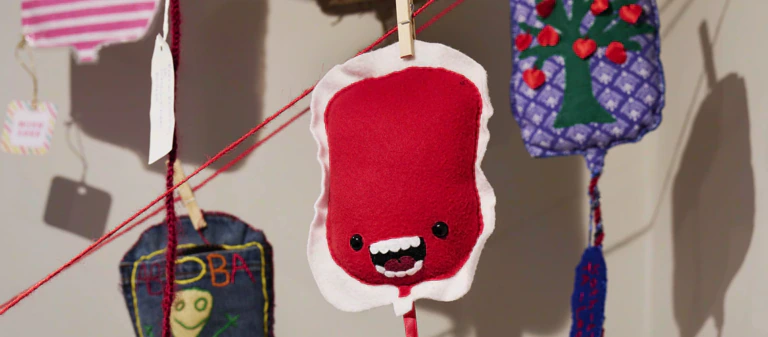
The exhibition covers a lot of ground in a comparatively small space, and achieves this through an ingenious mixture of display techniques. Each area incorporates text, featured objects and imagery alongside multi-sensory, multimedia elements within a series of interactives, ranging from simple flaps and drawers to more complex digital touch tables.
Two “talking beds” are used to show visitors that the room was once a hospital ward, and to present oral histories of former staff and patients. The displays are layered and varied to cater for multiple learning styles and ability levels, giving visitors the option to dip into subjects that interest them in different ways.
My only complaint is that the Infirmary museum is quite difficult to find, even though it is very centrally placed. The large former hospital building is now very clearly a university facility but the current exterior signage does not give the impression of welcoming the general public.
It is a surprising oversight, as just a short walk away is a much bigger product of the university’s expansion that has become a new showpiece for Worcester and is well used. This is the Hive.
Pioneering partnership
The Hive is the first joint public and university library in Europe, and a unique example in the UK of a local authority, in this case Worcestershire County Council, and a university working in partnership to create, build and run a major new community facility.
It brings together under one dramatic golden roof the main county library, archives, history, archaeology, information and council customer service centre.
The striking new structure is on a site in the town centre between the main shopping centre and the new university campus. It opened in July and has welcomed over 750,000 visitors and users in its first year.
The Hive does not include a museum among its amazing range of facilities, but its creation has had a ripple effect. Worcester’s central library previously occupied the ground floor of the city art gallery and museum. Its transfer to the Hive has given the museum space to expand into.
In another new local partnership Museums Worcester has brought together the city and county museums, which until recently were run by separate local authorities. No doubt this change was driven by a need to make financial savings, but it must be a positive move.
I feel as though there is an exciting future for museums, libraries and heritage in Worcester, which is coming out of creative thinking and new partnerships. If only other local authorities and universities in the UK could learn from this unexpected example. I would also encourage people to pay a visit to see for themselves.
Oliver Green is a research fellow at the London Transport Museum
Precisely because Worcester is well beyond the radar of the metropolitan media and Westminster politicians, what is happening here will not receive much attention nationally.
This is a pity because at a time of cuts and apparently bleak prospects for museums and the broader cultural sector, there are some very positive developments taking place in this part of middle England.
Initiatives and partnerships that link and promote learning, heritage, the regional economy and the wellbeing of the local community are coming together.
Museums are not driving these changes, but I did get a real sense that history and heritage are recognised as having a significant role in the region’s future, not just its past.
University community
Worcester is best known as the site of the final battle in the English Civil War in 1651, when Cromwell’s New Model Army routed Charles II’s forces.
Exactly a century later two medical men developed a unique method of manufacturing porcelain, established a factory on the banks of the Severn and created what became the city’s most famous product, Royal Worcester porcelain.
The factory is no longer there, but the real surprise for me was to discover that Worcester is not a fading heritage town but the home to one of the fastest-growing universities in the UK.
Medical museum
This modern centre of education has effectively become Worcester’s new growth industry, and has brought significant benefits to the local economy and community life.
Unlike most older universities, which often remain isolated and independent of their local communities, Worcester has established a close partnership with the city. The university’s new campus is at the heart of the city, occupying refurbished 18th-century buildings of the Worcester Royal Infirmary.
For almost 300 years, the Infirmary stood in the community as a monument to healthcare, with strong links to well known figures in medical history.
This is where the British Medical Association was founded in 1832 by Sir Charles Hastings, whose name was given to the current education centre for healthcare professionals at the large modern city hospital, now relocated to the edge of town.
That centre houses the George Marshall Medical Museum, made up from a personal collection donated by a local GP and surgeon in the 1950s, and on public display in the new building since 2002.
The university’s move into the old Infirmary offered an opportunity for a partnership lottery bid to create a permanent and interactive museum exhibition in part of the refurbished building.
It interprets the history of this former hospital and draws on a range of themes that link to it: public health, mental health, medical technology and community memory. The project aims ambitiously to “combine history, science, art and technology to explore the medical stories of one of England’s oldest infirmaries”.
Local focus
Medical museums have always tended to be the Cinderellas of the sector, with a few exceptions such as the Wellcome Collection. So how does this one shape up?
From the slightly overblown descriptions I had read in advance, I was expecting to find something bigger and grander, but the curators and designers have taken a creative and engaging approach to the subject. Medical collections can be gripping for specialists and medical students, but are potentially off-putting for others.
This display at the Infirmary has been developed with much broader audiences in mind: local residents, particularly those who remember the Infirmary, school-children at key stages 2-4, university students and staff. Last on the list were the general public and tourists.
Potentially challenging subjects, such as mental and sexual health, were included because the team decided that they were important stories to tell.
The curators have developed local stories, characters and collections while at the same time endeavouring to create interest for audiences who may have no particular affinity to Worcester.
As one of those remote visitors, it certainly worked for me. The central premise of the exhibition is to interpret history through the lives of the people that either directly shaped healthcare or those that were and are still affected by it.
The focus of every story told is local, but linked and made relevant to broader medical history themes. Unlike the George Marshall Medical Museum, it is not in the remote and slightly off-putting environment of a modern hospital.
The exhibition covers a lot of ground in a comparatively small space, and achieves this through an ingenious mixture of display techniques. Each area incorporates text, featured objects and imagery alongside multi-sensory, multimedia elements within a series of interactives, ranging from simple flaps and drawers to more complex digital touch tables.
Two “talking beds” are used to show visitors that the room was once a hospital ward, and to present oral histories of former staff and patients. The displays are layered and varied to cater for multiple learning styles and ability levels, giving visitors the option to dip into subjects that interest them in different ways.
My only complaint is that the Infirmary museum is quite difficult to find, even though it is very centrally placed. The large former hospital building is now very clearly a university facility but the current exterior signage does not give the impression of welcoming the general public.
It is a surprising oversight, as just a short walk away is a much bigger product of the university’s expansion that has become a new showpiece for Worcester and is well used. This is the Hive.
Pioneering partnership
The Hive is the first joint public and university library in Europe, and a unique example in the UK of a local authority, in this case Worcestershire County Council, and a university working in partnership to create, build and run a major new community facility.
It brings together under one dramatic golden roof the main county library, archives, history, archaeology, information and council customer service centre.
The striking new structure is on a site in the town centre between the main shopping centre and the new university campus. It opened in July and has welcomed over 750,000 visitors and users in its first year.
The Hive does not include a museum among its amazing range of facilities, but its creation has had a ripple effect. Worcester’s central library previously occupied the ground floor of the city art gallery and museum. Its transfer to the Hive has given the museum space to expand into.
In another new local partnership Museums Worcester has brought together the city and county museums, which until recently were run by separate local authorities. No doubt this change was driven by a need to make financial savings, but it must be a positive move.
I feel as though there is an exciting future for museums, libraries and heritage in Worcester, which is coming out of creative thinking and new partnerships. If only other local authorities and universities in the UK could learn from this unexpected example. I would also encourage people to pay a visit to see for themselves.
Oliver Green is a research fellow at the London Transport Museum
Project data
- Cost £243,000
- Main funders Heritage Lottery Fund £219,000; Bransford Trust £10,000; Hefce £10,000; RD Turner Charitable Trust £3,000
- Exhibition design Simon Fenn
- Graphic designer Helen Rawsthorn
- Exhibition build and manual interactives design/build Cod Steaks
- Lighting Design Lighting
- Object mounts Nathan Penrhys Jones
- Audiovisual hardware Audionation UK
- Digital interactives Rupert Mitchell