Position the cams! Connect the gears! Tighten the wheel nuts and watch as a Morris Mini-Minor rolls off the production line!
And by the time you’ve built that car the chances are you’ll have spent time as a gemmologist, tested precious metals, moulded a plastic duck and tried on a pair of Crocs made from crude oil.
That lively list of activities pretty well sums up a visit to Thinktank’s We Made It. The title refers to Birmingham’s once proud claim to have been “the workshop of the world”. All the objects on show that were made in the city or region are highlighted.
Paean to manufacturing
And there are plenty of them too, ranging from telephones to televisions, tankards to toasters. These and many other artefacts are arranged according to the raw materials from which they derived, such as metals, glass, gemstones, wood and plastic. They are divided up into four thematic sections that give rise to the exhibition’s subtitle: “nuts, bolts, gadgets and gizmos.”
We Made It occupies a balcony floor of Thinktank. The level below is about the past. The one above deals with the present while higher still is the future. This gives the impression that, even if it has one foot firmly in the past, We Made It has at least a toe in the here-and-now.
With that in mind I scoured the exhibition for things still manufactured here today. One example is from Hozelock, the producer of the world’s first plastic hose connector.
Its head office is in Birmingham and most of its products are still made in Britain.
Another is the precision engineer Brandauer, a family firm that has just celebrated its 150th anniversary. It is a market leader in the production of precision metal components and is rightly celebrated in the exhibition.
But this promotion could be taken so much further. It would be great if the curators made space for a changing display called “We Still Make It!” Aside from the sponsorship potential this could also inspire young visitors to think about their future careers.
We Made It has clearly been designed with children in mind. My weekday visit was punctuated by a cacophony of excited squeals. The exhibition was only a month old, but already the creative skills behind We Made It had shifted to We Maintain It.
That much was clear as I watched a silver fork quiver in its case as the next school group motored towards the skeleton of a Riley Elf. This car’s body has been cut away to reveal its insides.
Hands-on
There are two further cars on display, one of which is the real star of the show: the Morris Mini- Minor. It has been exploded into various components. Four complicated interactives need to be completed simultaneously in order to make the vehicle’s parts come together.
I know this because two friendly invigilators came to my rescue and helped me align the cams and circuits.
The complexity of these interactives underlined the fact that the hands-on activities work best when the gallery assistants are on hand to offer help and explanations. They make sure that visitors get the most out of their visit.
Whether or not Thinktank merits the very high entrance charge (£12.25 for an adult if bought on the day) for regular visitors is debatable. But there is certainly a lot to see and even more to do.
And it is genuinely educational. One of the strongest impressions left by my visit to We Made It is the extent to which crude oil dominates our lives: there would be no Crocs without the black gold nor a host of other plastic objects besides.
Human cost
And there is sweet-wrapped nostalgia too. A tin of Roses chocolates from the 1980s and a Dualit food mixer brought a tear to my eye by reminding me of the Christmases of my youth.
But that sort of emotional link between things and people is not really something that is tackled here. This is no social history exhibition. So the human cost of supplying the latest must-have gadgets is not addressed.
The ethics of everyday objects are, however, tackled in relation to environmental issues. Taking care of natural resources is a central message. Visitors are taught the drawbacks of using too little or too much material.
The dangers of inappropriate packaging are demonstrated by a tactile arrangement featuring curry in a wicker basket and a teapot made of chocolate. These handling objects and their braille labels demonstrate the efforts made to ensure the show is accessible to all.
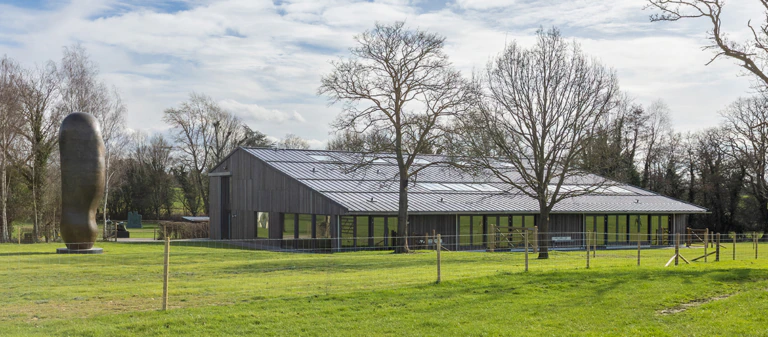
And that accessibility extends to the science garden outside. It juts out into Millennium Point. This striking landscape is still taking shape – just like the steady stream of building sites I passed on my way back to Birmingham’s rapidly expanding New Street Station.
These engineering projects serve to remind us that we still make things. There is a desperate need for the sorts of skills being taught at Thinktank: without them the exhibitions of the future are destined to be called “They Made It”.
Stuart Burch is a lecturer in museum studies at Nottingham Trent University
And by the time you’ve built that car the chances are you’ll have spent time as a gemmologist, tested precious metals, moulded a plastic duck and tried on a pair of Crocs made from crude oil.
That lively list of activities pretty well sums up a visit to Thinktank’s We Made It. The title refers to Birmingham’s once proud claim to have been “the workshop of the world”. All the objects on show that were made in the city or region are highlighted.
Paean to manufacturing
And there are plenty of them too, ranging from telephones to televisions, tankards to toasters. These and many other artefacts are arranged according to the raw materials from which they derived, such as metals, glass, gemstones, wood and plastic. They are divided up into four thematic sections that give rise to the exhibition’s subtitle: “nuts, bolts, gadgets and gizmos.”
We Made It occupies a balcony floor of Thinktank. The level below is about the past. The one above deals with the present while higher still is the future. This gives the impression that, even if it has one foot firmly in the past, We Made It has at least a toe in the here-and-now.
With that in mind I scoured the exhibition for things still manufactured here today. One example is from Hozelock, the producer of the world’s first plastic hose connector.
Its head office is in Birmingham and most of its products are still made in Britain.
Another is the precision engineer Brandauer, a family firm that has just celebrated its 150th anniversary. It is a market leader in the production of precision metal components and is rightly celebrated in the exhibition.
But this promotion could be taken so much further. It would be great if the curators made space for a changing display called “We Still Make It!” Aside from the sponsorship potential this could also inspire young visitors to think about their future careers.
We Made It has clearly been designed with children in mind. My weekday visit was punctuated by a cacophony of excited squeals. The exhibition was only a month old, but already the creative skills behind We Made It had shifted to We Maintain It.
That much was clear as I watched a silver fork quiver in its case as the next school group motored towards the skeleton of a Riley Elf. This car’s body has been cut away to reveal its insides.
Hands-on
There are two further cars on display, one of which is the real star of the show: the Morris Mini- Minor. It has been exploded into various components. Four complicated interactives need to be completed simultaneously in order to make the vehicle’s parts come together.
I know this because two friendly invigilators came to my rescue and helped me align the cams and circuits.
The complexity of these interactives underlined the fact that the hands-on activities work best when the gallery assistants are on hand to offer help and explanations. They make sure that visitors get the most out of their visit.
Whether or not Thinktank merits the very high entrance charge (£12.25 for an adult if bought on the day) for regular visitors is debatable. But there is certainly a lot to see and even more to do.
And it is genuinely educational. One of the strongest impressions left by my visit to We Made It is the extent to which crude oil dominates our lives: there would be no Crocs without the black gold nor a host of other plastic objects besides.
Human cost
And there is sweet-wrapped nostalgia too. A tin of Roses chocolates from the 1980s and a Dualit food mixer brought a tear to my eye by reminding me of the Christmases of my youth.
But that sort of emotional link between things and people is not really something that is tackled here. This is no social history exhibition. So the human cost of supplying the latest must-have gadgets is not addressed.
The ethics of everyday objects are, however, tackled in relation to environmental issues. Taking care of natural resources is a central message. Visitors are taught the drawbacks of using too little or too much material.
The dangers of inappropriate packaging are demonstrated by a tactile arrangement featuring curry in a wicker basket and a teapot made of chocolate. These handling objects and their braille labels demonstrate the efforts made to ensure the show is accessible to all.
And that accessibility extends to the science garden outside. It juts out into Millennium Point. This striking landscape is still taking shape – just like the steady stream of building sites I passed on my way back to Birmingham’s rapidly expanding New Street Station.
These engineering projects serve to remind us that we still make things. There is a desperate need for the sorts of skills being taught at Thinktank: without them the exhibitions of the future are destined to be called “They Made It”.
Stuart Burch is a lecturer in museum studies at Nottingham Trent University
Project data
- Cost £2.2m (including £100,000 participation programme)
- Main funders Heritage Lottery Fund (£999,000); Wolfson Foundation; Aluminium Federation; Assay Office; Millennium Point Trust; SITA Trust; Garfield Weston Foundation
- Exhibition design At Large
- Project manager Focus Consultants
- Cost manager Turner and Townsend
- Hands-on Interactives Paragon Creative
- Fit-out Beck Interiors