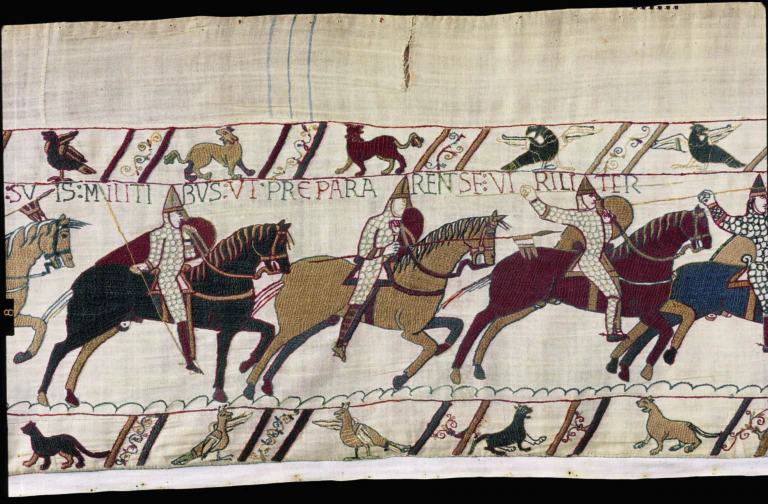
Who or what was a Viking? Well, they don’t wear horned helmets, raping and pillaging were not the norm and they didn’t actually call themselves Vikings – unless they were on a voyage.
On first impressions this exhibition, which was created by the Swedish History Museum in Stockholm, is dark and reverentially hushed.
Visitors snake past the displays in an orderly and deferential fashion. There is almost an atmosphere of worship. The exhibition is divided into eight themes ranging from family life to worship. The first, naturally enough, is Meet the Vikings.
Viking is an old Norse word meaning an outing, a commercial trip or a raid. It’s more of a verb than a descriptive noun, and was only probably used by men, women and children when they were raiding or trading overseas.
Object focus
Aside from this information and an unhelpful map, there is very little scene setting and visitors are plunged more or less straight into the route march.
Or that’s what it feels like. It’s busy and there’s an inevitable pace that propels visitors forward to the next display case, the next piece of text and the next set of objects.
Large-scale photographs of Scandinavian landscapes form a backdrop in this introductory area and film clips show re-created scenes of Viking life.
But the focus is on the objects, which are impressive and in some cases unexpected: colourful glass bead jewellery, a bronze Buddha and an intricate silver crucifix. The displays are well-designed and beautifully lit, showing the objects to maximum advantage.
The text is informative and easy to read and the interactives are varied and engaging. For example, in Meet the Vikings a display of typical clothing is linked to two touchscreens and visitors can help avatar Viking characters of different ages and status get dressed. It’s a good way to explore hierarchy and domestic life in Viking society.
Fossilised poo
There are many myths surrounding the Vikings and this exhibition sets out to debunk them and replace them with evidence. And it’s not short of facts. In truth, there are so many that it’s easy to feel overwhelmed.
The aim is to present the Vikings in a new light, with evidence gathered from archaeology, research and source material.
However, this research is not lightly worn. Nearly every other piece of text refers to source material and archaeological evidence, which is all well and good until the facts themselves become a dull litany with little narrative.
The sections on family, community and homes provide a bit more colour – these are subjects that anyone can identify with. The emphasis on the role of women in society is particularly interesting, with displays of jewellery and keys indicating their status as keepers of the homefront.
There is mention of the free and the unfree, a reference to the fact that slaves were a foundation of society at this time although this potentially fascinating story is barely touched on, the excuse being the lack of archaeological evidence.
There is also a wonderful display of fossilised poo in the section on homes, which is used to illustrate the typical diet of the time. Unfortunately, most children didn’t spot it – a little less discretion and a little more signposting wouldn’t go amiss.
These sections are more peopled and you feel the beginnings of a story emerge. For example, a Lodose knife with the simple engraving, “Think of me, I think of you, love me, I love you”, carved in runes on the side.
The next section on worship is where the action should really hot up. Gods, myths and legends are strongly associated with the Vikings and their culture is rich with folklore on these topics.
The space is dominated by a sunken stage-like area were the mythological world of the Vikings is explored. This story has everything – giants, dwarves, witches, sprites and spirits – but it is told in such a pedestrian way that it feels like most of the drama has been wrung out of it.
After this disappointment there are a couple of good interactives, a touchscreen version of the Viking board game Hnefatafl and a digital grave excavation game.
These are at the halfway point of the exhibition and they are needed: it’s a big show and somewhere to stop, rest and engage is welcome after lots of looking and reading.
There are also more beautiful objects and displays. A set of 38 fish-tail pendants is exquisite, although slightly overlooked.
A ship’s prow, represented by rivets hung on nylon thread in the shape of a Viking boat, is a striking display and neatly joins the sections on craftsmanship and death and ritual. Of course there is mention of the Valkyrie, Valhalla and Helheim and a careful explanation of the rituals and myths surrounding death.
But considering the imagery of burning boats and the rich source material from the Prose Edda and other sources, there is again a dampening of this fiery story.
Not very vicious Vikings
The final section of the exhibition, Over the Sea, is designed in the shape of a Viking ship with displays on either side. Here, films of recreated Viking boats setting sail capture some of the drama of those sea voyages.
The exhibition curators have successfully debunked myths and inserted some new information about the role of women in society.
Unfortunately, this is done at the expense of an engaging narrative. The attempts to dispel stereotypes and stick to the facts has drained some of the life out of the displays.
The very last section of the exhibition lays to rest the myth that the Vikings wore horned helmets; but once you step outside into the shop there are swords and horned helmets aplenty, alongside the Vicious Vikings book from the Horrible Histories series.
And that’s OK – museums have to make a buck (although £22 for the Hnefatafl game was a bit steep).
Whatever you might think of the Horrible Histories version of the past, the books and TV series have done lots to engage young people with history.
On balance I’d like to have seen a bit more of the Vicious Vikings and a little less of this sanitised version of events.
On first impressions this exhibition, which was created by the Swedish History Museum in Stockholm, is dark and reverentially hushed.
Visitors snake past the displays in an orderly and deferential fashion. There is almost an atmosphere of worship. The exhibition is divided into eight themes ranging from family life to worship. The first, naturally enough, is Meet the Vikings.
Viking is an old Norse word meaning an outing, a commercial trip or a raid. It’s more of a verb than a descriptive noun, and was only probably used by men, women and children when they were raiding or trading overseas.
Object focus
Aside from this information and an unhelpful map, there is very little scene setting and visitors are plunged more or less straight into the route march.
Or that’s what it feels like. It’s busy and there’s an inevitable pace that propels visitors forward to the next display case, the next piece of text and the next set of objects.
Large-scale photographs of Scandinavian landscapes form a backdrop in this introductory area and film clips show re-created scenes of Viking life.
But the focus is on the objects, which are impressive and in some cases unexpected: colourful glass bead jewellery, a bronze Buddha and an intricate silver crucifix. The displays are well-designed and beautifully lit, showing the objects to maximum advantage.
The text is informative and easy to read and the interactives are varied and engaging. For example, in Meet the Vikings a display of typical clothing is linked to two touchscreens and visitors can help avatar Viking characters of different ages and status get dressed. It’s a good way to explore hierarchy and domestic life in Viking society.
Fossilised poo
There are many myths surrounding the Vikings and this exhibition sets out to debunk them and replace them with evidence. And it’s not short of facts. In truth, there are so many that it’s easy to feel overwhelmed.
The aim is to present the Vikings in a new light, with evidence gathered from archaeology, research and source material.
However, this research is not lightly worn. Nearly every other piece of text refers to source material and archaeological evidence, which is all well and good until the facts themselves become a dull litany with little narrative.
The sections on family, community and homes provide a bit more colour – these are subjects that anyone can identify with. The emphasis on the role of women in society is particularly interesting, with displays of jewellery and keys indicating their status as keepers of the homefront.
There is mention of the free and the unfree, a reference to the fact that slaves were a foundation of society at this time although this potentially fascinating story is barely touched on, the excuse being the lack of archaeological evidence.
There is also a wonderful display of fossilised poo in the section on homes, which is used to illustrate the typical diet of the time. Unfortunately, most children didn’t spot it – a little less discretion and a little more signposting wouldn’t go amiss.
These sections are more peopled and you feel the beginnings of a story emerge. For example, a Lodose knife with the simple engraving, “Think of me, I think of you, love me, I love you”, carved in runes on the side.
The next section on worship is where the action should really hot up. Gods, myths and legends are strongly associated with the Vikings and their culture is rich with folklore on these topics.
The space is dominated by a sunken stage-like area were the mythological world of the Vikings is explored. This story has everything – giants, dwarves, witches, sprites and spirits – but it is told in such a pedestrian way that it feels like most of the drama has been wrung out of it.
After this disappointment there are a couple of good interactives, a touchscreen version of the Viking board game Hnefatafl and a digital grave excavation game.
These are at the halfway point of the exhibition and they are needed: it’s a big show and somewhere to stop, rest and engage is welcome after lots of looking and reading.
There are also more beautiful objects and displays. A set of 38 fish-tail pendants is exquisite, although slightly overlooked.
A ship’s prow, represented by rivets hung on nylon thread in the shape of a Viking boat, is a striking display and neatly joins the sections on craftsmanship and death and ritual. Of course there is mention of the Valkyrie, Valhalla and Helheim and a careful explanation of the rituals and myths surrounding death.
But considering the imagery of burning boats and the rich source material from the Prose Edda and other sources, there is again a dampening of this fiery story.
Not very vicious Vikings
The final section of the exhibition, Over the Sea, is designed in the shape of a Viking ship with displays on either side. Here, films of recreated Viking boats setting sail capture some of the drama of those sea voyages.
The exhibition curators have successfully debunked myths and inserted some new information about the role of women in society.
Unfortunately, this is done at the expense of an engaging narrative. The attempts to dispel stereotypes and stick to the facts has drained some of the life out of the displays.
The very last section of the exhibition lays to rest the myth that the Vikings wore horned helmets; but once you step outside into the shop there are swords and horned helmets aplenty, alongside the Vicious Vikings book from the Horrible Histories series.
And that’s OK – museums have to make a buck (although £22 for the Hnefatafl game was a bit steep).
Whatever you might think of the Horrible Histories version of the past, the books and TV series have done lots to engage young people with history.
On balance I’d like to have seen a bit more of the Vicious Vikings and a little less of this sanitised version of events.
Project data
- Cost undisclosed
- Partners and funders National Museums Scotland; Swedish History Museum; Museums partner, Austria; Studio-exhibit, Austria
- Concept National Historical Museum; Studio-exhibit
- Exhibition design and graphics Studio-exhibit
- Exhibition ends 12 May