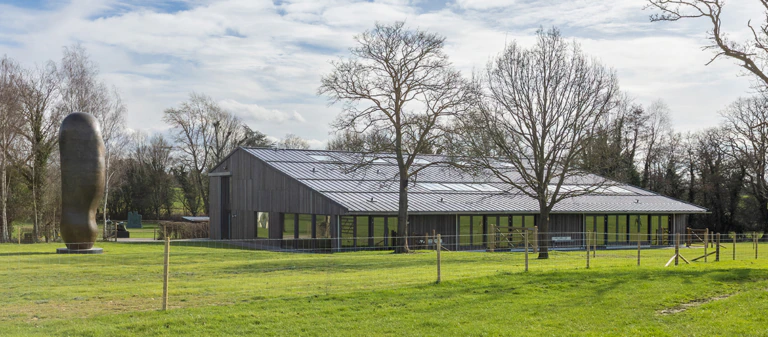
Gallery Oldham currently houses an exhibition based on the life of Thomas Henshaw. His name is known to us today because of the legacy he left in his will to provide schooling, employment and other forms of support to blind people in Manchester.
Henshaws Society for Blind People (HSBP) is the direct outcome of his generosity, and the Old Trafford-based charity is currently celebrating the 175th anniversary of its establishment.
The exhibition has been designed to be accessible to blind and visually impaired visitors and contains several items loaned from HSBP and other organisations, as well as original artwork and installations constructed by students of Henshaws College in Harrogate.
Thomas Henshaw made his fortune as a hat manufacturer in Oldham. In 1807 he bequeathed £20,000 to be used for founding an Asylum for the Blind.
Unfortunately, Henshaw’s state of mind at the time was questionable and, after his death by drowning in 1810, there was 23 years of legal wrangling before the money could be applied to its intended purpose.
Accessibility
Among the artefacts used to illustrate this section of the exhibition are a fine marble bust of Henshaw, a collection of tools used by hatters in the late 18th century and some examples of their craft.
There is also a metal strong box that might have been employed by solicitors for storing clients’ deeds, wills and similar important documents.
An over-arching feature of the exhibition is that a variety of strategies are employed to make the information accessible to sight-impaired people.
Some of the rare or delicate objects are enclosed in glass cases and of course, descriptive labels are provided, but a Braille leaflet is also available to be read as visitors explore the gallery. This is good, but the percentage of those who read Braille is rather small.
However, the text is also recorded on a small MP3 player that can be listened to as the visitors go around the exhibits. Another high-tech device, a sort of audio label-reader, is found at several points in the gallery.
Visitors point the handheld reader at an easily detected circular patch fixed to the label and an audio recording about the article in the case is heard.
Experience of blindness
There is a whole section in the exhibition that deals with the causes and treatment of blindness. The historical background explains that many people engaged in the crusades and other conflicts were blinded as a result of injuries received in combat.
Blinding as a punishment was also common, especially in the time of William the Conqueror. Treatment of eye conditions was often dangerous due to the almost total lack of scientific knowledge.
Fortunately, modern medical and surgical understanding has led to better prospects for the treatment of many serious eye conditions and research is likely to benefit millions in the future.
To gain some idea of what it is like to have glaucoma, cataract and several other common eye conditions, a set of simulation spectacles are on display. These can be put on by visitors who are asked to try simple tasks while wearing them.
The technology, education and employment section describes how in the late 18th and early 19th centuries, British industry underwent dramatic changes that had profound effects on the economy and the social organisation of the country.
These changes were spearheaded by new technologies such as steam and the invention of machinery to take the place of manual labour.
To enable blind people to have a share of the resulting progress and prosperity, the Henshaws Asylum for the Blind was set up in accordance with its benefactor’s vision and was soon active in providing schooling and workshops for blind people in Manchester.
To facilitate learning a method of tactile reading and writing was necessary and George Hughes, director of the asylum, won a gold medal at the 1851 Great Exhibition for the invention of the Typograph.
A model of this machine, which could emboss letters on paper, is included in the Oldham exhibition. Also displayed are some rare books written in a variety of raised dot systems of tactile reading that preceded Braille.
Of course, we have also experienced a technological revolution that has transformed every aspect of our lives. The effect of computers is felt in nearly all aspect of life and the challenge now being faced by the Henshaws Society is to ensure that blind people are not denied the tremendous opportunities that are offered by new technology.
Technological aids
Two exhibits at the gallery clearly illustrate the technological progress witnessed by many living blind people. The Stainsby Braille writer was one of the main means of producing Braille for many years in this country.
The simple machine consists of a metal board, a clamp to hold the paper and a carriage with six keys that produce the dots. Nowadays, Braille books are produced electronically. Talking kitchen scales are on display and can be tried by visitors.
This is just one example of how speech technology is revolutionising the accessibility of devices so they can be used by blind people. Talking watches, computer screen readers and talking mobile phone apps are other instances of devices that are helping blind people in their daily lives.
The final section of the exhibition offers a chance to reflect on attitudes to people with sight loss. A wide-ranging historical framework takes us from the ancient Greeks and Romans to modern times.
A group of Henshaws service users give personal insights about how the charity has helped them adjust to visual impairment. Finally, inside a darkened area, poems by Sarah Strutt, a Henshaws service user, can be heard.
The subject of accessibility for blind and partially sighted visitors to museums and galleries is a complex one. This exhibition goes some way towards trying to find solutions to some of the issues involved but by no means solves all of them.
Gallery Oldham is to be congratulated on its thoughtful presentation of this exhibition. It is a celebration of the vision of one man, Thomas Henshaw, the far-seeing philanthropist.
Bernard Knight is totally blind and he visited the exhibition with someone who is also sight impaired
Henshaws Society for Blind People (HSBP) is the direct outcome of his generosity, and the Old Trafford-based charity is currently celebrating the 175th anniversary of its establishment.
The exhibition has been designed to be accessible to blind and visually impaired visitors and contains several items loaned from HSBP and other organisations, as well as original artwork and installations constructed by students of Henshaws College in Harrogate.
Thomas Henshaw made his fortune as a hat manufacturer in Oldham. In 1807 he bequeathed £20,000 to be used for founding an Asylum for the Blind.
Unfortunately, Henshaw’s state of mind at the time was questionable and, after his death by drowning in 1810, there was 23 years of legal wrangling before the money could be applied to its intended purpose.
Accessibility
Among the artefacts used to illustrate this section of the exhibition are a fine marble bust of Henshaw, a collection of tools used by hatters in the late 18th century and some examples of their craft.
There is also a metal strong box that might have been employed by solicitors for storing clients’ deeds, wills and similar important documents.
An over-arching feature of the exhibition is that a variety of strategies are employed to make the information accessible to sight-impaired people.
Some of the rare or delicate objects are enclosed in glass cases and of course, descriptive labels are provided, but a Braille leaflet is also available to be read as visitors explore the gallery. This is good, but the percentage of those who read Braille is rather small.
However, the text is also recorded on a small MP3 player that can be listened to as the visitors go around the exhibits. Another high-tech device, a sort of audio label-reader, is found at several points in the gallery.
Visitors point the handheld reader at an easily detected circular patch fixed to the label and an audio recording about the article in the case is heard.
Experience of blindness
There is a whole section in the exhibition that deals with the causes and treatment of blindness. The historical background explains that many people engaged in the crusades and other conflicts were blinded as a result of injuries received in combat.
Blinding as a punishment was also common, especially in the time of William the Conqueror. Treatment of eye conditions was often dangerous due to the almost total lack of scientific knowledge.
Fortunately, modern medical and surgical understanding has led to better prospects for the treatment of many serious eye conditions and research is likely to benefit millions in the future.
To gain some idea of what it is like to have glaucoma, cataract and several other common eye conditions, a set of simulation spectacles are on display. These can be put on by visitors who are asked to try simple tasks while wearing them.
The technology, education and employment section describes how in the late 18th and early 19th centuries, British industry underwent dramatic changes that had profound effects on the economy and the social organisation of the country.
These changes were spearheaded by new technologies such as steam and the invention of machinery to take the place of manual labour.
To enable blind people to have a share of the resulting progress and prosperity, the Henshaws Asylum for the Blind was set up in accordance with its benefactor’s vision and was soon active in providing schooling and workshops for blind people in Manchester.
To facilitate learning a method of tactile reading and writing was necessary and George Hughes, director of the asylum, won a gold medal at the 1851 Great Exhibition for the invention of the Typograph.
A model of this machine, which could emboss letters on paper, is included in the Oldham exhibition. Also displayed are some rare books written in a variety of raised dot systems of tactile reading that preceded Braille.
Of course, we have also experienced a technological revolution that has transformed every aspect of our lives. The effect of computers is felt in nearly all aspect of life and the challenge now being faced by the Henshaws Society is to ensure that blind people are not denied the tremendous opportunities that are offered by new technology.
Technological aids
Two exhibits at the gallery clearly illustrate the technological progress witnessed by many living blind people. The Stainsby Braille writer was one of the main means of producing Braille for many years in this country.
The simple machine consists of a metal board, a clamp to hold the paper and a carriage with six keys that produce the dots. Nowadays, Braille books are produced electronically. Talking kitchen scales are on display and can be tried by visitors.
This is just one example of how speech technology is revolutionising the accessibility of devices so they can be used by blind people. Talking watches, computer screen readers and talking mobile phone apps are other instances of devices that are helping blind people in their daily lives.
The final section of the exhibition offers a chance to reflect on attitudes to people with sight loss. A wide-ranging historical framework takes us from the ancient Greeks and Romans to modern times.
A group of Henshaws service users give personal insights about how the charity has helped them adjust to visual impairment. Finally, inside a darkened area, poems by Sarah Strutt, a Henshaws service user, can be heard.
The subject of accessibility for blind and partially sighted visitors to museums and galleries is a complex one. This exhibition goes some way towards trying to find solutions to some of the issues involved but by no means solves all of them.
Gallery Oldham is to be congratulated on its thoughtful presentation of this exhibition. It is a celebration of the vision of one man, Thomas Henshaw, the far-seeing philanthropist.
Bernard Knight is totally blind and he visited the exhibition with someone who is also sight impaired
Project data
- Cost £30,000
- Funder Heritage Lottery Fund
- Curator Laura Wigg-Bailey
- Exhibition ends 5 January