First prize for the best creative relaunch and titling in 2012 must go to the Beaney House of Art & Knowledge. What a name!
It has a wonderful ring of Ruskin about it but sounds suitably cool and retro at the same time. Forget those other sad attempts to get away from calling something a museum or a library.
Thinktank has to explain itself with the subtitle Birmingham Science Museum and, let’s face it, those supposedly radical Idea Stores in Tower Hamlets, east London, are really just new local libraries.
The Beaney is actually an art museum and library in a refurbished and extended building, but its full new title does have a echo of quality to it, which sounds intriguing. The others are just so last century.
Something different
Having said that, the Beaney does rather lay it on with a trowel from the start. The Highlights guide describes it self-importantly as “a major contribution towards the development of the cultural offering in East Kent”.
We are then told that its ethos is to “enable people to explore, learn, participate and create using the permanent collections, special exhibitions, community engagement programmes and educational activities as inspiration”.
You can’t argue with that, standard stuff from any Heritage Lottery Fund (HLF) application really, but what does the Beaney offer that makes it stand out as different?
The first thing is the building, right on the high street in the heart of the city. It is definitely not “Canterbury’s architectural gem” as the guidebook suggests (isn’t there an old cathedral somewhere in town?) but it is a great late-Victorian stylistic mash-up, designed by the city surveyor in the 1890s.
New partnership
It was originally called the Beaney Institute, funded through a substantial bequest to the corporation from former resident James George Beaney, who had made good as a surgeon after emigrating to Australia. From day one, the Beaney housed the city’s disparate museum collections and a free public library.
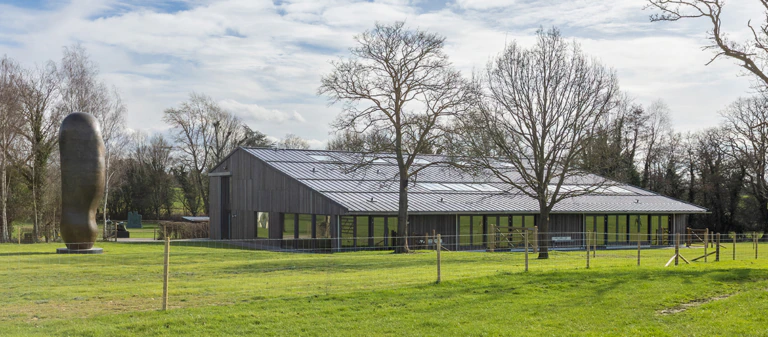
In a £14m joint project between the city and the county, with 50% HLF funding, the old Beaney has been beautifully refurbished. A large new extension at the back houses the library, further gallery and exhibition space, a tourist information centre and a cafe.
The cooperative partnership between two local authorities in creating the new Beaney is something of a miracle in itself at a grim time of financial cutbacks by councils when libraries and museums are often at the bottom of local authority priorities. I don’t know how the revenue costs are split between Kent and Canterbury but to the user the partnership is seamless.
Although the library and museum occupy separate parts of the building, the helpful frontline staff all have the same uniform of bright green T-shirts with Ask Me printed on the back.
It’s a very comfortable environment that will no doubt continue to be a popular drop-in space in the centre of town for the local community.
The Beaney also seems to have managed what the Museums, Libraries and Archives Council never achieved for the sector, to get a museum and library working effectively together, a logical but increasingly rare phenomenon these days.
“Cows” Cooper
The refurbished Beaney has opened with a lively programme of events, activities and temporary exhibitions, starting with an arts council touring show of sculptor Henry Moore.
The problem is the Beaney’s existing collections. These date back to the Canterbury Philosophical and Literary Institution’s early 19th-century cabinet of curiosities, which was acquired by the corporation in 1846.
It is that familiar mixture of geology, natural history, Grand Tour antiquities and anthropological curios brought back by world explorers and travellers. Most of it has little or nothing to do with Canterbury or even Kent, and there is no logic to give the collection any coherence.
The curators have turned this bizarre variety to advantage by putting contrasting material together in engaging ways that encourages you to look closely at individual objects.
This approach is a bit hit and miss because some of the material is fascinating but a lot of it has that junky “old curiosity shop” feel and doesn’t really seem to merit such high-class display conditions. It looks good but I’m not sure that this is the best approach for what will presumably become semi-permanent displays.
There is sometimes a fine line between innovative, imaginative reinterpretation and making the most of frankly mediocre material that might be better left in store.
This is particularly true of the museum’s own art collections, which are a mixed bag. If you enter the Beaney through the old front door from the high street , the first gallery you come to is the Garden Room, which has been entirely given over to a display of locally born Thomas Sidney Cooper’s animal paintings, promoted here as of “national importance”.
You may not have heard of him, but “Cows” Cooper was the leading Victorian cattle painter, who became very wealthy through this rather bizarre niche collectors’ market and was a generous benefactor of the city, establishing the local art school.
This is an interesting local story, but three cow paintings go a long way for me and don’t deserve pride of place in the front gallery. Time for a cattle cull, I think.
I don’t want to be too hard on the Beaney because the renovated building and new displays really are outstanding. It’s just that attention has been lavished on Canterbury’s weakest collections, while the city’s other museums are still languishing in comparative neglect.
Proximity to London
Two minutes’ walk from the Beaney, in a much more important medieval building, is the Canterbury Heritage Museum, which tells the story of the city.
The collections are great, spanning 10 centuries from Becket to Bagpuss, and even include the early Invicta steam locomotive from the 1830s squeezed inappropriately into a back room. This is really important stuff, but it’s poorly presented, with hessian displays that look as though they remember the 1970s.
I wish the Beaney every success, but I really hope that Canterbury will move on to improve its other historic gems. Now that the city is only an hour from London on the Javelin trains it needs to raise its game.
Oliver Green is a research fellow at the London Transport Museum
It has a wonderful ring of Ruskin about it but sounds suitably cool and retro at the same time. Forget those other sad attempts to get away from calling something a museum or a library.
Thinktank has to explain itself with the subtitle Birmingham Science Museum and, let’s face it, those supposedly radical Idea Stores in Tower Hamlets, east London, are really just new local libraries.
The Beaney is actually an art museum and library in a refurbished and extended building, but its full new title does have a echo of quality to it, which sounds intriguing. The others are just so last century.
Something different
Having said that, the Beaney does rather lay it on with a trowel from the start. The Highlights guide describes it self-importantly as “a major contribution towards the development of the cultural offering in East Kent”.
We are then told that its ethos is to “enable people to explore, learn, participate and create using the permanent collections, special exhibitions, community engagement programmes and educational activities as inspiration”.
You can’t argue with that, standard stuff from any Heritage Lottery Fund (HLF) application really, but what does the Beaney offer that makes it stand out as different?
The first thing is the building, right on the high street in the heart of the city. It is definitely not “Canterbury’s architectural gem” as the guidebook suggests (isn’t there an old cathedral somewhere in town?) but it is a great late-Victorian stylistic mash-up, designed by the city surveyor in the 1890s.
New partnership
It was originally called the Beaney Institute, funded through a substantial bequest to the corporation from former resident James George Beaney, who had made good as a surgeon after emigrating to Australia. From day one, the Beaney housed the city’s disparate museum collections and a free public library.
In a £14m joint project between the city and the county, with 50% HLF funding, the old Beaney has been beautifully refurbished. A large new extension at the back houses the library, further gallery and exhibition space, a tourist information centre and a cafe.
The cooperative partnership between two local authorities in creating the new Beaney is something of a miracle in itself at a grim time of financial cutbacks by councils when libraries and museums are often at the bottom of local authority priorities. I don’t know how the revenue costs are split between Kent and Canterbury but to the user the partnership is seamless.
Although the library and museum occupy separate parts of the building, the helpful frontline staff all have the same uniform of bright green T-shirts with Ask Me printed on the back.
It’s a very comfortable environment that will no doubt continue to be a popular drop-in space in the centre of town for the local community.
The Beaney also seems to have managed what the Museums, Libraries and Archives Council never achieved for the sector, to get a museum and library working effectively together, a logical but increasingly rare phenomenon these days.
“Cows” Cooper
The refurbished Beaney has opened with a lively programme of events, activities and temporary exhibitions, starting with an arts council touring show of sculptor Henry Moore.
The problem is the Beaney’s existing collections. These date back to the Canterbury Philosophical and Literary Institution’s early 19th-century cabinet of curiosities, which was acquired by the corporation in 1846.
It is that familiar mixture of geology, natural history, Grand Tour antiquities and anthropological curios brought back by world explorers and travellers. Most of it has little or nothing to do with Canterbury or even Kent, and there is no logic to give the collection any coherence.
The curators have turned this bizarre variety to advantage by putting contrasting material together in engaging ways that encourages you to look closely at individual objects.
This approach is a bit hit and miss because some of the material is fascinating but a lot of it has that junky “old curiosity shop” feel and doesn’t really seem to merit such high-class display conditions. It looks good but I’m not sure that this is the best approach for what will presumably become semi-permanent displays.
There is sometimes a fine line between innovative, imaginative reinterpretation and making the most of frankly mediocre material that might be better left in store.
This is particularly true of the museum’s own art collections, which are a mixed bag. If you enter the Beaney through the old front door from the high street , the first gallery you come to is the Garden Room, which has been entirely given over to a display of locally born Thomas Sidney Cooper’s animal paintings, promoted here as of “national importance”.
You may not have heard of him, but “Cows” Cooper was the leading Victorian cattle painter, who became very wealthy through this rather bizarre niche collectors’ market and was a generous benefactor of the city, establishing the local art school.
This is an interesting local story, but three cow paintings go a long way for me and don’t deserve pride of place in the front gallery. Time for a cattle cull, I think.
I don’t want to be too hard on the Beaney because the renovated building and new displays really are outstanding. It’s just that attention has been lavished on Canterbury’s weakest collections, while the city’s other museums are still languishing in comparative neglect.
Proximity to London
Two minutes’ walk from the Beaney, in a much more important medieval building, is the Canterbury Heritage Museum, which tells the story of the city.
The collections are great, spanning 10 centuries from Becket to Bagpuss, and even include the early Invicta steam locomotive from the 1830s squeezed inappropriately into a back room. This is really important stuff, but it’s poorly presented, with hessian displays that look as though they remember the 1970s.
I wish the Beaney every success, but I really hope that Canterbury will move on to improve its other historic gems. Now that the city is only an hour from London on the Javelin trains it needs to raise its game.
Oliver Green is a research fellow at the London Transport Museum
Project data
- Cost £14m
- Funders Canterbury City Council £1.418m; Kent County Council £1.818m; Heritage Lottery Fund £7m; Homes and Communities Agency; European Union; Interreg; East Kent Partnership; Friends of Canterbury Museums
- Exhibition design Casson Mann
- Architects Sidell Gibson; John Miller and Partners
- Conservation architect Norman Change
- Management Faithful+Gould
- Main contractor Wates
- Services engineer Mott MacDonald
- Structural engineer Campbell Reith