There have always been tensions in the relationship between town and gown, which are often played out in university museums and galleries.
While they might be key to a higher education institution’s engagement with the public, they can, inadvertently, also highlight the differences between the concerns of specialist teaching collections and researchers, and the public’s need for explanation and engagement.
The Museum of Archaeology and Anthropology, University of Cambridge (or MAA, as it styles itself ), is an interesting example of how such stresses play out in practice.
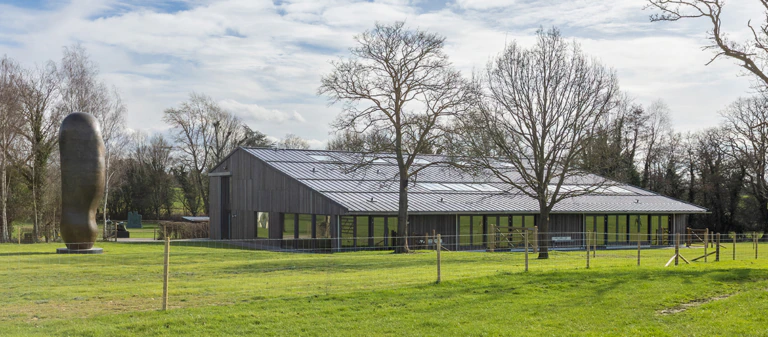
The museum reopened in May, following an 18-month closure and a £1.8m refit. The refurbished, and very beautiful, ground floor space is now known as the Li Ka Shing Gallery after its major benefactor, a patron of the university.
The redevelopment features a new temporary exhibition space, a new reception area, and, after 127 years, a new front door that opens onto Downing Street and “the rest of the world outside the university”.
Public access
But although the museum is physically more accessible than ever, it takes more to engage with the public than that.
The Higher Education Funding Council for England’s (Hefce) 2010 review of its museum and gallery funding identified that the MAA’s services to the wider research community and its support of teaching and learning within higher education were among its strengths.
But the institution fell down in its delivery of the broader government objectives of increasing public access to the wider community, promoting lifelong learning and social cohesion.
It wasn’t just Hefce that picked up on this. The director, Nicholas Thomas, is on record as wanting to open up the museum’s vast collection, and create the city’s first proper “museum of Cambridge”.
Arts Council England also requires its major partner museums to make sure that they are being used to “maximum public benefit” – “reaching more and more people, including children and young people, through quality engaging experiences”.
So, one way or another, MAA, has been tasked with becoming more public facing. Its collections are world-class, vast and global.
But given its limitations of space, what kind of choices has it made about its displays? The objects on show were apparently selected on the basis of the knowledge they contain and the secrets they reveal.
According to the interpretation, objects can tell several stories; they reveal the creativity of the world’s peoples; they allow the viewer to enter into a relationship with those who made them, as well as those who found them; and that making things is what makes us human. It’s all very Neil MacGregor, and it makes for a captivating visitor experience.
The sheer breadth and diversity of the collection presumably determined that there would be a critical mass of small displays on different subjects. One wonders if there could have been an underlying and unifying narrative. But, maybe that’s tantamount to asking for the answer to life, the universe and everything.
There’s an overwhelming sense of the Li Ka Shing Gallery having been done by the book. The shop is near the front door in order to maximise retail opportunities; the environment is light and bright; there is some contemporary art; and a deconstruction of collecting and the characteristics of collections. The museum ticks every box.
Some aspects of the installation are terrific. Titles, descriptions and explanations are clear and elegant, and rhetorical flourishes ensure that you pay attention. But, there’s a thin line between MAA’s eloquent mastery of its subjects, and the conspicuously self-referential nature of its displays.
Many of these concentrate on the history of the collection itself: Gifts & Discoveries, for example, describes how some of the museum’s highlights were brought to Cambridge by travellers and scientists, many of whom were university employees.
Other displays reflect the museum associates’ own research agendas – artefacts from MAA’s Sami collections, and objects from Captain Cook’s voyages. Even a questionnaire about the upstairs archaeology gallery is cast as a research project, rather than a public consultation.
Visitors are informed that the space in question “...is an introduction to a gallery that has yet to be created”. The survey places you – the consultee – right in the hands of the curatorial research fellow, who has “a particular interest in the exhibition as experiment, and the museum as a research site”.
All this might be exactly what you’d expect of a museum whose staff are academics, researchers and members of a university department of archaeology and anthropology. But to your average punter, there’s a downside that is manifest in the tone with which it’s all delivered – authoritative, assured and condescending.
Disconnected
Quite how it planned to accommodate the public appears to have been a problem. The museum is marketing itself on the basis of what feels like the lowest common denominator.
It describes its treasures as: the “biggest” object (a Haida totem pole); the “most mysterious” object (one of Captain Cook’s curiosities); the “oldest” (a 1.8-million-year-old stone chopping tool from Tanzania); and the “rudest” (a Colchester-ware beaker decorated with a chariot race, in which the chariots, driven by naked women are pulled by penises); and the “rarest” (a wooden and mother of pearl snakes and ladders board, from India).
Something about it feels disconnected. It’s as if the public is merely there to be contended with. The museum opens from Tuesday to Saturday, 10:30am–4:30pm, and it’s closed on Sundays. These are prohibitive hours for encouraging public access. I wonder if the visiting times had been determined by historic work practices.
The museum also functions as a corridor – several staff simply walked in through one door and straight out through another. As a visitor, you inevitably catch glimpses of where they came from, and where they went to.
The Natural History Museum deliberately chose to reveal its scientists at work inside the Darwin Centre in order to reinforce the close relationship it wanted to engender between the museum, its research and its visitors. The MAA has succeeded in doing the opposite.
Sara Selwood is an independent museum consultant
While they might be key to a higher education institution’s engagement with the public, they can, inadvertently, also highlight the differences between the concerns of specialist teaching collections and researchers, and the public’s need for explanation and engagement.
The Museum of Archaeology and Anthropology, University of Cambridge (or MAA, as it styles itself ), is an interesting example of how such stresses play out in practice.
The museum reopened in May, following an 18-month closure and a £1.8m refit. The refurbished, and very beautiful, ground floor space is now known as the Li Ka Shing Gallery after its major benefactor, a patron of the university.
The redevelopment features a new temporary exhibition space, a new reception area, and, after 127 years, a new front door that opens onto Downing Street and “the rest of the world outside the university”.
Public access
But although the museum is physically more accessible than ever, it takes more to engage with the public than that.
The Higher Education Funding Council for England’s (Hefce) 2010 review of its museum and gallery funding identified that the MAA’s services to the wider research community and its support of teaching and learning within higher education were among its strengths.
But the institution fell down in its delivery of the broader government objectives of increasing public access to the wider community, promoting lifelong learning and social cohesion.
It wasn’t just Hefce that picked up on this. The director, Nicholas Thomas, is on record as wanting to open up the museum’s vast collection, and create the city’s first proper “museum of Cambridge”.
Arts Council England also requires its major partner museums to make sure that they are being used to “maximum public benefit” – “reaching more and more people, including children and young people, through quality engaging experiences”.
So, one way or another, MAA, has been tasked with becoming more public facing. Its collections are world-class, vast and global.
But given its limitations of space, what kind of choices has it made about its displays? The objects on show were apparently selected on the basis of the knowledge they contain and the secrets they reveal.
According to the interpretation, objects can tell several stories; they reveal the creativity of the world’s peoples; they allow the viewer to enter into a relationship with those who made them, as well as those who found them; and that making things is what makes us human. It’s all very Neil MacGregor, and it makes for a captivating visitor experience.
The sheer breadth and diversity of the collection presumably determined that there would be a critical mass of small displays on different subjects. One wonders if there could have been an underlying and unifying narrative. But, maybe that’s tantamount to asking for the answer to life, the universe and everything.
There’s an overwhelming sense of the Li Ka Shing Gallery having been done by the book. The shop is near the front door in order to maximise retail opportunities; the environment is light and bright; there is some contemporary art; and a deconstruction of collecting and the characteristics of collections. The museum ticks every box.
Some aspects of the installation are terrific. Titles, descriptions and explanations are clear and elegant, and rhetorical flourishes ensure that you pay attention. But, there’s a thin line between MAA’s eloquent mastery of its subjects, and the conspicuously self-referential nature of its displays.
Many of these concentrate on the history of the collection itself: Gifts & Discoveries, for example, describes how some of the museum’s highlights were brought to Cambridge by travellers and scientists, many of whom were university employees.
Other displays reflect the museum associates’ own research agendas – artefacts from MAA’s Sami collections, and objects from Captain Cook’s voyages. Even a questionnaire about the upstairs archaeology gallery is cast as a research project, rather than a public consultation.
Visitors are informed that the space in question “...is an introduction to a gallery that has yet to be created”. The survey places you – the consultee – right in the hands of the curatorial research fellow, who has “a particular interest in the exhibition as experiment, and the museum as a research site”.
All this might be exactly what you’d expect of a museum whose staff are academics, researchers and members of a university department of archaeology and anthropology. But to your average punter, there’s a downside that is manifest in the tone with which it’s all delivered – authoritative, assured and condescending.
Disconnected
Quite how it planned to accommodate the public appears to have been a problem. The museum is marketing itself on the basis of what feels like the lowest common denominator.
It describes its treasures as: the “biggest” object (a Haida totem pole); the “most mysterious” object (one of Captain Cook’s curiosities); the “oldest” (a 1.8-million-year-old stone chopping tool from Tanzania); and the “rudest” (a Colchester-ware beaker decorated with a chariot race, in which the chariots, driven by naked women are pulled by penises); and the “rarest” (a wooden and mother of pearl snakes and ladders board, from India).
Something about it feels disconnected. It’s as if the public is merely there to be contended with. The museum opens from Tuesday to Saturday, 10:30am–4:30pm, and it’s closed on Sundays. These are prohibitive hours for encouraging public access. I wonder if the visiting times had been determined by historic work practices.
The museum also functions as a corridor – several staff simply walked in through one door and straight out through another. As a visitor, you inevitably catch glimpses of where they came from, and where they went to.
The Natural History Museum deliberately chose to reveal its scientists at work inside the Darwin Centre in order to reinforce the close relationship it wanted to engender between the museum, its research and its visitors. The MAA has succeeded in doing the opposite.
Sara Selwood is an independent museum consultant
Project data
- Cost £1.8m
- Main funders DCMS Wolfson Fund; Li Ka Shing Foundation
- Exhibition design At Large
- Display cases ClickNetherfield