Returning to Taunton after a gap of some years, I was unprepared for the dramatic transformation that has followed a £6.9m refurbishment of the Museum of Somerset.
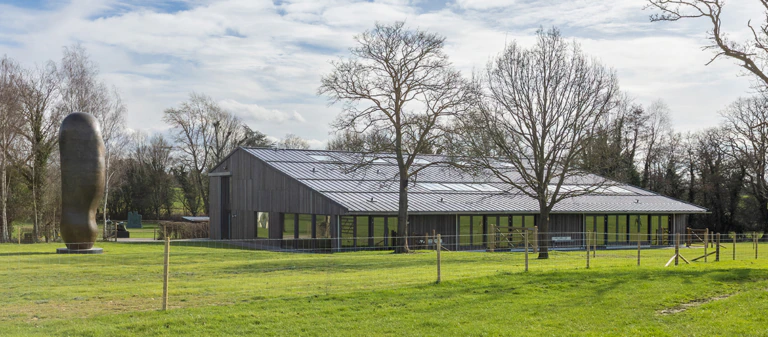
This makeover has clearly extended well beyond the walls of Taunton Castle, where the museum is housed, with landscaping in the courtyard and an airy modern entrance and shop providing visitors with a much better sense of arrival than before.
The exhibition unfolds through galleries and rooms grouped around two floors of the castle. Creating a modern museum within a medieval building must have provided the architects and designers with many difficult challenges, but they have succeeded in inserting the kind of new displays and physical access visitors now expect, while also preserving and enhancing the architecture of the castle.
The exhibitions are arranged chronologically, although visitors are not plunged immediately into the story after stepping into what was the old great hall. Instead, they are faced by a magnificent art installation.
In a tranquil golden light, an enormous tree sculpture, carved from an oak felled in the Quantock Hills, features carvings of animals, fossils, people and stories from the museum.
Ghostly Romans
The museum proper begins beyond the shadows cast by the tree in a space featuring displays on two floors, with a mezzanine running around the outside. On both levels, six large showcases dominate, their architectural proportions making them seem like they are part of the new structure itself.
Foundation Stones begins with a dazzling display of fossils and geological specimens. As visitors make their way down the gallery they move ever nearer the geological present, with each case highlighting a particular part of the story.
The quality and variety of material on display is matched by some of the imaginative ways in which it is interpreted. Visitors are able to touch large fossils at the start of the gallery, and when I visited they were also captivated by the plesiosaur displayed in a pit in the gallery floor.
Mezzanine-level displays tell the story of the earliest Somerset people, from neolithic to Roman times. But before leaving the ground floor, visitors pass a stunning Roman mosaic.
In the old museum this was displayed vertically, so while its new position is out of chronological sequence, it is now shown properly, with ghostly, almost holographic, video projections of Roman people bringing it to life.
The same arrangement of large cases is repeated on the first floor, with each one chronicling an era in the early history of the county. The quality of the collections shines through, once again.
It is noticeable that, throughout the museum, displays generally feature only minimal video and interactive content – the strength of material makes them seem superfluous for the most part.
The rich archaeology of the county has resulted in some amazing discoveries, many of them shown in the displays. The cases are crammed with these treasures and brought to life by illustrations from artist Victor Ambrus and well-written text.
It is a shame that the size of some of the text labels makes them difficult to read, a particular problem when they are placed at the bottom of the cases in subdued light.
The Making Somerset gallery that follows takes the story forward into the Anglo-Saxon period. It begins with a dramatic display of cauldrons and pots hanging from the ceiling – a nearby label notes the museum has “the largest collection of English cauldrons and skillets in existence”.
The main focus of the gallery is role of Christianity in the county, both in terms of its parish churches and monastic past. The lighting in this gallery, as it is in the rest of the museum, is simply stunning, highlighting the extraordinary variety of objects that are on display.
Bloody Assizes
Close by, in a well-proportioned circular tower room, is a space titled Reflecting. Around the walls are the thoughts of writers and poets such as Coleridge, Steinbeck and Thackeray as well as musicians and bands such as Joe Strummer and the Wurzels.
Although the space was, I guess, intended for quiet contemplation, I thought it might have benefited from some audio to provide some variety. I overheard a visitor saying that the museum was like a Tardis as you continue to find new rooms and galleries.
Downstairs, the old Adam Library contains a New Horizons display, showing ethnographic material acquired by the museum from collectors and explorers.
Further on, displays also tell the story of transport in the county, including some evocative postcards and souvenirs from resorts such as Weston-Super-Mare.
The Somerset Military museum, in an upstairs gallery, has also been completely redisplayed and provides a thoughtful and evocative portrait of Somerset regiments and their history in a relatively modest space.
Somerset was the scene of much bloodshed in the 17th century when key battles in the civil war and the Monmouth rebellion were played out nearby. Local people were imprisoned in the castle in July 1685 following the rebellion and put on trial at the infamous Bloody Assizes, presided over by Judge Jeffreys.
Displays describing this gruesome episode are housed in a space where prisoners were held before trial, adding to the sombre atmosphere.
The rebellion display brings a low-key end to the exhibitions although there is a further video installation, Speaking Your Mind, where local people give their views about the county they live in.
If there is a weakness to the well thought-out exhibitions, it is that the relatively modern history of the county is generally only dealt with superficially, although given the reaction of visitors to the museum on the day I visited, this may be a minor quibble.
The museum has a photographic exhibition telling the story of the museum redevelopment project and the images shown feature workers who helped rebuild the castle and the new exhibitions.
I could not find a picture of the museum team itself, which is a pity, since they deserve a huge amount of praise for creating such a magnificent new museum that showcases both the collection and the historic building that houses it.
Tim Bryan is the head of collections and interpretation at the Heritage Motor Centre in Gaydon
This makeover has clearly extended well beyond the walls of Taunton Castle, where the museum is housed, with landscaping in the courtyard and an airy modern entrance and shop providing visitors with a much better sense of arrival than before.
The exhibition unfolds through galleries and rooms grouped around two floors of the castle. Creating a modern museum within a medieval building must have provided the architects and designers with many difficult challenges, but they have succeeded in inserting the kind of new displays and physical access visitors now expect, while also preserving and enhancing the architecture of the castle.
The exhibitions are arranged chronologically, although visitors are not plunged immediately into the story after stepping into what was the old great hall. Instead, they are faced by a magnificent art installation.
In a tranquil golden light, an enormous tree sculpture, carved from an oak felled in the Quantock Hills, features carvings of animals, fossils, people and stories from the museum.
Ghostly Romans
The museum proper begins beyond the shadows cast by the tree in a space featuring displays on two floors, with a mezzanine running around the outside. On both levels, six large showcases dominate, their architectural proportions making them seem like they are part of the new structure itself.
Foundation Stones begins with a dazzling display of fossils and geological specimens. As visitors make their way down the gallery they move ever nearer the geological present, with each case highlighting a particular part of the story.
The quality and variety of material on display is matched by some of the imaginative ways in which it is interpreted. Visitors are able to touch large fossils at the start of the gallery, and when I visited they were also captivated by the plesiosaur displayed in a pit in the gallery floor.
Mezzanine-level displays tell the story of the earliest Somerset people, from neolithic to Roman times. But before leaving the ground floor, visitors pass a stunning Roman mosaic.
In the old museum this was displayed vertically, so while its new position is out of chronological sequence, it is now shown properly, with ghostly, almost holographic, video projections of Roman people bringing it to life.
The same arrangement of large cases is repeated on the first floor, with each one chronicling an era in the early history of the county. The quality of the collections shines through, once again.
It is noticeable that, throughout the museum, displays generally feature only minimal video and interactive content – the strength of material makes them seem superfluous for the most part.
The rich archaeology of the county has resulted in some amazing discoveries, many of them shown in the displays. The cases are crammed with these treasures and brought to life by illustrations from artist Victor Ambrus and well-written text.
It is a shame that the size of some of the text labels makes them difficult to read, a particular problem when they are placed at the bottom of the cases in subdued light.
The Making Somerset gallery that follows takes the story forward into the Anglo-Saxon period. It begins with a dramatic display of cauldrons and pots hanging from the ceiling – a nearby label notes the museum has “the largest collection of English cauldrons and skillets in existence”.
The main focus of the gallery is role of Christianity in the county, both in terms of its parish churches and monastic past. The lighting in this gallery, as it is in the rest of the museum, is simply stunning, highlighting the extraordinary variety of objects that are on display.
Bloody Assizes
Close by, in a well-proportioned circular tower room, is a space titled Reflecting. Around the walls are the thoughts of writers and poets such as Coleridge, Steinbeck and Thackeray as well as musicians and bands such as Joe Strummer and the Wurzels.
Although the space was, I guess, intended for quiet contemplation, I thought it might have benefited from some audio to provide some variety. I overheard a visitor saying that the museum was like a Tardis as you continue to find new rooms and galleries.
Downstairs, the old Adam Library contains a New Horizons display, showing ethnographic material acquired by the museum from collectors and explorers.
Further on, displays also tell the story of transport in the county, including some evocative postcards and souvenirs from resorts such as Weston-Super-Mare.
The Somerset Military museum, in an upstairs gallery, has also been completely redisplayed and provides a thoughtful and evocative portrait of Somerset regiments and their history in a relatively modest space.
Somerset was the scene of much bloodshed in the 17th century when key battles in the civil war and the Monmouth rebellion were played out nearby. Local people were imprisoned in the castle in July 1685 following the rebellion and put on trial at the infamous Bloody Assizes, presided over by Judge Jeffreys.
Displays describing this gruesome episode are housed in a space where prisoners were held before trial, adding to the sombre atmosphere.
The rebellion display brings a low-key end to the exhibitions although there is a further video installation, Speaking Your Mind, where local people give their views about the county they live in.
If there is a weakness to the well thought-out exhibitions, it is that the relatively modern history of the county is generally only dealt with superficially, although given the reaction of visitors to the museum on the day I visited, this may be a minor quibble.
The museum has a photographic exhibition telling the story of the museum redevelopment project and the images shown feature workers who helped rebuild the castle and the new exhibitions.
I could not find a picture of the museum team itself, which is a pity, since they deserve a huge amount of praise for creating such a magnificent new museum that showcases both the collection and the historic building that houses it.
Tim Bryan is the head of collections and interpretation at the Heritage Motor Centre in Gaydon
Project data
- Cost £6.9m
- Main funder Heritage Lottery Fund £4.8m
- Architect and lead consultant Feilden Clegg Bradley Studios
- Exhibition design Event Communications
- Engineer King Shaw
- Quantity surveyor PGP
- Main build contractor HW Pollard & Son
- Main fit-out contractor The Hub
- Display cases Reier
- Lighting consultants Hoare Lea; Full-On Lighting
- AV software Elbow
- AV hardware Sysco
- Graphics BAF
- Mountmaker Museum Workshop
- Tree sculpture Simon O’Rourkea