Editor's note
04.11.2011
This review does not include the new development at Fort Nelson. There will be a full review of all the new galleries in a forthcoming issue of Museums Journal
The two “superguns” did it for me. One was a five-metre long, 15th-century Ottoman bombard (siege cannon), the other a prototype for the Iraqi supergun, sitting opposite each other in a temporary tented gallery.
Such bombards played a crucial role in the Ottoman empire’s capture of Constantinople in 1453. Gerald Bull’s supergun narrowly missed playing an equally dramatic role in the first gulf war.
Separated by more than five centuries, these two pieces bookend the Royal Armouries’ impressive collection of artillery displayed in this Victorian defensive redoubt above the Hampshire coast.
As examples of a certain, perhaps regrettable, variety of human ingenuity, they pushed the boundaries of what was technically possible in the period in which they were made. Both weapons were invested with considerable significance.
Their fearsome reputations were such that they did not need to be fired to have an impact. They kept secrets that were only partly understood by those who operated them.
Whether this power was reflected in tabloid exposés of arms to Iraq or the script of a prayer cast in the bronze of the bombard itself, it is clear that there is much more going on here than engineering.
In the early days of artillery, those who founded and operated such weapons were popularly endowed with disturbing, almost divine, powers to create objects that had a life, and often a name, of their own.
Like humans, bombards, sakers, coehorns and similar types of weapons were fickle – fully capable of blowing up in your face, even if treated with respect.
Many of the early Portuguese and Spanish cannon on display at Fort Nelson were cast complete with small images of the Virgin Mary, or with the name of the saint after which they were named.
Fort Nelson is one of a network of fortresses erected in the 1860s when prime minister Palmerston and many others feared a French invasion. Seven forts and redoubts were built on Portsdown Hill on the Hampshire coast.
Although some of the others are open for special events, Fort Nelson is the only one fully accessible to the public, and the only one to hold regular firing displays.
It was intended to protect the strategically important port of Portsmouth from inland attack in the event that the French succeeded in landing elsewhere and marched on the port. The collapse of the French Second Empire in the Franco-Prussian War eliminated the French threat.
Indeed, Napoleon III and his wife Empress Eugénie were forced to seek asylum in Hampshire, where they remain to this day, entombed at Farnborough.
Fort routine
Fort Nelson never saw action, therefore, and was redundant within decades. In the 20th century it fell into disrepair. It was restored by Hampshire County Council in the early 1990s and became a branch of the Royal Armouries in 1995.
At present, its displays do a poor job of explaining when it was built (1869), and how it relates to the surrounding landscape and its sister forts. The fort is built into the top of the hill, and its deliberately low profile has the odd effect of making it hard to appreciate how well-positioned it is.
There is only one opportunity to climb up onto the wind-swept ramparts and admire the view. There is more to see underground as the whole fort is bisected by a deep tunnel that leads from the barracks through the powder magazine and on to the mortar gallery and a caponier.
This is a feature that permitted the fort’s garrison to survey and fire into the main defensive ditch. Near the entrance, visitors can visit the Redan, a complex of buildings which housed the officers’ mess, hospital, kitchens and sleeping accommodation.
A kitchen and a set of sleeping quarters were open during my visit, the latter thoughtfully furnished with Victorian uniforms and personal effects, accompanied by an audio of a typical garrison soldier’s letter describing fort routine.
This room gives a flavour of what must have been a monotonous life, with little but the occasional drill (usually performed without any actual firing, or even gunpowder) to mark the days by.
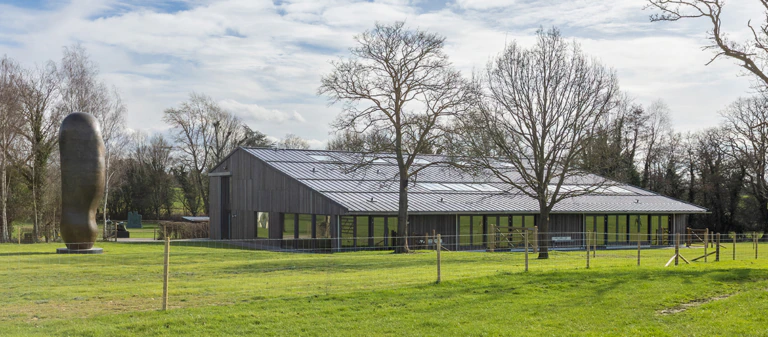
There are plans to open up more of the Redan and a visitors’ centre is under construction outside. Presumably the latter will feature a proper model and other displays explaining the fort’s origins, construction and purpose.
The fort itself is of considerable interest, but the Royal Armouries’ collections are the main attraction. To some extent the fort and the collections overlap, as some of the armament on display was deployed there.
But the collections include siege, field, mountain, antiaircraft and antitank artillery from an equally wide range of armed forces: primarily British, but also French, Italian, German, Chinese, Indian and Russian. For those interested in military history, the collection and the labels mounted next to the pieces have much to offer.
Apart from a display on the evolution of rifling between 1869 and 1880, there were none of those poorly formatted, dense labels that can be seen in many military museums, and visitors are not bombarded with information.
Off the mark
Fort Nelson brands itself as the branch of the Royal Armouries dedicated to artillery. It is clearly going to be a draw for military history buffs, and the curators can perhaps be excused for pitching the museum at their level.
But basic terms such as muzzle, breech and rifling are not explained, and a visitor ignorant of their meaning would struggle to make sense of much of the commentary without them. As a son of a British army officer, I was well-schooled in this argot, though I confess I was defeated by the discussion of rifling.
For those visitors who escaped national service, “the Woolwich groove” will be more redolent of dubstep music than a method of rifling a cannon. And the What is Artillery? gallery fails to answer the question it poses. Ordinary visitors would surely appreciate something more by way of an introduction.
Funding delays and other difficulties mean that the displays are still not as the curators would wish. But with a bit more imagination, it should be possible to connect all visitors with these extraordinary objects: not only as specimens of this or that “class” or “mark” of weapon, but as one-offs with a fascinating provenance.
Some of the pieces on display at Fort Nelson didn’t have just one life, they had several: forged, fired, captured, rebored, turned on their makers, taken as booty, collected and displayed in a variety of contexts. They all have mouths, but these cannon need a bit more help to tell their stories.
Jonathan Conlin teaches history at the University of Southampton
04.11.2011
This review does not include the new development at Fort Nelson. There will be a full review of all the new galleries in a forthcoming issue of Museums Journal
The two “superguns” did it for me. One was a five-metre long, 15th-century Ottoman bombard (siege cannon), the other a prototype for the Iraqi supergun, sitting opposite each other in a temporary tented gallery.
Such bombards played a crucial role in the Ottoman empire’s capture of Constantinople in 1453. Gerald Bull’s supergun narrowly missed playing an equally dramatic role in the first gulf war.
Separated by more than five centuries, these two pieces bookend the Royal Armouries’ impressive collection of artillery displayed in this Victorian defensive redoubt above the Hampshire coast.
As examples of a certain, perhaps regrettable, variety of human ingenuity, they pushed the boundaries of what was technically possible in the period in which they were made. Both weapons were invested with considerable significance.
Their fearsome reputations were such that they did not need to be fired to have an impact. They kept secrets that were only partly understood by those who operated them.
Whether this power was reflected in tabloid exposés of arms to Iraq or the script of a prayer cast in the bronze of the bombard itself, it is clear that there is much more going on here than engineering.
In the early days of artillery, those who founded and operated such weapons were popularly endowed with disturbing, almost divine, powers to create objects that had a life, and often a name, of their own.
Like humans, bombards, sakers, coehorns and similar types of weapons were fickle – fully capable of blowing up in your face, even if treated with respect.
Many of the early Portuguese and Spanish cannon on display at Fort Nelson were cast complete with small images of the Virgin Mary, or with the name of the saint after which they were named.
Fort Nelson is one of a network of fortresses erected in the 1860s when prime minister Palmerston and many others feared a French invasion. Seven forts and redoubts were built on Portsdown Hill on the Hampshire coast.
Although some of the others are open for special events, Fort Nelson is the only one fully accessible to the public, and the only one to hold regular firing displays.
It was intended to protect the strategically important port of Portsmouth from inland attack in the event that the French succeeded in landing elsewhere and marched on the port. The collapse of the French Second Empire in the Franco-Prussian War eliminated the French threat.
Indeed, Napoleon III and his wife Empress Eugénie were forced to seek asylum in Hampshire, where they remain to this day, entombed at Farnborough.
Fort routine
Fort Nelson never saw action, therefore, and was redundant within decades. In the 20th century it fell into disrepair. It was restored by Hampshire County Council in the early 1990s and became a branch of the Royal Armouries in 1995.
At present, its displays do a poor job of explaining when it was built (1869), and how it relates to the surrounding landscape and its sister forts. The fort is built into the top of the hill, and its deliberately low profile has the odd effect of making it hard to appreciate how well-positioned it is.
There is only one opportunity to climb up onto the wind-swept ramparts and admire the view. There is more to see underground as the whole fort is bisected by a deep tunnel that leads from the barracks through the powder magazine and on to the mortar gallery and a caponier.
This is a feature that permitted the fort’s garrison to survey and fire into the main defensive ditch. Near the entrance, visitors can visit the Redan, a complex of buildings which housed the officers’ mess, hospital, kitchens and sleeping accommodation.
A kitchen and a set of sleeping quarters were open during my visit, the latter thoughtfully furnished with Victorian uniforms and personal effects, accompanied by an audio of a typical garrison soldier’s letter describing fort routine.
This room gives a flavour of what must have been a monotonous life, with little but the occasional drill (usually performed without any actual firing, or even gunpowder) to mark the days by.
There are plans to open up more of the Redan and a visitors’ centre is under construction outside. Presumably the latter will feature a proper model and other displays explaining the fort’s origins, construction and purpose.
The fort itself is of considerable interest, but the Royal Armouries’ collections are the main attraction. To some extent the fort and the collections overlap, as some of the armament on display was deployed there.
But the collections include siege, field, mountain, antiaircraft and antitank artillery from an equally wide range of armed forces: primarily British, but also French, Italian, German, Chinese, Indian and Russian. For those interested in military history, the collection and the labels mounted next to the pieces have much to offer.
Apart from a display on the evolution of rifling between 1869 and 1880, there were none of those poorly formatted, dense labels that can be seen in many military museums, and visitors are not bombarded with information.
Off the mark
Fort Nelson brands itself as the branch of the Royal Armouries dedicated to artillery. It is clearly going to be a draw for military history buffs, and the curators can perhaps be excused for pitching the museum at their level.
But basic terms such as muzzle, breech and rifling are not explained, and a visitor ignorant of their meaning would struggle to make sense of much of the commentary without them. As a son of a British army officer, I was well-schooled in this argot, though I confess I was defeated by the discussion of rifling.
For those visitors who escaped national service, “the Woolwich groove” will be more redolent of dubstep music than a method of rifling a cannon. And the What is Artillery? gallery fails to answer the question it poses. Ordinary visitors would surely appreciate something more by way of an introduction.
Funding delays and other difficulties mean that the displays are still not as the curators would wish. But with a bit more imagination, it should be possible to connect all visitors with these extraordinary objects: not only as specimens of this or that “class” or “mark” of weapon, but as one-offs with a fascinating provenance.
Some of the pieces on display at Fort Nelson didn’t have just one life, they had several: forged, fired, captured, rebored, turned on their makers, taken as booty, collected and displayed in a variety of contexts. They all have mouths, but these cannon need a bit more help to tell their stories.
Jonathan Conlin teaches history at the University of Southampton