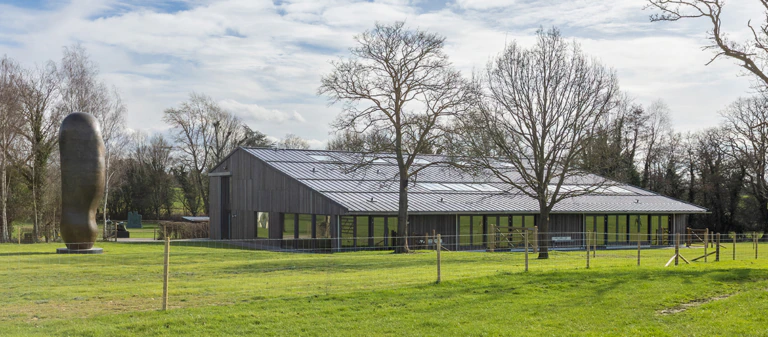
The Watts Gallery used to be free to enter and was in such a terrible state that it was officially an English Heritage Building at Risk. Now, £11m of capital expenditure later, it’s spick and span and tickets cost £7.50. Is it worth it?
Founded by the leading Victorian artist George Frederic Watts and the potter Mary Watts, the gallery opened in 1904, showcasing GF’s work and housing apprentice potters. Just up the lane is a remarkable chapel designed by Mary.
After Mary’s death in 1938 the gallery gradually fell asleep. It woke up when Richard Ormond, a former director of the National Maritime Museum, became chairman of the trustees and Perdita Hunt became director.
I first visited the Watts Gallery about five years ago to talk about its plan to sell works from the collection to increase the gallery’s endowment. That controversial proposal eventually led to changes to the Museums Association code of ethics to permit sale from collections in exceptional circumstances.
In particular, the income from the sale has to significantly increase long-term public benefit from the remaining collection. And that is exactly what the overall transformation of the Watts Gallery has achieved.
No longer a ramshackle collection of tumble-down buildings, the gallery is repaired and subtly altered, so that previously separate buildings are now linked together.
The collection is the centre of attention: cleaned, conserved, properly displayed and intelligently interpreted.
Elegant gallery guides
The collection is dominated by powerful oil paintings. In the main gallery spaces they are neatly displayed in gold frames on richly coloured walls, beneath a high gold ceiling.
But curator Mark Bills has skilfully avoided creating a ghastly Tim Clifford-style symmetrical heritage hang. The pictures are arranged by theme and the hang varies undogmatically.
Instead of individual labels next to each picture, information is provided in elegant hardback books, which illustrate each work in colour next to 100 or so words of text.
Visitors stroll round the gallery, book in hand, taking time to read, look, discuss and think, encouraged by friendly volunteer room guides. One of the nicest features of the gallery is the murmur of visitor conversation.
In other parts of the building, such as the temporary exhibition gallery (full of loans from Tate) and the gallery devoted to GF’s life, interpretation uses graphic panels and individual object labels.
They, too, are well written and informative, with an unpatronising seriousness of intent. A children’s guide is promised soon, but as yet there’s little for little ones apart from the collection itself, which, like most Victorian art, is fairly accessible.
Local community
The highlight is Physical Energy, a larger-than-life sculpture of a figure on a horse. Mounted on train tracks so Watts could work on it outdoors, it dominates the sculpture gallery. This space exemplifies the approach taken by architects ZMMA.
There has been plenty of careful conservation, but rather than slavishly recreate all aspects of the original, it has made modern interventions such as huge glass doors and a chic slightly polished concrete floor.
Elsewhere are modern balustrades and newly designed ceilings. The main bit of new build is hung all over with wood shingles and has a modish, almost brutalist, 1970s-retro wood-shuttered concrete chimney for the gallery’s new kiln, which is adjacent to the learning studio.
The Watts Gallery makes a pleasant, comfortable visit. A smart middle-class, middle-aged woman was dozing happily, lying full-length on a bench by the gallery entrance. The teashop was packed, staff struggling to cope with demand.
The gallery feels part of its local (posh) community, with its thousands of well-heeled friends and volunteers. Less lucky locals benefit from ambitious learning and outreach programmes, including ones for prisoners, reformed drug and alcohol users and rough sleepers.
The gallery has a trainee curator and works with City and Guilds to train conservators. It is currently organising sponsored swims to raise funds to support an apprentice potter.
Like many of the best museums with a nationally important collection, the Watts Gallery is both local and international, simultaneously serving schoolchildren and overseas scholars.
It’s also somehow urban and rural. Watts can be seen as a great modern urban artist, tackling themes such as child prostitution, homelessness and suicides in the Thames. He ended up living – and building his gallery – in the Surrey hills.
In the 21st century, the carefully managed countryside (the North Downs Way passes the gallery) contrasts with the constant whoosh of speeding traffic (the A3 is also close by).
Carbon concerns
Admirably, the gallery website bends over backwards to tell you all the different ways that you could get to the gallery apart from using a car. (It is done so well I was almost tempted to set off there on foot.)
Unfortunately, the packed car park of around 50 spaces, with overspill parking across the road, tells the truth about how most people travel to and through rural Surrey.
My concern about carbon emissions didn’t stop there. The gallery is stuffed with energy-hungry halogen lighting (why not LEDs?) and for some crackpot reason, allegedly to do with government indemnity, it’s got air-conditioning.
Given that the collection has survived for 100 years in damp, leaking, sometimes freezing conditions, that seems a tad unnecessary.
There’s a ground source heat pump, but the gallery might need to organise a lot more sponsored swims to pay for all the electricity.
I don’t know who recommended all the energy-hungry kit – but I do know that I’ve been to a few recently opened buildings supported by the Heritage Lottery Fund (HLF) that seem to use far more energy than before they were refurbished. This is in spite of HLF’s expressed desire for greener projects.
To end on a happier note, as the gallery was about to reopen, the Watts’s house, Limnerslease, came on the market, just over the road. The gallery is trying to buy it and open it. This would give visitors an even better experience of gallery, chapel and house.
I wish them well – as long as they don’t do any more to increase their energy consumption.
Maurice Davies is the head of policy and communication at the Museums Association
Founded by the leading Victorian artist George Frederic Watts and the potter Mary Watts, the gallery opened in 1904, showcasing GF’s work and housing apprentice potters. Just up the lane is a remarkable chapel designed by Mary.
After Mary’s death in 1938 the gallery gradually fell asleep. It woke up when Richard Ormond, a former director of the National Maritime Museum, became chairman of the trustees and Perdita Hunt became director.
I first visited the Watts Gallery about five years ago to talk about its plan to sell works from the collection to increase the gallery’s endowment. That controversial proposal eventually led to changes to the Museums Association code of ethics to permit sale from collections in exceptional circumstances.
In particular, the income from the sale has to significantly increase long-term public benefit from the remaining collection. And that is exactly what the overall transformation of the Watts Gallery has achieved.
No longer a ramshackle collection of tumble-down buildings, the gallery is repaired and subtly altered, so that previously separate buildings are now linked together.
The collection is the centre of attention: cleaned, conserved, properly displayed and intelligently interpreted.
Elegant gallery guides
The collection is dominated by powerful oil paintings. In the main gallery spaces they are neatly displayed in gold frames on richly coloured walls, beneath a high gold ceiling.
But curator Mark Bills has skilfully avoided creating a ghastly Tim Clifford-style symmetrical heritage hang. The pictures are arranged by theme and the hang varies undogmatically.
Instead of individual labels next to each picture, information is provided in elegant hardback books, which illustrate each work in colour next to 100 or so words of text.
Visitors stroll round the gallery, book in hand, taking time to read, look, discuss and think, encouraged by friendly volunteer room guides. One of the nicest features of the gallery is the murmur of visitor conversation.
In other parts of the building, such as the temporary exhibition gallery (full of loans from Tate) and the gallery devoted to GF’s life, interpretation uses graphic panels and individual object labels.
They, too, are well written and informative, with an unpatronising seriousness of intent. A children’s guide is promised soon, but as yet there’s little for little ones apart from the collection itself, which, like most Victorian art, is fairly accessible.
Local community
The highlight is Physical Energy, a larger-than-life sculpture of a figure on a horse. Mounted on train tracks so Watts could work on it outdoors, it dominates the sculpture gallery. This space exemplifies the approach taken by architects ZMMA.
There has been plenty of careful conservation, but rather than slavishly recreate all aspects of the original, it has made modern interventions such as huge glass doors and a chic slightly polished concrete floor.
Elsewhere are modern balustrades and newly designed ceilings. The main bit of new build is hung all over with wood shingles and has a modish, almost brutalist, 1970s-retro wood-shuttered concrete chimney for the gallery’s new kiln, which is adjacent to the learning studio.
The Watts Gallery makes a pleasant, comfortable visit. A smart middle-class, middle-aged woman was dozing happily, lying full-length on a bench by the gallery entrance. The teashop was packed, staff struggling to cope with demand.
The gallery feels part of its local (posh) community, with its thousands of well-heeled friends and volunteers. Less lucky locals benefit from ambitious learning and outreach programmes, including ones for prisoners, reformed drug and alcohol users and rough sleepers.
The gallery has a trainee curator and works with City and Guilds to train conservators. It is currently organising sponsored swims to raise funds to support an apprentice potter.
Like many of the best museums with a nationally important collection, the Watts Gallery is both local and international, simultaneously serving schoolchildren and overseas scholars.
It’s also somehow urban and rural. Watts can be seen as a great modern urban artist, tackling themes such as child prostitution, homelessness and suicides in the Thames. He ended up living – and building his gallery – in the Surrey hills.
In the 21st century, the carefully managed countryside (the North Downs Way passes the gallery) contrasts with the constant whoosh of speeding traffic (the A3 is also close by).
Carbon concerns
Admirably, the gallery website bends over backwards to tell you all the different ways that you could get to the gallery apart from using a car. (It is done so well I was almost tempted to set off there on foot.)
Unfortunately, the packed car park of around 50 spaces, with overspill parking across the road, tells the truth about how most people travel to and through rural Surrey.
My concern about carbon emissions didn’t stop there. The gallery is stuffed with energy-hungry halogen lighting (why not LEDs?) and for some crackpot reason, allegedly to do with government indemnity, it’s got air-conditioning.
Given that the collection has survived for 100 years in damp, leaking, sometimes freezing conditions, that seems a tad unnecessary.
There’s a ground source heat pump, but the gallery might need to organise a lot more sponsored swims to pay for all the electricity.
I don’t know who recommended all the energy-hungry kit – but I do know that I’ve been to a few recently opened buildings supported by the Heritage Lottery Fund (HLF) that seem to use far more energy than before they were refurbished. This is in spite of HLF’s expressed desire for greener projects.
To end on a happier note, as the gallery was about to reopen, the Watts’s house, Limnerslease, came on the market, just over the road. The gallery is trying to buy it and open it. This would give visitors an even better experience of gallery, chapel and house.
I wish them well – as long as they don’t do any more to increase their energy consumption.
Maurice Davies is the head of policy and communication at the Museums Association
Project data
- Cost £11m
- Main funders Heritage Lottery Fund £4.9m; English Heritage
- Architects ZMMA