When Finn O’Hare put himself forward for the job of opening the Museum of Liverpool he was only five years old but very excited about the new building.
O’Hare, who is now six, wrote a letter to the director of National Museums Liverpool saying: “It’ll be great. I’m good at opening things.”
A very Lennonish bit of chutzpah, but David Fleming astutely agreed to it rather than asking a more obvious Liverpool luminary such as Paul McCartney to do the honours.
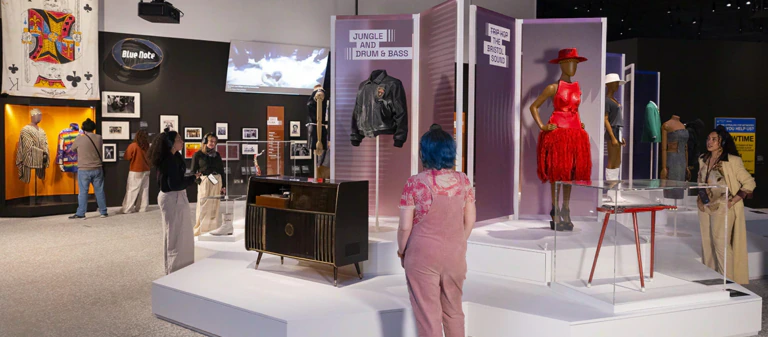
More than 13,000 people visited the Museum of Liverpool on the first day, and it was very busy when I visited a few days later. I don’t think I have ever seen so many people of all ages enjoying themselves so much in a museum.
The Museum of Liverpool has the feel of a genuine people’s museum, perhaps more so than any other city history museum.
More than 10,000 people were consulted on the content creation, specifically through the Our City, Our Stories programme, which has enabled residents to present their interpretation of the museum’s themes through displays co-produced with Museum of Liverpool curators.
Museum director Janet Dugdale and her colleagues have been working on this for nearly ten years. It has been a long haul, and not without numerous problems, crises and delays on the way, but the result is a great credit to everyone involved.
Interestingly, Dugdale attributes much of the project’s success to the creative team’s determination to hold on to, and deliver, the original masterplan developed in 2004.
Consultants BRC Imagination Arts, whose work on the project finished about four years ago, insisted that the museum triumvirate of Fleming, Dugdale and Sharon Granville, the project director, literally signed on the line to commit themselves to it once the vision had been agreed. This was evidently a powerful motivator.
The museum’s location on the Liverpool Pierhead is in many ways ideal, but a position in the middle of a World Heritage Site was always going to be challenging.
It now sits on the waterfront between the “three graces” of the Liver, Cunard and Mersey Harbour Board buildings on one side and the historic Albert Dock complex on the other.
All of these are listed structures and the Albert Dock already houses the Maritime and International Slavery Museums as well as Tate Liverpool, all three in restored Victorian warehouse blocks.
The former Museum of Liverpool Life had also been located in a smaller former dock building nearby since 1993, but was barely fit for purpose as it could not be expanded to display any larger objects of the city’s history in the growing collections. This led to NML’s decision to create a new museum about the city on a vacant site nearby.
The new building has had a turbulent gestation. The museum was originally to be incorporated in the city’s “fourth grace” project to regenerate the pierhead area. Architect Will Alsop won an open competition with his controversial “cloud” building, but the whole scheme was abandoned in 2004 before any work had started.
A new project led by NML was then established and the contract for a standalone museum building was awarded to Danish practice 3XN. They are credited as creative architects for the building, as it had to be completed by AEW of Manchester, which took over as project architects in 2007.
The eventual £72m cost of this major scheme has come from multiple sources, including the now defunct Northwest Regional Development Agency.
The saga has seen further controversy since the opening with the first review of the museum in the national press. This was an ill-informed article by the Observer’s architecture correspondent, Rowan Moore, which in turn prompted heated debate on the paper’s website.
A lot of people have expressed strong opinions for and against the building. This is partly because of its sensitive position, though many of the negative comments seem to be the familiar rants about planners, architects and even Liverpool City Council (who had nothing to do with it).
These are clearly shark-infested waters, but I’ll take my chances and dive in. I think the new museum looks great. It works well inside and out, and is a beautiful modern building that is practical and functional. It is quite different in appearance to the Royal Liver building and its eclectic neighbours, but how could it not be?
The Liver itself must have seemed an extraordinary alien structure when it rose up a century ago as Britain’s first reinforced concrete skyscraper and the tallest building in Europe at the time.
While the Museum of Liverpool is a complete stylistic contrast to the existing pierhead buildings, the new ferry terminal alongside is a sort of mini-me copy of the museum, although not by the same architects. It fits in well, unlike the chunky black glass office and apartment complex on the other side of the museum.
Regeneration
Sixty years ago the pierhead was a bustling transport hub with multiple pier ferry access, a triple-loop tram terminus and a station on the “dockers’ umbrella”, Liverpool’s famous overhead railway. Most of these striking features were lost in the 1950s.
So a part of the city that has been bleak and depressing for years has now been revitalised. The reconstructed canal and promenade alongside the museum has become an inviting leisure area and is already providing a dramatic backdrop for open-air concerts, festivals, light shows and other activities.
The design of the museum building has achieved one of the key objectives of the creative team, which was to make the city panorama outside a visual extension of the gallery displays.
This is a complete reversal of the traditional black-box museum design where there is controlled inside lighting only, and rarely any viewing windows in a gallery space.
The main reason for the darkened box is to limit light levels on sensitive museum collections, but I am assured that special precautions were taken to ensure a suitable level of collections care.
The views out in every direction are stunning and offer a new dimension that is largely lacking in every city history museum I can think of. This is particularly effective with this location, since the port and access to the wider world is the key to the city’s entire history.
All the main display galleries are quite large, uninterrupted spaces based on an underfloor grid of IT and electrics, which allows multimedia, sound and lighting to be delivered anywhere.
The main exhibition designers have worked with their showcase supplier to develop a high-spec but completely demountable display system. This is used throughout the museum, although almost every display unit looks different, individually designed and bespoke.
All this has come with a premium price-tag, but it does mean that nearly all the “permanent” displays can be changed easily and cheaply.
Prevailing myths
The museum displays are not presented as a chronological run through Liverpool’s history or as a series of urban history themes. Liverpool is a city of endless stories, told in a unique accent with characteristic scouse wit.
Excellent use of multimedia linked to object-rich displays has created some fascinating and high-quality content, though it does not add up to the biography of the city that the museum team was aiming for. It is more a series of individually expressed stories and impressions where the overall thread can be lost.
There is a sense that, in its interpretive style, the museum effectively colludes with some of the legends about Liverpool rather than challenging them. An obvious example is the so-called Merseybeat phenomenon.
I would not argue with the talent of the Beatles and their worldwide influence on popular music, but the fact is that none of the other major British beat groups of the 1960s that followed in their wake came from Liverpool.
Yet the idea that Liverpool became the new centre of popular music, with Merseyside a unique pool of talent, is still sustained, a myth created by marketing and now embedded in popular culture.
Nevertheless, there is something inexplicable about Liverpool. It has long had, and continues to project, an image and influence that is far bigger than the city itself. The range of creative talent it has produced is amazing, but it has never been a huge city and its population has fallen substantially since the second world war.
Shanghai, its current twin city and the subject of one of the museum’s displays about Liverpool’s worldwide links, is more than 50 times its size. Liverpool still holds its own loudly and effectively, but the explanation for this, other than something in the Mersey, remains elusive.
When I was about Finn O’Hare’s age I knew nothing about Liverpool except that all my Dinky Toys came from the mysterious Meccano factory in Binns Road. In my mind this was something magical. I now know that it was badly managed, closed down and demolished 40-odd years ago, and that about 1,000 Liverpool women lost their jobs.
Billy Fury may not have been thinking of his hometown when he recorded one of his big hits in 1960, but the song title used by the Museum of Liverpool to name one of the main galleries is a brilliant choice. A Wondrous Place indeed, and I’ll be back to see the final new galleries when they open at the end of the year.
Oliver Green is the research fellow at the London Transport Museum
O’Hare, who is now six, wrote a letter to the director of National Museums Liverpool saying: “It’ll be great. I’m good at opening things.”
A very Lennonish bit of chutzpah, but David Fleming astutely agreed to it rather than asking a more obvious Liverpool luminary such as Paul McCartney to do the honours.
More than 13,000 people visited the Museum of Liverpool on the first day, and it was very busy when I visited a few days later. I don’t think I have ever seen so many people of all ages enjoying themselves so much in a museum.
The Museum of Liverpool has the feel of a genuine people’s museum, perhaps more so than any other city history museum.
More than 10,000 people were consulted on the content creation, specifically through the Our City, Our Stories programme, which has enabled residents to present their interpretation of the museum’s themes through displays co-produced with Museum of Liverpool curators.
Museum director Janet Dugdale and her colleagues have been working on this for nearly ten years. It has been a long haul, and not without numerous problems, crises and delays on the way, but the result is a great credit to everyone involved.
Interestingly, Dugdale attributes much of the project’s success to the creative team’s determination to hold on to, and deliver, the original masterplan developed in 2004.
Consultants BRC Imagination Arts, whose work on the project finished about four years ago, insisted that the museum triumvirate of Fleming, Dugdale and Sharon Granville, the project director, literally signed on the line to commit themselves to it once the vision had been agreed. This was evidently a powerful motivator.
The museum’s location on the Liverpool Pierhead is in many ways ideal, but a position in the middle of a World Heritage Site was always going to be challenging.
It now sits on the waterfront between the “three graces” of the Liver, Cunard and Mersey Harbour Board buildings on one side and the historic Albert Dock complex on the other.
All of these are listed structures and the Albert Dock already houses the Maritime and International Slavery Museums as well as Tate Liverpool, all three in restored Victorian warehouse blocks.
The former Museum of Liverpool Life had also been located in a smaller former dock building nearby since 1993, but was barely fit for purpose as it could not be expanded to display any larger objects of the city’s history in the growing collections. This led to NML’s decision to create a new museum about the city on a vacant site nearby.
The new building has had a turbulent gestation. The museum was originally to be incorporated in the city’s “fourth grace” project to regenerate the pierhead area. Architect Will Alsop won an open competition with his controversial “cloud” building, but the whole scheme was abandoned in 2004 before any work had started.
A new project led by NML was then established and the contract for a standalone museum building was awarded to Danish practice 3XN. They are credited as creative architects for the building, as it had to be completed by AEW of Manchester, which took over as project architects in 2007.
The eventual £72m cost of this major scheme has come from multiple sources, including the now defunct Northwest Regional Development Agency.
The saga has seen further controversy since the opening with the first review of the museum in the national press. This was an ill-informed article by the Observer’s architecture correspondent, Rowan Moore, which in turn prompted heated debate on the paper’s website.
A lot of people have expressed strong opinions for and against the building. This is partly because of its sensitive position, though many of the negative comments seem to be the familiar rants about planners, architects and even Liverpool City Council (who had nothing to do with it).
These are clearly shark-infested waters, but I’ll take my chances and dive in. I think the new museum looks great. It works well inside and out, and is a beautiful modern building that is practical and functional. It is quite different in appearance to the Royal Liver building and its eclectic neighbours, but how could it not be?
The Liver itself must have seemed an extraordinary alien structure when it rose up a century ago as Britain’s first reinforced concrete skyscraper and the tallest building in Europe at the time.
While the Museum of Liverpool is a complete stylistic contrast to the existing pierhead buildings, the new ferry terminal alongside is a sort of mini-me copy of the museum, although not by the same architects. It fits in well, unlike the chunky black glass office and apartment complex on the other side of the museum.
Regeneration
Sixty years ago the pierhead was a bustling transport hub with multiple pier ferry access, a triple-loop tram terminus and a station on the “dockers’ umbrella”, Liverpool’s famous overhead railway. Most of these striking features were lost in the 1950s.
So a part of the city that has been bleak and depressing for years has now been revitalised. The reconstructed canal and promenade alongside the museum has become an inviting leisure area and is already providing a dramatic backdrop for open-air concerts, festivals, light shows and other activities.
The design of the museum building has achieved one of the key objectives of the creative team, which was to make the city panorama outside a visual extension of the gallery displays.
This is a complete reversal of the traditional black-box museum design where there is controlled inside lighting only, and rarely any viewing windows in a gallery space.
The main reason for the darkened box is to limit light levels on sensitive museum collections, but I am assured that special precautions were taken to ensure a suitable level of collections care.
The views out in every direction are stunning and offer a new dimension that is largely lacking in every city history museum I can think of. This is particularly effective with this location, since the port and access to the wider world is the key to the city’s entire history.
All the main display galleries are quite large, uninterrupted spaces based on an underfloor grid of IT and electrics, which allows multimedia, sound and lighting to be delivered anywhere.
The main exhibition designers have worked with their showcase supplier to develop a high-spec but completely demountable display system. This is used throughout the museum, although almost every display unit looks different, individually designed and bespoke.
All this has come with a premium price-tag, but it does mean that nearly all the “permanent” displays can be changed easily and cheaply.
Prevailing myths
The museum displays are not presented as a chronological run through Liverpool’s history or as a series of urban history themes. Liverpool is a city of endless stories, told in a unique accent with characteristic scouse wit.
Excellent use of multimedia linked to object-rich displays has created some fascinating and high-quality content, though it does not add up to the biography of the city that the museum team was aiming for. It is more a series of individually expressed stories and impressions where the overall thread can be lost.
There is a sense that, in its interpretive style, the museum effectively colludes with some of the legends about Liverpool rather than challenging them. An obvious example is the so-called Merseybeat phenomenon.
I would not argue with the talent of the Beatles and their worldwide influence on popular music, but the fact is that none of the other major British beat groups of the 1960s that followed in their wake came from Liverpool.
Yet the idea that Liverpool became the new centre of popular music, with Merseyside a unique pool of talent, is still sustained, a myth created by marketing and now embedded in popular culture.
Nevertheless, there is something inexplicable about Liverpool. It has long had, and continues to project, an image and influence that is far bigger than the city itself. The range of creative talent it has produced is amazing, but it has never been a huge city and its population has fallen substantially since the second world war.
Shanghai, its current twin city and the subject of one of the museum’s displays about Liverpool’s worldwide links, is more than 50 times its size. Liverpool still holds its own loudly and effectively, but the explanation for this, other than something in the Mersey, remains elusive.
When I was about Finn O’Hare’s age I knew nothing about Liverpool except that all my Dinky Toys came from the mysterious Meccano factory in Binns Road. In my mind this was something magical. I now know that it was badly managed, closed down and demolished 40-odd years ago, and that about 1,000 Liverpool women lost their jobs.
Billy Fury may not have been thinking of his hometown when he recorded one of his big hits in 1960, but the song title used by the Museum of Liverpool to name one of the main galleries is a brilliant choice. A Wondrous Place indeed, and I’ll be back to see the final new galleries when they open at the end of the year.
Oliver Green is the research fellow at the London Transport Museum
Project data
- Cost £72m
- Main funders Northwest Regional Development Agency; European Regional Development Fund; Heritage Lottery Fund; Department for Culture, Media and Sport
- Creative architects 3XN
- Architects AEW
- Main contractor Pihl Galliford Try
- M&E and structural engineer Buro Happold
- Visitor experience masterplan BRC Imagination Arts
- Exhibition project manager Robert Batchelor/EPL
- Exhibition design Redman Design (Liverpool Overhead Railway gallery, History Detectives, the Great Port gallery, the People’s Republic gallery) Haley Sharpe (Little Liverpool Global City, Wondrous Place, Atrium, flexible exhibition system design)
- Display cases Click Netherfield
- Exhibition system Click Netherfield/Protean
- Wayfinding and signage Benson Signs
- AV software & multimedia 55 Degrees (Wondrous Place), Centre Screen Productions (the People’s Republic), Global City, Atrium, Football Show)
- Interactives Paragon Creative
- Lighting consultant Sutton Vane Associates