“My work is grounded in presence and absence. I unearth the hidden and forgotten and look for traces of human stories in particular places.”
These are the words of Annie Harrison, one of three artists, all former students of Manchester Metropolitan University (MMU), commissioned to create a new installation at the reopened Gallery of Costume at Platt Hall in Manchester.
Located at the bottom of the dramatic staircase in the entrance hall, her assemblage of rolled and folded sheets is a reference to the lives of those who passed through the workhouse system in the industrial revolution. The theme of presence and absence pervades the gallery.
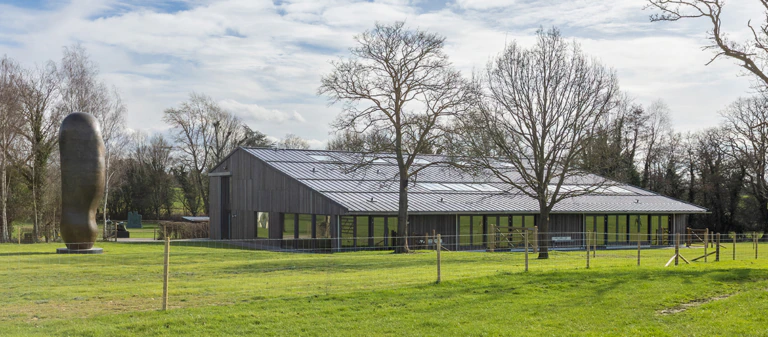
The costume collection is housed in a listed Georgian building, which has been restored as part of a £1.3m renovation funded by Manchester City Council. Closed for two years, it houses more than 20,000 items of clothing and accessories, ranging from clogs and shawls worn by Lancashire weavers in the 17th century, to today’s couture and high-street merchandise.
The first-floor collection focusing on costume up to the 20th century is largely the same, but the ground floor has been extensively reconfigured to incorporate spaces for temporary exhibitions, workshops and lectures, a shop and a new permanent display.
Situated outside of the city centre in Rusholme, the Costume Gallery is familiar to specialists, but does not have a high profile in Manchester. Often referred to as a hidden gem, the lack of public awareness of the gallery is surprising in view of the popularity of the park in which it is located.
Platt Fields Park has been an important leisure destination since it was opened to the public in 1910. Its centenary is celebrated in the first temporary exhibition to be held since the refurbishment – a collaborative project with the Friends of Platt Fields, whose members campaigned for its renovation and who act as volunteers.
The new exhibition on the ground floor, Suffragettes to Supermodels: A Century of Fashion 1910-2010, includes women’s costume ranging from an Edwardian serge wool dress, complete with a Votes for Women sash, through to recent examples of high-street collaborations with designers.
The layout is initially confusing because it appears to contradict the title by starting in 2010 and going back in time. However, the location of contemporary pieces at the entrance and the highlighting of themes such as green issues, celebrity and individual style is a strategy to attract new and young audiences to visit the collection.
Reinterpretation
The exhibition was developed by Miles Lambert, the gallery’s curator, and his small team. Considering the multiple tasks that curatorial staff are now expected to undertake in terms of collection care, management, front-of-house and sales, it is a commendable achievement.
Labels give concise information about historical, social and cultural context in addition to an account of the specific provenance of each item throughout the displays. Photographs of models or celebrities wearing the garments are used to add a personal touch.
What is missing is a rationale for the selection of the artefacts on display. It would have been interesting to know why they had been chosen in preference to the thousands of garments and accessories remaining boxed in the archive.
Looking at the fashions on display at Platt Hall there is a palpable sense of the absent other, that is the objects hidden from public view in the attic and pavilions. This may be due to the inescapable link between clothes and the body and the association of costume with the secret lives of former owners.
There has been much debate about how to animate fashion displays, which, because of the disembodied nature of clothing, can often appear frozen and lifeless.
At the Costume Gallery, the creative input of students from the MA Design Lab at MMU has been harnessed to consider alternative approaches to enliven the gallery and reinterpret its collection.
The outcome of this collaboration includes a display of hat “creations” produced by embroidery students and the three site-specific art installations by Annie Harrison, Christine Evans and Susan MacMurray. The latter’s contribution, Widow, is a striking garment sculpture made of leather nappa and pierced by 100,000 silver adamantine pins.
Partnership work
Working in partnership is a hot trend in the museum world and is one of the themes of this October’s Museums Association conference. Partnerships can take many forms and the long-standing relationship between Manchester City Council and MMU as manifested in the refurbished Gallery of Costume is one such collaboration.
Here the gallery acted as client with students briefed to challenge preconceptions, increase the gallery’s profile in the city and engage with new audiences.
This “shared practice” is documented as a case study in a joint report of May 2009 outlining the benefits of collaboration, partnerships and research relationships and commissioned by Renaissance North West, Arts Council England North West and the North West Universities Association.
The Gallery of Costume collaboration ticks all the boxes of widening participation, knowledge transfer, employer engagement, entrepreneurship, creative practice and innovation. It provides real-life consultancy experience for the students and an input of fresh ideas and new perspectives for the gallery.
The renovation project at Platt Hall is testimony to the collaborative efforts of the curatorial team, Platt Field Park volunteers and students and staff at MMU. The presence of new displays, educational spaces and student installations has helped to make the gallery a site worth travelling the extra mile to visit.
But what is absent is the communication of the processes involved in bringing the project to fruition. The inclusion of visual and written material detailing concept development and website links to participating student and artists’ blogs could unearth the fascinating stories that underpin the gallery’s reinvention.
Nicky Ryan is the principal lecturer, cultural and critical studies, at the London College of Communication
Cost £1.3m
Funder Manchester City Council
Curator Miles Lambert
Project management Parkinson Building Contractors
These are the words of Annie Harrison, one of three artists, all former students of Manchester Metropolitan University (MMU), commissioned to create a new installation at the reopened Gallery of Costume at Platt Hall in Manchester.
Located at the bottom of the dramatic staircase in the entrance hall, her assemblage of rolled and folded sheets is a reference to the lives of those who passed through the workhouse system in the industrial revolution. The theme of presence and absence pervades the gallery.
The costume collection is housed in a listed Georgian building, which has been restored as part of a £1.3m renovation funded by Manchester City Council. Closed for two years, it houses more than 20,000 items of clothing and accessories, ranging from clogs and shawls worn by Lancashire weavers in the 17th century, to today’s couture and high-street merchandise.
The first-floor collection focusing on costume up to the 20th century is largely the same, but the ground floor has been extensively reconfigured to incorporate spaces for temporary exhibitions, workshops and lectures, a shop and a new permanent display.
Situated outside of the city centre in Rusholme, the Costume Gallery is familiar to specialists, but does not have a high profile in Manchester. Often referred to as a hidden gem, the lack of public awareness of the gallery is surprising in view of the popularity of the park in which it is located.
Platt Fields Park has been an important leisure destination since it was opened to the public in 1910. Its centenary is celebrated in the first temporary exhibition to be held since the refurbishment – a collaborative project with the Friends of Platt Fields, whose members campaigned for its renovation and who act as volunteers.
The new exhibition on the ground floor, Suffragettes to Supermodels: A Century of Fashion 1910-2010, includes women’s costume ranging from an Edwardian serge wool dress, complete with a Votes for Women sash, through to recent examples of high-street collaborations with designers.
The layout is initially confusing because it appears to contradict the title by starting in 2010 and going back in time. However, the location of contemporary pieces at the entrance and the highlighting of themes such as green issues, celebrity and individual style is a strategy to attract new and young audiences to visit the collection.
Reinterpretation
The exhibition was developed by Miles Lambert, the gallery’s curator, and his small team. Considering the multiple tasks that curatorial staff are now expected to undertake in terms of collection care, management, front-of-house and sales, it is a commendable achievement.
Labels give concise information about historical, social and cultural context in addition to an account of the specific provenance of each item throughout the displays. Photographs of models or celebrities wearing the garments are used to add a personal touch.
What is missing is a rationale for the selection of the artefacts on display. It would have been interesting to know why they had been chosen in preference to the thousands of garments and accessories remaining boxed in the archive.
Looking at the fashions on display at Platt Hall there is a palpable sense of the absent other, that is the objects hidden from public view in the attic and pavilions. This may be due to the inescapable link between clothes and the body and the association of costume with the secret lives of former owners.
There has been much debate about how to animate fashion displays, which, because of the disembodied nature of clothing, can often appear frozen and lifeless.
At the Costume Gallery, the creative input of students from the MA Design Lab at MMU has been harnessed to consider alternative approaches to enliven the gallery and reinterpret its collection.
The outcome of this collaboration includes a display of hat “creations” produced by embroidery students and the three site-specific art installations by Annie Harrison, Christine Evans and Susan MacMurray. The latter’s contribution, Widow, is a striking garment sculpture made of leather nappa and pierced by 100,000 silver adamantine pins.
Partnership work
Working in partnership is a hot trend in the museum world and is one of the themes of this October’s Museums Association conference. Partnerships can take many forms and the long-standing relationship between Manchester City Council and MMU as manifested in the refurbished Gallery of Costume is one such collaboration.
Here the gallery acted as client with students briefed to challenge preconceptions, increase the gallery’s profile in the city and engage with new audiences.
This “shared practice” is documented as a case study in a joint report of May 2009 outlining the benefits of collaboration, partnerships and research relationships and commissioned by Renaissance North West, Arts Council England North West and the North West Universities Association.
The Gallery of Costume collaboration ticks all the boxes of widening participation, knowledge transfer, employer engagement, entrepreneurship, creative practice and innovation. It provides real-life consultancy experience for the students and an input of fresh ideas and new perspectives for the gallery.
The renovation project at Platt Hall is testimony to the collaborative efforts of the curatorial team, Platt Field Park volunteers and students and staff at MMU. The presence of new displays, educational spaces and student installations has helped to make the gallery a site worth travelling the extra mile to visit.
But what is absent is the communication of the processes involved in bringing the project to fruition. The inclusion of visual and written material detailing concept development and website links to participating student and artists’ blogs could unearth the fascinating stories that underpin the gallery’s reinvention.
Nicky Ryan is the principal lecturer, cultural and critical studies, at the London College of Communication
Project data
Cost £1.3m
Funder Manchester City Council
Curator Miles Lambert
Project management Parkinson Building Contractors