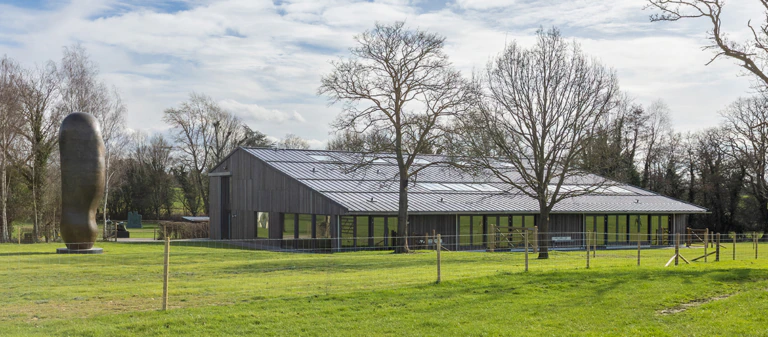
It is appropriate that the first exhibition produced as part of the Sports Heritage Network’s Our Sporting Life (OSL) initiative is displayed in a gallery overlooking the river Thames, a place where so many British Olympic rowers, including Matthew Pinsent and Steve Redgrave, have excelled in recent years.
Although the exhibition is a precursor to the 2012 Olympic and Paralympic Games, it wisely adopts a more community focused approach, celebrating the history and diversity of Henley’s local sporting life.
At the core of the exhibition is a history of the Olympics and Paralympics in Britain, which is bolstered by a display of objects loaned by the British Olympic Association, including three items used in the 1908 Games at White City Stadium in west London.
There is naturally some suitably stirring 2012 PR material, including video footage of previous British triumphs, but the introduction also highlights the OSL project, which aims to build up a collection of personal and community sporting memories that will form a lasting legacy after 2012.
Visitors are encouraged to answer the question: “What does sport mean to you?” by completing a postcard in the exhibition or visiting the OSL website.
The exhibition highlights the sporting life of Henley through a combination of graphics, objects and audiovisuals. And while the use of a standardised case and graphic system gives everything a professional look, it retains enough informality to make sure that it feels like a display that has been produced with the community, rather than for them.
This impression is reinforced by the credit board at the beginning of the exhibition that, while acknowledging major funders and supporters, contains the names of more than 75 individuals, most of whom are from clubs and sporting organisations in the area.
A timeline gives a summary of the growth of clubs and organisations to the present day, while context is provided with a national and international strand added to the chronology, including past Olympics and other major sporting events. Visitors can then circulate around the exhibition, which includes most of the major sports.
Rowing tales
Given the location of the exhibition, there is a strong focus on local rowing clubs, although this subject is dealt with elsewhere in the museum.
The story of the Henley club, the oldest rowing club in Britain, is a fascinating glimpse into the social history of the sport, illustrated by a 1892 booklet which, in defining what an amateur rower was, barred “anyone involved in manual labour, a trade, mechanic or artisan” from being a member or competing, a situation that persisted until 1946.
However, a letter to the club from the Amateur Rowing Association says that a piano tuner could qualify as an amateur rower.
Henley is still the home to the Leander Club, another rowing club set up in the 19th century and famous for nurturing Pinsent and Redgrave – the medal collection of Olympian Ben Hunt-Davis is also on display in one of two showcases featuring material brought in by the public.
Many of the sporting clubs and organisations in Henley have a long history. The first recorded cricket match there was played in 1766, although a proper club was not set up until 1869. A fascinating series of team pictures from the 1930s to the present illustrate changing cricketing fashions.
More photographs and graphics tell the story of the football team, formed in 1871. A minute book from 1931 outlines the etiquette of hosting visiting teams – hot baths for the opposition and cold baths for Henley Town players. Further graphics and objects tell the story of the hockey, rugby and tennis clubs and Henley’s golf courses.
The exhibition also features material from a number of local sporting heroes. Two swimsuits belonging to Paralympian Graham Edwards, who won gold in the Athens 2004 and Beijing 2008 games, are displayed as well as one of his swimming caps.
An accompanying graphic attempts to explain the classification system used in Paralympic sport.
The life of another disabled local hero, croquet player Montague Ell, who lost his arms in the first world war, but continued to win national championships, is also told. Ell is credited with advancing sport for disabled people and developing sports at Stoke Mandeville.
The Winter Olympic Games features in a display of material used by another Henley resident, Graham Bell. Now a BBC commentator, Bell was once a downhill skier.
Sports-obsessed Britain
The community element of the display is strong throughout, but is strongest in the section chronicling the sporting exploits of local primary and secondary schools through graphics, photographs and trophies.
Two albums of pictures and press cuttings from the nearby Gillotts School bring to life the fact that many people’s first experience of sport is as part of their education. Close by, an audio recording allows visitors to hear extracts of interviews given by some of those involved in local sport over the years.
The coming of the Olympiad reminds us that, for many people in Britain, sport is an obsession and an inspiration. Our Sporting Life Henley is the first of what organisers hope will be more than 100 similar exhibitions celebrating local sporting heroes all over Britain.
The standardised graphic and showcase system developed for the OSL initiative will provide an inexpensive setting for museums, communities and individuals to harness what Sebastian Coe calls “the inspirational power of sport”.
The excellent Henley exhibition has set the bar high for those that will follow.
Tim Bryan is the head of collections and interpretation at the Heritage Motor Centre, Gaydon
Cost £5,000
Main funder Museums, Libraries and Archives Council
Exhibition design and build RFA Design
Exhibition ends 11 July
Although the exhibition is a precursor to the 2012 Olympic and Paralympic Games, it wisely adopts a more community focused approach, celebrating the history and diversity of Henley’s local sporting life.
At the core of the exhibition is a history of the Olympics and Paralympics in Britain, which is bolstered by a display of objects loaned by the British Olympic Association, including three items used in the 1908 Games at White City Stadium in west London.
There is naturally some suitably stirring 2012 PR material, including video footage of previous British triumphs, but the introduction also highlights the OSL project, which aims to build up a collection of personal and community sporting memories that will form a lasting legacy after 2012.
Visitors are encouraged to answer the question: “What does sport mean to you?” by completing a postcard in the exhibition or visiting the OSL website.
The exhibition highlights the sporting life of Henley through a combination of graphics, objects and audiovisuals. And while the use of a standardised case and graphic system gives everything a professional look, it retains enough informality to make sure that it feels like a display that has been produced with the community, rather than for them.
This impression is reinforced by the credit board at the beginning of the exhibition that, while acknowledging major funders and supporters, contains the names of more than 75 individuals, most of whom are from clubs and sporting organisations in the area.
A timeline gives a summary of the growth of clubs and organisations to the present day, while context is provided with a national and international strand added to the chronology, including past Olympics and other major sporting events. Visitors can then circulate around the exhibition, which includes most of the major sports.
Rowing tales
Given the location of the exhibition, there is a strong focus on local rowing clubs, although this subject is dealt with elsewhere in the museum.
The story of the Henley club, the oldest rowing club in Britain, is a fascinating glimpse into the social history of the sport, illustrated by a 1892 booklet which, in defining what an amateur rower was, barred “anyone involved in manual labour, a trade, mechanic or artisan” from being a member or competing, a situation that persisted until 1946.
However, a letter to the club from the Amateur Rowing Association says that a piano tuner could qualify as an amateur rower.
Henley is still the home to the Leander Club, another rowing club set up in the 19th century and famous for nurturing Pinsent and Redgrave – the medal collection of Olympian Ben Hunt-Davis is also on display in one of two showcases featuring material brought in by the public.
Many of the sporting clubs and organisations in Henley have a long history. The first recorded cricket match there was played in 1766, although a proper club was not set up until 1869. A fascinating series of team pictures from the 1930s to the present illustrate changing cricketing fashions.
More photographs and graphics tell the story of the football team, formed in 1871. A minute book from 1931 outlines the etiquette of hosting visiting teams – hot baths for the opposition and cold baths for Henley Town players. Further graphics and objects tell the story of the hockey, rugby and tennis clubs and Henley’s golf courses.
The exhibition also features material from a number of local sporting heroes. Two swimsuits belonging to Paralympian Graham Edwards, who won gold in the Athens 2004 and Beijing 2008 games, are displayed as well as one of his swimming caps.
An accompanying graphic attempts to explain the classification system used in Paralympic sport.
The life of another disabled local hero, croquet player Montague Ell, who lost his arms in the first world war, but continued to win national championships, is also told. Ell is credited with advancing sport for disabled people and developing sports at Stoke Mandeville.
The Winter Olympic Games features in a display of material used by another Henley resident, Graham Bell. Now a BBC commentator, Bell was once a downhill skier.
Sports-obsessed Britain
The community element of the display is strong throughout, but is strongest in the section chronicling the sporting exploits of local primary and secondary schools through graphics, photographs and trophies.
Two albums of pictures and press cuttings from the nearby Gillotts School bring to life the fact that many people’s first experience of sport is as part of their education. Close by, an audio recording allows visitors to hear extracts of interviews given by some of those involved in local sport over the years.
The coming of the Olympiad reminds us that, for many people in Britain, sport is an obsession and an inspiration. Our Sporting Life Henley is the first of what organisers hope will be more than 100 similar exhibitions celebrating local sporting heroes all over Britain.
The standardised graphic and showcase system developed for the OSL initiative will provide an inexpensive setting for museums, communities and individuals to harness what Sebastian Coe calls “the inspirational power of sport”.
The excellent Henley exhibition has set the bar high for those that will follow.
Tim Bryan is the head of collections and interpretation at the Heritage Motor Centre, Gaydon
Project data
Cost £5,000
Main funder Museums, Libraries and Archives Council
Exhibition design and build RFA Design
Exhibition ends 11 July