Timing is everything. We are in the middle of another global financial crisis, are involved in a costly foreign war, and are facing a tense general election. The perfect time to open a museum examining politics, democracy, class, conflict and identity.
The People’s History Museum explores the world-changing ideas that were fought for by the working people of Britain. The Trade Union, Labour and Co-operative History Society founded the museum in the 1960s.
It was originally called the National Museum of Labour History and was based in London, but moved to Manchester in 1990. It has the largest collection of trade union and political banners in the world and a very important archive, which includes the Labour Party and the Communist Party of Great Britain collections.
The new museum is an extension to the existing Pump House building on the left bank of the River Irwell. It sits alongside the redeveloped Spinningfields district off Deansgate and the regenerated warehouses on the Salford side.
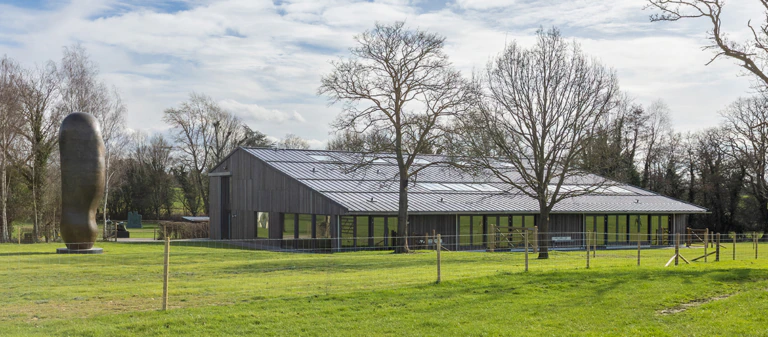
The extension, built by architects Austin-Smith: Lord, has a striking facade. The museum has a curved structure with a visor-like strip of windows. It shares a design language with Fact, the Liverpool arts and creative technology centre that was designed by the same architects.
The People’s History Museum is the first public building in the UK to be clad in a Corten shell, the same steel used in Richard Serra’s Fulcrum sculpture at Liverpool Street station in London and Antony Gormley’s Angel of the North outside Gateshead.
Corten has a rusty patina and its use may stimulate some wisecracks about the museum being a monument to rust-belt industries, but it makes a dramatic contribution to the streetscape.
The extension successfully houses the museum’s facilities, which are now all on one site. The interior is light, with river views, a reception area and a shop. There is also a stylish cafe and bar that sensibly stays open after the museum closes.
Below ground level are offices, stores and the archive reading room. The Pump House, which once held the museum, is now a flexible space with an exhibition gallery and rooms for hire.
Democratic roots
The main galleries are on the first floor and take a chronological approach, using themed areas as chapters charting the evolving story of British democracy and the struggle for representation, and the right to associate and agitate for improved working conditions, pay, housing and services.
It sets the scene with the Peterloo Massacre and the corrupt political system of the early 19th century and then moves back in time to look at earlier democratic pioneers such as the Levellers and the Diggers, moving through to 18th-century radical Thomas Paine and the Tolpuddle Martyrs. Space is tight here and the shifting chronology is a little confusing.
Things really begin to gel as the story continues through the 19th and 20th centuries in themed displays that cover many areas including Chartism, industrialisation, unionism, liberal social reform, women’s suffrage, the General Strike, the Spanish civil war, the second world war, the 1945 Labour government, the Thatcher years, the miners’ strike in the 1980s and the Poll Tax.
It’s a big story but it remains coherent and is generously supported by plenty of objects. Foremost are the political and union banners for which the collection is renowned but there are other delights such Paine’s desk, posters from all political parties and former Labour party leader Michael Foot’s infamous donkey jacket, which actually came from Harrods. A recent addition is an amazing painted skeleton that was used in early trade-union oath taking.
The displays use the current trend for colours of muted reds, purples and ochres with clear graphics. Integrated audiovisuals, interactives and touchscreens are on hand for those who want more information. The mix of these is right and they never dominate or deviate from the storyline.
In addition, there is an area for educational and performance work within the galleries. The conservation studio is also on this floor and visitors can see the staff at work through a large window. They can also go into a booth to hear protest music from the Specials, Billy Bragg and others.
Personal stories
Overall the interpretation aims for an even-handed approach and acknowledges the achievements of differing parties, movements and individuals. However, this is a museum about politics, ideologies and actions.
Each successive display reminds the visitor that the democratic and social rights that we take for granted were often won in the face of moral revolt. The origins of British socialism can be as seen both indigenous and international.
The displays also illustrate that many of those victories were gained at personal cost by the unselfish actions of men and women who had an eye on the future. George Orwell, writing in the 1940s, hoped for a series of very British revolutions that would not always mean red flags and street fighting but a fundamental shift of power.
The Beveridge Report into social welfare and the 1945 reforming Labour government went a part of the way and perhaps more could have been made of this. The museum goes on to chart the rise of single-issue protests such as the Poll Tax and the Iraq war.
The People’s History Museum has opened at the right time with the right message. The galleries do not seek sensation but invite us to question how far our classless, free society has come.
Now Manchester’s Urbis is about to close, the People’s History Museum’s temporary exhibition spaces have the chance to deliver adventures into popular and political culture, ensuring repeat visitors and attracting new ones. With a combination of creative marketing and challenging and occasionally controversial programming, it should be a real success.
Mark Suggitt is a museum consultant
Project data
Cost £12.5m
Main funders Heritage Lottery Fund £7.18m, Manchester City Council £2m, Northwest Regional Development Agency £2m, European Regional Development Fund
Architect Austin-Smith: Lord
Exhibition design Headland Design Associates
Project management Paul Cleworth Project Management
Construction Wates Construction
Structural engineer Curtins Consulting
Mechanical and electrical engineer Buro Happold
Quantity surveyor Simon Fenton Partnership
Brand consultant True North
Digital agency Reading Room
Access consultant Full Circle Arts
Display cases Click Netherfield