Tucked away at the south end of Lambeth Bridge is the former church of St-Mary-at Lambeth. Threatened by demolition in the 1970s, the building was saved thanks to its connection to two outstanding gardeners. This is the place where John Tradescant and his son are buried - both were royal gardeners who introduced many new plants to Britain in the 17th century.
The Museum of Garden History that was founded in the 1970s has just undergone another transformation. A major building project has opened up the interior of the church, and it has changed its name to the Garden Museum.
The museum's spacious interior bears little relation to its previous incarnation. Prior to this building project, all of the facilities were crammed into the single-storey church. No wonder that, on his arrival in 2006 as director, Christopher Woodward decided it was time for renewal.
The new interior was designed by Dow Jones Architects, who had the idea of putting a belvedere inside the existing church structure. They have used a timber structure to create a single-storey temporary exhibition space at the west end of the church.
This space is fully enclosed so that the environment can be controlled. Its timber walls continue around the corner, creating additional storage areas without making the rest of the space feel cramped. Above the temporary exhibition and storage areas sits a space that now houses the permanent exhibition and an education room.
True to the concept of a belvedere, the permanent exhibition space is open to the rest of the church, so that visitors have views over the nave and towards the stained-glass windows at the far end. It is reached via a lift next to the entrance, or by the staircase that meanders up to the first floor from halfway along the nave. The stairs also create a natural partition between the shop and the ground floor events space.
The gallery's first exhibition, which ended last month, was a retrospective about the life and work of Beth Chatto, whose gardens within a garden at White Barn Farm in Essex introduced a new way of thinking about plants and gardening in the 1960s.
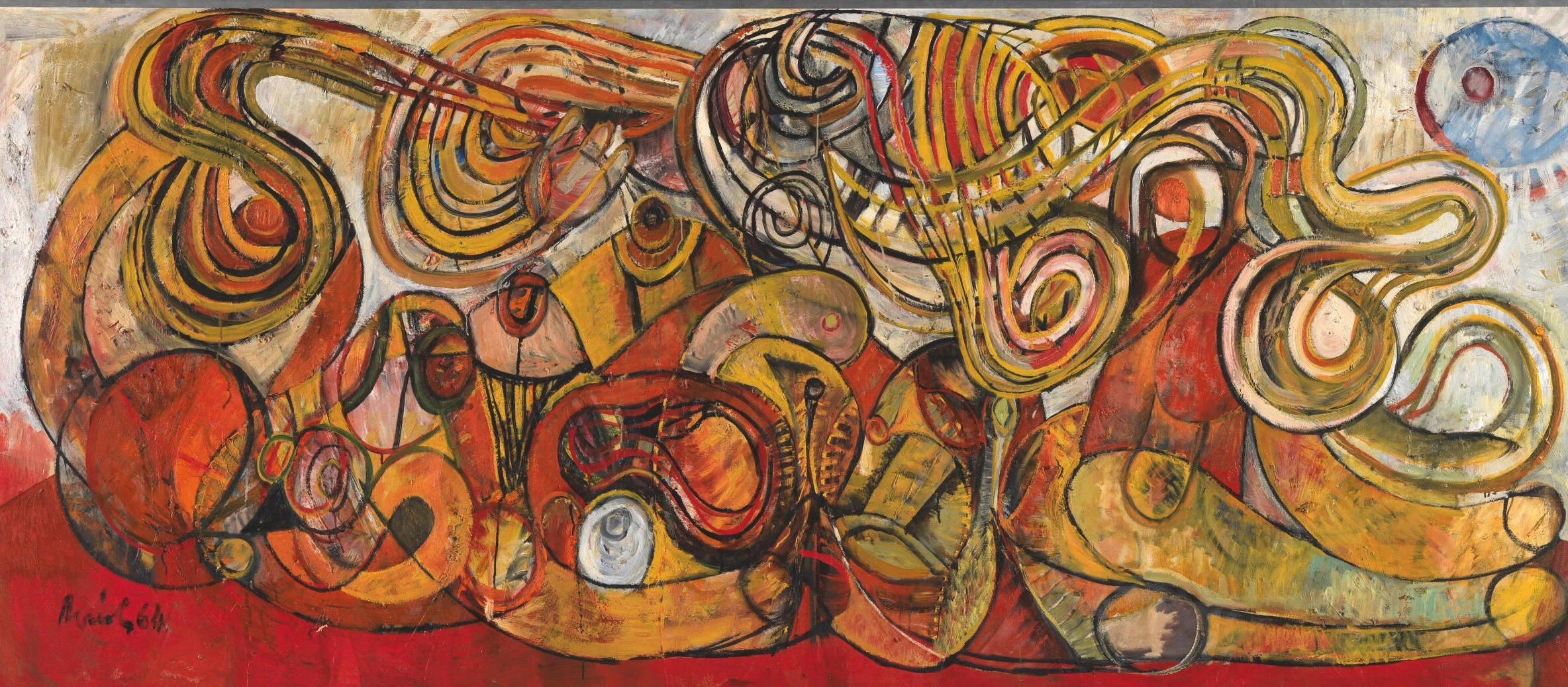
The exhibition space has very simple cases that elegantly displayed photographs and Chatto's notes and books. There was artwork by her mentor, Cedric Morris, and comments from those she has influenced, so that Chatto's work was placed in a brief context of gardening history.
The exhibition was very nicely designed, with good use of large graphic panels showing images of Chatto's creations, and a sympathetic colour scheme.
Chatto is being followed by the Highgrove Florilegium (12 May-31 August), a series of watercolours by 75 botanical artists from around the world who have painted plants and trees grown in the garden of the Prince of Wales and the Duchess of Cornwall.
Upstairs, the redisplay of the museum's collection of gardening artefacts is certainly a refreshing change from the previous display. It is also a very small exhibition, and one can't help feeling that there is more potential than has been realised.
A tiny section titled the Hired Gardener points out that the term gardener has ambiguous social status - from labourer to professional. This is an interesting train of thought, but it isn't pursued. There is a case of tools belonging to "gentlemen gardeners", but it would be nice to have these put in the context of the trade/profession as a whole.
A similar kind of social context would be useful for other sections. The area on lawn care has some intriguing photographs of people posing with their lawnmowers. They were all taken between 1900 and 1935, and it would be good to know why.
One thing that is very clear from the exhibition is how little gardening tools have changed. The case titled Oldest Tools contains items dating from 1500 to 1800. Without even reading the labels it is easy to identify shears, watering cans and dibbers.
Surprisingly, there is little mention of the Tradescants. There is a copy of the catalogue of the Museaum Tradescantianum, a tiny volume detailing the contents of the Tradescants' garden in Latin, but that's it. Perhaps they will be the subject of a later show.
Once visitors have had their fill of gardening exhibits they can wander outside into the museum's garden. The plants are labelled so that people can take notes. Those whose gardening efforts aren't always successful can take comfort from the very honest labels that accompany the formal knot garden, which document the trials and tribulations of dealing with dwarf box hedge.
The redesign of the museum has done exactly what was asked of it and the subtle change in name to the Garden Museum broadens the possibilities for future exhibitions.
Rachel Souhami is a freelance curator and lecturer in science communication at Imperial College London
The Museum of Garden History that was founded in the 1970s has just undergone another transformation. A major building project has opened up the interior of the church, and it has changed its name to the Garden Museum.
The museum's spacious interior bears little relation to its previous incarnation. Prior to this building project, all of the facilities were crammed into the single-storey church. No wonder that, on his arrival in 2006 as director, Christopher Woodward decided it was time for renewal.
The new interior was designed by Dow Jones Architects, who had the idea of putting a belvedere inside the existing church structure. They have used a timber structure to create a single-storey temporary exhibition space at the west end of the church.
This space is fully enclosed so that the environment can be controlled. Its timber walls continue around the corner, creating additional storage areas without making the rest of the space feel cramped. Above the temporary exhibition and storage areas sits a space that now houses the permanent exhibition and an education room.
True to the concept of a belvedere, the permanent exhibition space is open to the rest of the church, so that visitors have views over the nave and towards the stained-glass windows at the far end. It is reached via a lift next to the entrance, or by the staircase that meanders up to the first floor from halfway along the nave. The stairs also create a natural partition between the shop and the ground floor events space.
The gallery's first exhibition, which ended last month, was a retrospective about the life and work of Beth Chatto, whose gardens within a garden at White Barn Farm in Essex introduced a new way of thinking about plants and gardening in the 1960s.
The exhibition space has very simple cases that elegantly displayed photographs and Chatto's notes and books. There was artwork by her mentor, Cedric Morris, and comments from those she has influenced, so that Chatto's work was placed in a brief context of gardening history.
The exhibition was very nicely designed, with good use of large graphic panels showing images of Chatto's creations, and a sympathetic colour scheme.
Chatto is being followed by the Highgrove Florilegium (12 May-31 August), a series of watercolours by 75 botanical artists from around the world who have painted plants and trees grown in the garden of the Prince of Wales and the Duchess of Cornwall.
Upstairs, the redisplay of the museum's collection of gardening artefacts is certainly a refreshing change from the previous display. It is also a very small exhibition, and one can't help feeling that there is more potential than has been realised.
A tiny section titled the Hired Gardener points out that the term gardener has ambiguous social status - from labourer to professional. This is an interesting train of thought, but it isn't pursued. There is a case of tools belonging to "gentlemen gardeners", but it would be nice to have these put in the context of the trade/profession as a whole.
A similar kind of social context would be useful for other sections. The area on lawn care has some intriguing photographs of people posing with their lawnmowers. They were all taken between 1900 and 1935, and it would be good to know why.
One thing that is very clear from the exhibition is how little gardening tools have changed. The case titled Oldest Tools contains items dating from 1500 to 1800. Without even reading the labels it is easy to identify shears, watering cans and dibbers.
Surprisingly, there is little mention of the Tradescants. There is a copy of the catalogue of the Museaum Tradescantianum, a tiny volume detailing the contents of the Tradescants' garden in Latin, but that's it. Perhaps they will be the subject of a later show.
Once visitors have had their fill of gardening exhibits they can wander outside into the museum's garden. The plants are labelled so that people can take notes. Those whose gardening efforts aren't always successful can take comfort from the very honest labels that accompany the formal knot garden, which document the trials and tribulations of dealing with dwarf box hedge.
The redesign of the museum has done exactly what was asked of it and the subtle change in name to the Garden Museum broadens the possibilities for future exhibitions.
Rachel Souhami is a freelance curator and lecturer in science communication at Imperial College London
Project data
Cost: £500,000
Main funders: two anonymous donations
Architect: Dow Jones Architects
Exhibition design: Sara de Bondt, Ben Weaver, Abigail Hampton (permanent exhibition), Annabel Fraser (Beth Chatto temporary exhibition)
Project management: in house
Curator: Mary Guyatt (permanent exhibition) Beth Chatto (temporary exhibition), Mira Shapur (permanent exhibition)
Audiovisual: ADi Group (Beth Chatto only)
Lighting: MindsEye
Cost: £500,000
Main funders: two anonymous donations
Architect: Dow Jones Architects
Exhibition design: Sara de Bondt, Ben Weaver, Abigail Hampton (permanent exhibition), Annabel Fraser (Beth Chatto temporary exhibition)
Project management: in house
Curator: Mary Guyatt (permanent exhibition) Beth Chatto (temporary exhibition), Mira Shapur (permanent exhibition)
Audiovisual: ADi Group (Beth Chatto only)
Lighting: MindsEye