When Nicole Kidman attempted to play the didgeridoo on a live TV show in Germany last December, she upset many indigenous Australians.
As an Australian actor promoting the film Australia, her critics said that she should have known better. That incident occurred after this book was published, but it exemplifies some of the issues around cultural appropriation that the author analyses in detail.
James Young, a philosopher at the University of Victoria in Canada, is interested in moral, rather than legal, questions. He is careful to define his terms, and in this essay develops arguments for defensible and objectionable cultural appropriation.
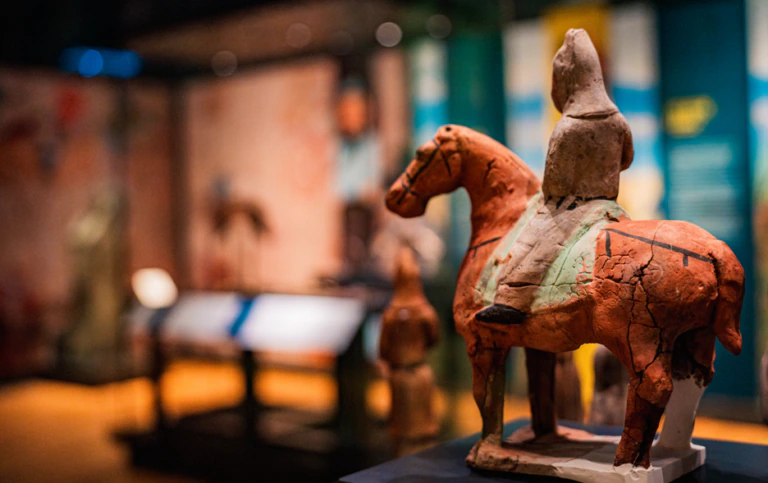
He describes two kinds of cultural appropriation: the taking of art objects and the taking (or borrowing) of artistic content. The British stole objects when they removed brass sculptures from Benin in 1897 and Picasso used content from African carvings in his own art.
Those from whom culture is taken can be characterised as "insiders", to distinguish them from the "outsiders", who do the taking - though he points out that the boundaries between the two may sometimes be blurred.
Young explores ideas of cultural ownership, inheritance and aesthetic value. He analyses the harm done by cultural appropriation: who is harmed and how; and most importantly, when can such harm be justified? The thread of argument becomes occasionally tangled.
In advocating his "proprietary principle", Young is very clear about the morally indefensible status of objects held in museums whose provenance involved force, theft, deceit or coercion.
But when he discusses the Parthenon marbles, his reading of history is somewhat partial, citing very questionable references to support his contention that Elgin merely rescued what had already been abandoned by the Greeks.
He is weaker on archaeological analysis, in which he fails to discuss the importance of context where cultural value and understanding are concerned.
Where context is important to Young is in his assessment of appropriation in contemporary art. He argues that it is OK to display in an art gallery Chris Ofili's Holy Virgin Mary, a work incorporating pornographic images, but not outside a cathedral on Good Friday.
By extension, he suggests that a female didgeridoo player might indulge her passion in private, but should not play it at a gathering of indigenous Australians.
Which brings us back to the fair Nicole. How would Kidman's performance have fared under Young's scrutiny? However justifiably upset, indigenous Australians and their culture, he would argue, are not going to be "brought down" by this outsider's ill-considered antics. After all, anyone can buy and try to play a didgeridoo.
Hundreds are for sale on eBay. So this was almost certainly content, rather than object, appropriation. The didgeridoo forms part of the male initiation ceremony in Aboriginal culture, a particular instrument being made and decorated for an individual boy, a process that often involves women in the group.
The male-only playing role of the didgeridoo is deeply rooted in Aboriginal culture, but for insiders, some fun is reported with role-reversal. And it is worth pointing out that the word "didgeridoo" is an outsider's one. If we are serious about showing respect, yidaki has a better Aboriginal linguistic lineage.
The book could benefit from a gobbledygook filter: particularly baffling were "permissive mereologists", the description of a left shoe as "gerrymandered" and the repeated use of the word "homogenous" (which has a precise meaning in biology) instead of "homogeneous".
That said, it is a thought-provoking book which raises important issues and challenges cant. Despite his professed sympathy for the cause of indigenous dispossession, Young's values are western ones.
If he sometimes falls foul of the very rules that he sets out, this demonstrates, if nothing else, what a slippery subject he has tried - and almost succeeded - to tie down.
Tristram Besterman is a freelance adviser and writer on museums and culture
As an Australian actor promoting the film Australia, her critics said that she should have known better. That incident occurred after this book was published, but it exemplifies some of the issues around cultural appropriation that the author analyses in detail.
James Young, a philosopher at the University of Victoria in Canada, is interested in moral, rather than legal, questions. He is careful to define his terms, and in this essay develops arguments for defensible and objectionable cultural appropriation.
He describes two kinds of cultural appropriation: the taking of art objects and the taking (or borrowing) of artistic content. The British stole objects when they removed brass sculptures from Benin in 1897 and Picasso used content from African carvings in his own art.
Those from whom culture is taken can be characterised as "insiders", to distinguish them from the "outsiders", who do the taking - though he points out that the boundaries between the two may sometimes be blurred.
Young explores ideas of cultural ownership, inheritance and aesthetic value. He analyses the harm done by cultural appropriation: who is harmed and how; and most importantly, when can such harm be justified? The thread of argument becomes occasionally tangled.
In advocating his "proprietary principle", Young is very clear about the morally indefensible status of objects held in museums whose provenance involved force, theft, deceit or coercion.
But when he discusses the Parthenon marbles, his reading of history is somewhat partial, citing very questionable references to support his contention that Elgin merely rescued what had already been abandoned by the Greeks.
He is weaker on archaeological analysis, in which he fails to discuss the importance of context where cultural value and understanding are concerned.
Where context is important to Young is in his assessment of appropriation in contemporary art. He argues that it is OK to display in an art gallery Chris Ofili's Holy Virgin Mary, a work incorporating pornographic images, but not outside a cathedral on Good Friday.
By extension, he suggests that a female didgeridoo player might indulge her passion in private, but should not play it at a gathering of indigenous Australians.
Which brings us back to the fair Nicole. How would Kidman's performance have fared under Young's scrutiny? However justifiably upset, indigenous Australians and their culture, he would argue, are not going to be "brought down" by this outsider's ill-considered antics. After all, anyone can buy and try to play a didgeridoo.
Hundreds are for sale on eBay. So this was almost certainly content, rather than object, appropriation. The didgeridoo forms part of the male initiation ceremony in Aboriginal culture, a particular instrument being made and decorated for an individual boy, a process that often involves women in the group.
The male-only playing role of the didgeridoo is deeply rooted in Aboriginal culture, but for insiders, some fun is reported with role-reversal. And it is worth pointing out that the word "didgeridoo" is an outsider's one. If we are serious about showing respect, yidaki has a better Aboriginal linguistic lineage.
The book could benefit from a gobbledygook filter: particularly baffling were "permissive mereologists", the description of a left shoe as "gerrymandered" and the repeated use of the word "homogenous" (which has a precise meaning in biology) instead of "homogeneous".
That said, it is a thought-provoking book which raises important issues and challenges cant. Despite his professed sympathy for the cause of indigenous dispossession, Young's values are western ones.
If he sometimes falls foul of the very rules that he sets out, this demonstrates, if nothing else, what a slippery subject he has tried - and almost succeeded - to tie down.
Tristram Besterman is a freelance adviser and writer on museums and culture
By James Young
£40 Wiley-Blackwell
ISBN 978 1 4051 7656 9
£40 Wiley-Blackwell
ISBN 978 1 4051 7656 9