When hardly a month seems to pass without Museums Journal reporting closures or cutbacks to local authority-run museums, it is good to report that the community museum is alive and well, in north Nottinghamshire at least.
Bassetlaw Museum opened in 1986 and was recently relaunched after a major refurbishment funded largely by the district council and the Heritage Lottery Fund. The money has been spent on providing new exhibitions and restoring the fine Georgian building they occupy.
Dating from about 1750 and owned by members of the aristocracy and then local industrialists, Amcott House retains much of its original character.
Walking into the museum, the relatively narrow hall makes any introductory interpretation difficult and the visitor is channelled deep into the house almost immediately. The impact of the building restoration is most striking in the two ground floor galleries, which occupy what must have been the grandest part of the house in its prime.
Although one cannot fail to be impressed by the surroundings, the way in which interpretation has been integrated into the period decor is equally well done. The design and colour of graphics is subtle, and touchscreen interactive databases have been cleverly built into reproduction desks and display panels.
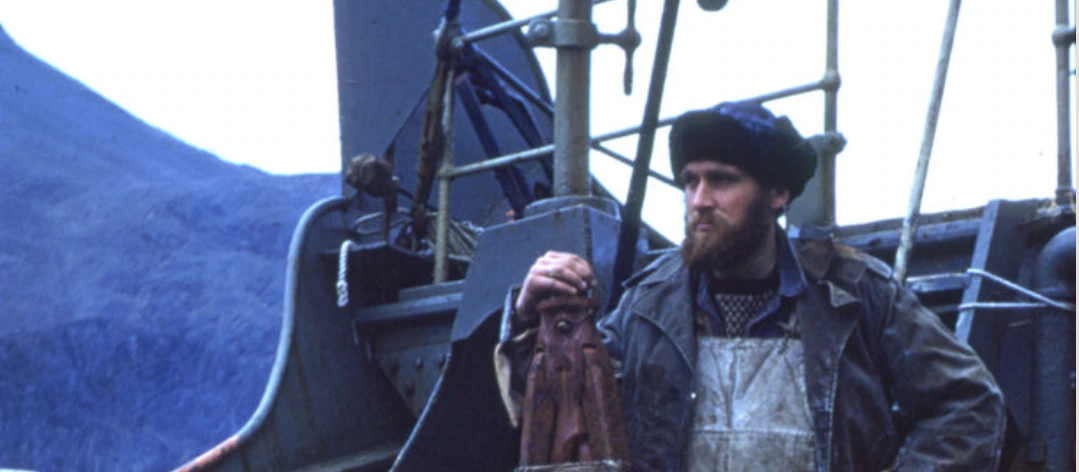
What was originally the drawing room is now dominated by the Wyse Collection, a display of porcelain, pottery and glass donated to the town by a Retford businessman in the 1960s. Elsewhere in the space are fascinating displays of images taken by local photographers, most notably the Edgar Welchman and Stephen Pegler collections.
The latter collection is particularly interesting because of its early use of autochrome colour and because Pegler himself lived in Amcott House and made it a focal point for the town by featuring it in many images.
House makeover
There is a collection of more than 20,000 negatives, most of which are accessible through touchscreens. Although it is easy to be cynical about the kind of images taken by local photographers across Britain, the colour photographs shown here genuinely evoke a lost age.
The ground floor also houses the temporary exhibition gallery and a small display on the role of the area during both world wars, along with a section on the Pilgrim Fathers. Three of the original settlers in America - Richard Clyfton, William Brewster and John Robinson - came from the local area.
The house has retained its graceful wrought-iron balustraded staircase leading to the first floor and an airy conservatory on the half-landing built in 1881. There is no lift to this level or the first floor proper and a leaflet handed to all visitors apologises for this omission and explains that the museum is a Grade II* building and suitable lift access "was a problem we could not solve".
It is a shame that no workable solution could be found as the displays on the first floor are a credit to the museum's staff and design team. Amcott House originally had four bedrooms and two dressing rooms on the first floor, and today each of the rooms covers different aspects of the local history.
The sound of Winston Churchill coming from a 1940s wireless draws the visitor into the first room - a second world war kitchen scene with familiar objects shown behind a minimal barrier that makes the displays more accessible.
From domesticity, visitors are taken back to school into a reconstructed classroom. Clearly designed with primary-school children in mind, the displays will nevertheless bring back memories to those old enough to have sat at wooden desks with inkwells at some time during their school life. With a nod to the national curriculum, the emphasis is on the Victorian era.
Local focus
The most crowded room in the museum is the one dedicated to industrial Bassetlaw. Although set in a rural landscape, towns such as Retford and Worksop were transformed in the 19th and early 20th centuries. The industries are familiar - paper and textile mills, foundries and engineering works - and the material displayed is well chosen, giving visitors a sense of the huge variety of trades practised in the area.
To reinforce this there is a large showcase displaying social history items such as medicine and mineral water bottles under which there are drawers full of letterheads, bills and invoices.
In what was once a dressing room, a very small portion of the museum's costume collection has been displayed; while the 18th-century material exhibited has been chosen to reflect the history of the house, another touchscreen database illustrates the rest of the collection with images showing more modern costumes. Light levels are kept low to protect the exhibits, but unfortunately this means that none of the labels are readable.
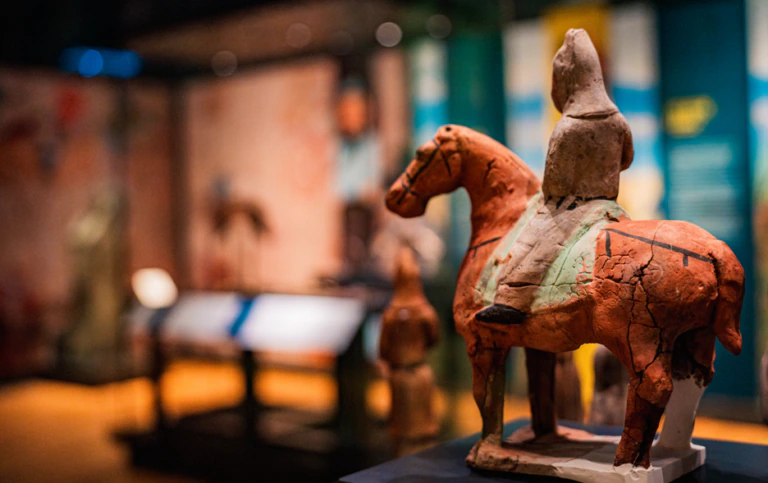
The final room on the first floor tells the story of the earliest inhabitants of the Bassetlaw area. The archaeology displays are perhaps the most elegantly designed, with four, tall light wood cases surrounding the centrepiece. Each of the cases contains only one small item, visible through fixed magnifying glasses, the most impressive being a 12th-century chess piece, or toy, in the form of a knight.
Access issues aside, recent investment in the museum has clearly improved it. The new displays are well designed, and tell the story of the area in an attractive way, although the lack of any contemporary story was a weakness.
Nevertheless, it's clear that Bassetlaw is a friendly and well-loved museum cherished by its local community. Any local authority questioning the sustainability and intrinsic value of their local museums could learn much from a visit there.
Tim Bryan is the head of collections at the Heritage Motor Centre, Gaydon
Bassetlaw Museum opened in 1986 and was recently relaunched after a major refurbishment funded largely by the district council and the Heritage Lottery Fund. The money has been spent on providing new exhibitions and restoring the fine Georgian building they occupy.
Dating from about 1750 and owned by members of the aristocracy and then local industrialists, Amcott House retains much of its original character.
Walking into the museum, the relatively narrow hall makes any introductory interpretation difficult and the visitor is channelled deep into the house almost immediately. The impact of the building restoration is most striking in the two ground floor galleries, which occupy what must have been the grandest part of the house in its prime.
Although one cannot fail to be impressed by the surroundings, the way in which interpretation has been integrated into the period decor is equally well done. The design and colour of graphics is subtle, and touchscreen interactive databases have been cleverly built into reproduction desks and display panels.
What was originally the drawing room is now dominated by the Wyse Collection, a display of porcelain, pottery and glass donated to the town by a Retford businessman in the 1960s. Elsewhere in the space are fascinating displays of images taken by local photographers, most notably the Edgar Welchman and Stephen Pegler collections.
The latter collection is particularly interesting because of its early use of autochrome colour and because Pegler himself lived in Amcott House and made it a focal point for the town by featuring it in many images.
House makeover
There is a collection of more than 20,000 negatives, most of which are accessible through touchscreens. Although it is easy to be cynical about the kind of images taken by local photographers across Britain, the colour photographs shown here genuinely evoke a lost age.
The ground floor also houses the temporary exhibition gallery and a small display on the role of the area during both world wars, along with a section on the Pilgrim Fathers. Three of the original settlers in America - Richard Clyfton, William Brewster and John Robinson - came from the local area.
The house has retained its graceful wrought-iron balustraded staircase leading to the first floor and an airy conservatory on the half-landing built in 1881. There is no lift to this level or the first floor proper and a leaflet handed to all visitors apologises for this omission and explains that the museum is a Grade II* building and suitable lift access "was a problem we could not solve".
It is a shame that no workable solution could be found as the displays on the first floor are a credit to the museum's staff and design team. Amcott House originally had four bedrooms and two dressing rooms on the first floor, and today each of the rooms covers different aspects of the local history.
The sound of Winston Churchill coming from a 1940s wireless draws the visitor into the first room - a second world war kitchen scene with familiar objects shown behind a minimal barrier that makes the displays more accessible.
From domesticity, visitors are taken back to school into a reconstructed classroom. Clearly designed with primary-school children in mind, the displays will nevertheless bring back memories to those old enough to have sat at wooden desks with inkwells at some time during their school life. With a nod to the national curriculum, the emphasis is on the Victorian era.
Local focus
The most crowded room in the museum is the one dedicated to industrial Bassetlaw. Although set in a rural landscape, towns such as Retford and Worksop were transformed in the 19th and early 20th centuries. The industries are familiar - paper and textile mills, foundries and engineering works - and the material displayed is well chosen, giving visitors a sense of the huge variety of trades practised in the area.
To reinforce this there is a large showcase displaying social history items such as medicine and mineral water bottles under which there are drawers full of letterheads, bills and invoices.
In what was once a dressing room, a very small portion of the museum's costume collection has been displayed; while the 18th-century material exhibited has been chosen to reflect the history of the house, another touchscreen database illustrates the rest of the collection with images showing more modern costumes. Light levels are kept low to protect the exhibits, but unfortunately this means that none of the labels are readable.
The final room on the first floor tells the story of the earliest inhabitants of the Bassetlaw area. The archaeology displays are perhaps the most elegantly designed, with four, tall light wood cases surrounding the centrepiece. Each of the cases contains only one small item, visible through fixed magnifying glasses, the most impressive being a 12th-century chess piece, or toy, in the form of a knight.
Access issues aside, recent investment in the museum has clearly improved it. The new displays are well designed, and tell the story of the area in an attractive way, although the lack of any contemporary story was a weakness.
Nevertheless, it's clear that Bassetlaw is a friendly and well-loved museum cherished by its local community. Any local authority questioning the sustainability and intrinsic value of their local museums could learn much from a visit there.
Tim Bryan is the head of collections at the Heritage Motor Centre, Gaydon
Project data
Cost: £850,000
Funders: Heritage Lottery Fund £685,000; WREN £50,000; Bassetlaw district council £139,000; independent sponsors £2,000
Design: JANVS
Multimedia design: JANVS
Showcases: Edwin Dyson
Building contractor: QSP
Graphic supply and installation: Edwin Dyson
Cost: £850,000
Funders: Heritage Lottery Fund £685,000; WREN £50,000; Bassetlaw district council £139,000; independent sponsors £2,000
Design: JANVS
Multimedia design: JANVS
Showcases: Edwin Dyson
Building contractor: QSP
Graphic supply and installation: Edwin Dyson