One 1970s fashion unworthy of revival - hessian - tops the what-not-to-wear list for the 21st-century gallery. Under an HLF-funded access project, York Museums Trust has had a makeover, stripping out and painting over this tired wall covering to banish York Art Gallery's dowdy past. The result is an atmospheric, visual transformation bustling with people on a busy bank holiday weekend.
The remodeled ground floor signals the most dramatic change. The previously nondescript foyer is now a welcoming entrance housing an open-plan cafe that doesn't overshadow the gallery's main purpose. The Studio, a neutral space primarily for education, decent toilets and a tempting shop lead off this area.
Art collection publications are absent, but are in the pipeline - a souvenir guidebook is a must. Elsewhere, a small display introduces the renowned Studio Pottery, featuring in an exhibition later this year. Helpful staff abound, leaving the lack of cloakroom facilities my single niggle.
Interpretation throughout is lo-tech, layered and enhanced by satisfying interactive units to encourage hands-on discovery. Themed galleries have stylish, multi-lingual introductory banners; artworks have labels of varying length; supplementary sheets include large-type text, children's guides (I liked 'Charlotte's father was King Charles II and he had lots of girlfriends'), and curators' commentaries, inspired but wordy perspectives on selected paintings by York's non-fine art curators.
Some sheets were missing, but I enjoyed the archaeologist's assessments of visual accuracy in Fungai's glorious Martyrdom of St Clement. Here's something we can all have fun with to harness colleagues' expertise and enhance visitors' experiences. They deserved more prominence, perhaps edited onto wall panels.
Individual labels are in clear font, but a number were unevenly printed and, for readability, might benefit from re-printing. Easily missed 'collection-highlight' labels used gold background paper and in the colourful, but darker, upstairs rooms, my tired old eyes struggled to read them at all.
Overall, texts combined information on both object and artist, and were effective and well pitched for general interest, although some lacked artist information, leaving me feeling frustrated and wanting to know more.
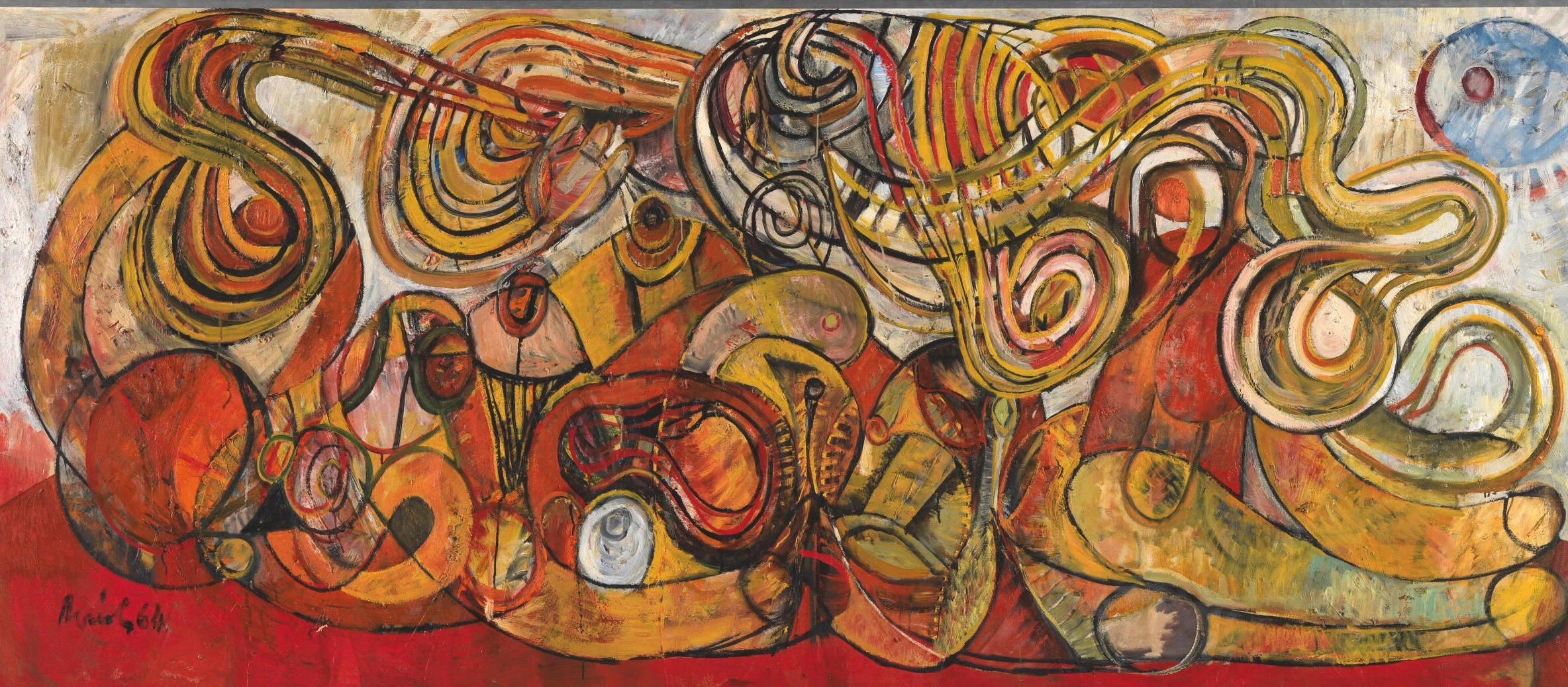
The main gallery, formerly displaying continental old masters, has become a prominent, generously proportioned temporary exhibition room. Reflections shows it off well, pairing 11 paintings from York's collection with loans which have similar styles, subjects or dates. This works best in the striking coupling of Roderick O'Conor's turbulent painting The Wave with Monet's Flood Waters (National Gallery).
The exhibition focuses attention on works that have perhaps become over-familiar, and it is here that several of the gallery's masterpieces feature: I wondered how some, particularly Cotes' Lady Stanhope... and Moore's Venus, would integrate into the permanent collection themes employed elsewhere in the gallery.
Meanwhile, reflections from awkward lighting and an over-polished floor together created the biggest challenge for visitors. The collection displays are thematically rather than chronologically arranged, under Devotion, Morality, People, Stories and Places.
Devotion is a sparse, elegant installation of religious works against pale and slate-grey walls - a mini-Sainsbury Wing. These colours complement the gold-backed panels but are too stark for the Dutch 17th-century paintings in the next room. Height and symmetrical hangs evoke altarpiece layouts.
More knowledgeable visitors will realise this, but an explanation would benefit most. Seating here would also enrich the contemplative experience. The thematic approach is a bold departure for York but does not fully deliver the focus or variety of style and period it promises.
Morality draws attention to hidden messages in Dutch painting, pertinent certainly to still lifes including the Snyders, but overlooking, for example, the landscapes also present. An introductory overview to Dutch and Flemish art is what the actual grouping logically begged.
Upstairs, an exploration of people is confined to portraits, narrow in range (mostly 17th to 18th century) and appearing yellowed against unforgiving red walls. Nearby, Stories offers a largely 19th-century perspective on narrative in art.
Places embraces the progress of wider artistic styles and movements through English Romanticism and Impressionism but is not pursued beyond the early 1950s.
Looking at York, a modest, temporary display, was attracting much attention. This tantalizing slice through the gallery's drawings, prints and watercolours includes delights by Place and Rowlandson. Galleries under-exploit works on paper, especially local views, and there is nowhere more relevant to celebrate them than in Yorkshire's tourism hotspot.
Next door, the old exhibition space, largely unchanged, hosts vibrant domestic patchwork quilts from York Castle Museum and showcases the Trust's first impressive scholarly catalogue.
Poor William Etty, York's celebrated, influential son, is relegated to bit parts in People and Stories. Since I'm not a fan, I shouldn't complain, but he flags up a bigger issue.
Where the thematic approach falls short is in conveying the true character and range of the collection. It is great to see newly conserved works coming out of store, but other iconic items, including the van Nickelen and Baburen, are absent.
Only a couple of works post-date the Second World War, yet well chosen loaned contemporary interventions hinted at the potential of more diverse groupings across styles, periods and continents that would offer a more dynamic, challenging visitor experience.
Plans to focus on 20th-century works in a forthcoming temporary display are really welcome, but may not rectify the present imbalance since it is the existing themes that would benefit from strengthening and broadening.
Segregation of the 20th-century element also seems to undermine the traditional chronology that these displays seek to escape. They fall short, too, in spotlighting the collection's notable history and the accomplishments of those involved: curator Hans Hess's steely determination to create a significant gallery; donor Lycett Green's astuteness and generosity; the reuniting of the St Clement panels.
These are fantastic stories. Woven in prominently throughout to emphasize the richness of the collection, they could also serve to stress that York Art Gallery's new development is the next major chapter. Not withstanding limited financial resources, ambitious projects like this help to reiterate the point that great galleries do exist outside London.
Ann Bukantas is the curator of fine art at the Walker, Liverpool
The remodeled ground floor signals the most dramatic change. The previously nondescript foyer is now a welcoming entrance housing an open-plan cafe that doesn't overshadow the gallery's main purpose. The Studio, a neutral space primarily for education, decent toilets and a tempting shop lead off this area.
Art collection publications are absent, but are in the pipeline - a souvenir guidebook is a must. Elsewhere, a small display introduces the renowned Studio Pottery, featuring in an exhibition later this year. Helpful staff abound, leaving the lack of cloakroom facilities my single niggle.
Interpretation throughout is lo-tech, layered and enhanced by satisfying interactive units to encourage hands-on discovery. Themed galleries have stylish, multi-lingual introductory banners; artworks have labels of varying length; supplementary sheets include large-type text, children's guides (I liked 'Charlotte's father was King Charles II and he had lots of girlfriends'), and curators' commentaries, inspired but wordy perspectives on selected paintings by York's non-fine art curators.
Some sheets were missing, but I enjoyed the archaeologist's assessments of visual accuracy in Fungai's glorious Martyrdom of St Clement. Here's something we can all have fun with to harness colleagues' expertise and enhance visitors' experiences. They deserved more prominence, perhaps edited onto wall panels.
Individual labels are in clear font, but a number were unevenly printed and, for readability, might benefit from re-printing. Easily missed 'collection-highlight' labels used gold background paper and in the colourful, but darker, upstairs rooms, my tired old eyes struggled to read them at all.
Overall, texts combined information on both object and artist, and were effective and well pitched for general interest, although some lacked artist information, leaving me feeling frustrated and wanting to know more.
The main gallery, formerly displaying continental old masters, has become a prominent, generously proportioned temporary exhibition room. Reflections shows it off well, pairing 11 paintings from York's collection with loans which have similar styles, subjects or dates. This works best in the striking coupling of Roderick O'Conor's turbulent painting The Wave with Monet's Flood Waters (National Gallery).
The exhibition focuses attention on works that have perhaps become over-familiar, and it is here that several of the gallery's masterpieces feature: I wondered how some, particularly Cotes' Lady Stanhope... and Moore's Venus, would integrate into the permanent collection themes employed elsewhere in the gallery.
Meanwhile, reflections from awkward lighting and an over-polished floor together created the biggest challenge for visitors. The collection displays are thematically rather than chronologically arranged, under Devotion, Morality, People, Stories and Places.
Devotion is a sparse, elegant installation of religious works against pale and slate-grey walls - a mini-Sainsbury Wing. These colours complement the gold-backed panels but are too stark for the Dutch 17th-century paintings in the next room. Height and symmetrical hangs evoke altarpiece layouts.
More knowledgeable visitors will realise this, but an explanation would benefit most. Seating here would also enrich the contemplative experience. The thematic approach is a bold departure for York but does not fully deliver the focus or variety of style and period it promises.
Morality draws attention to hidden messages in Dutch painting, pertinent certainly to still lifes including the Snyders, but overlooking, for example, the landscapes also present. An introductory overview to Dutch and Flemish art is what the actual grouping logically begged.
Upstairs, an exploration of people is confined to portraits, narrow in range (mostly 17th to 18th century) and appearing yellowed against unforgiving red walls. Nearby, Stories offers a largely 19th-century perspective on narrative in art.
Places embraces the progress of wider artistic styles and movements through English Romanticism and Impressionism but is not pursued beyond the early 1950s.
Looking at York, a modest, temporary display, was attracting much attention. This tantalizing slice through the gallery's drawings, prints and watercolours includes delights by Place and Rowlandson. Galleries under-exploit works on paper, especially local views, and there is nowhere more relevant to celebrate them than in Yorkshire's tourism hotspot.
Next door, the old exhibition space, largely unchanged, hosts vibrant domestic patchwork quilts from York Castle Museum and showcases the Trust's first impressive scholarly catalogue.
Poor William Etty, York's celebrated, influential son, is relegated to bit parts in People and Stories. Since I'm not a fan, I shouldn't complain, but he flags up a bigger issue.
Where the thematic approach falls short is in conveying the true character and range of the collection. It is great to see newly conserved works coming out of store, but other iconic items, including the van Nickelen and Baburen, are absent.
Only a couple of works post-date the Second World War, yet well chosen loaned contemporary interventions hinted at the potential of more diverse groupings across styles, periods and continents that would offer a more dynamic, challenging visitor experience.
Plans to focus on 20th-century works in a forthcoming temporary display are really welcome, but may not rectify the present imbalance since it is the existing themes that would benefit from strengthening and broadening.
Segregation of the 20th-century element also seems to undermine the traditional chronology that these displays seek to escape. They fall short, too, in spotlighting the collection's notable history and the accomplishments of those involved: curator Hans Hess's steely determination to create a significant gallery; donor Lycett Green's astuteness and generosity; the reuniting of the St Clement panels.
These are fantastic stories. Woven in prominently throughout to emphasize the richness of the collection, they could also serve to stress that York Art Gallery's new development is the next major chapter. Not withstanding limited financial resources, ambitious projects like this help to reiterate the point that great galleries do exist outside London.
Ann Bukantas is the curator of fine art at the Walker, Liverpool
Project data
Cost: £445,000
Funders: Heritage Lottery Fund, City of York Council, Arts Council England, Friends of York Art Gallery, Gerrard Limited, local trusts and businesses
Architect: Bauman Lyons
Contractor: Scotfit Cafe partners: Hartley's
Cost: £445,000
Funders: Heritage Lottery Fund, City of York Council, Arts Council England, Friends of York Art Gallery, Gerrard Limited, local trusts and businesses
Architect: Bauman Lyons
Contractor: Scotfit Cafe partners: Hartley's