It's a tricky one: how do you engage a bunch of teenage mums, and teenage mothers-to-be, with an eclectic collection of antiquities, ethnography, natural history and assorted curios? (A task made harder by having the end target of raising the birthweight of the babies concerned.)
The Cuming Museum, in the Elephant and Castle area of south London, is the home of the Cuming family's collection. Between 1780 and 1900 Richard Cuming and his son, Henry Syer Cuming, amassed 100,000 artefacts from around the world.
Richard started the collection at the precocious age of five (not for nothing was his nickname 'the young philosopher') when he was given three fossils and a Moghul coin by his aunt. Intriguingly these are still on display at the museum in the box that Richard made for them.
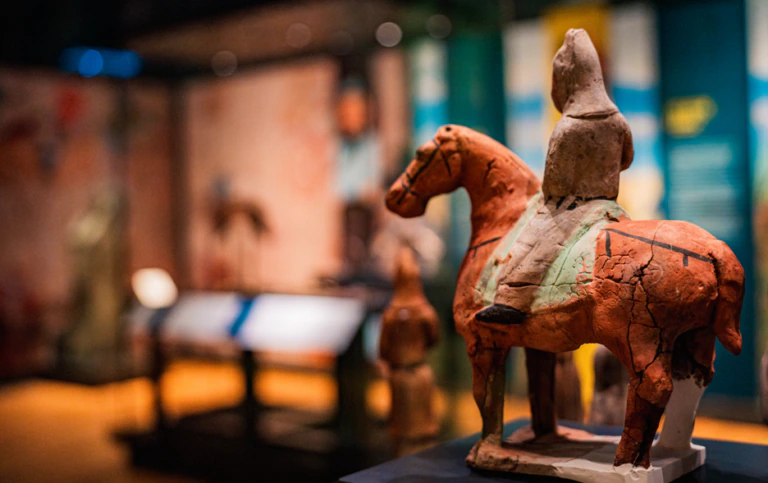
There is a wealth of weirdness in the objects - chocolate nails of Christ cosy up in the cases with a stuffed fish, a lock of hair from King Charles I and a shoe allegedly worn by Queen Victoria.
But one of the most fascinating aspects of the collection is the history of it: how it was put together; who collected what and why; and how it is being used in the present. How could a family that rarely ventured beyond the fields and hedgerows of Peckham have created such a museum?
Luckily for the Cumings, they were in the right place at the right time. The Royal Geographic Society was sponsoring expeditions and exhibitions, and when the shows ended the goods were often sold.
Traders were bringing back ethnographic knick-knacks along with their regular cargoes of sugar and tea with the hope of making a quick buck at the auction houses.
And new museums and collections were being put together - and disbanded - all the time. The Cuming collection draws on at least 20 other pre-existing collections, notably the Leverian Museum.
And the Cumings didn't stop at the real thing. The knock-on effect of the large public appetite for antiquities was the production of fakes. Henry Cuming deliberately bought fakes and added them to his collection; he even helped to expose two of the most famous forgers of the period, Billy and Charley, who became notorious for knocking out 'medieval' statues and reliquaries.
Richard and Henry were avaricious collectors who also saw the importance of everyday objects. Local tickets, posters and packaging were all saved. So their bequest, which included most of their collection and some money to start the museum, also gives an insight into life in Southwark at the start of the last century.
This year is the centenary of the museum opening and to mark the anniversary the collection will get a new accessible home with a dedicated education space, new displays and visitor facilities. It's sorely needed.
While the collection is extraordinary because of its breadth and eccentricity, it is undermined by poor display, constricted by the original listed display cabinets and confined by the tight space that it is currently shoe-horned into.
Ironically, when the museum opened 100 years ago it had more display areas than now - over the years some of the space was turned over to office accommodation and collection storage.
The long-term development plans are for a Discovery Centre that will combine all of Southwark's collections: the art collection (which came from the South London Gallery in 2004), the local history library and archive, and the Cuming collection.
But that's a way off; the Heritage Lottery Fund application has only just gone in and the move won't be until 2009 at the earliest.
In the interim the museum will move next door into what was the town hall and will gain a better street presence. The timescale for the move is tight: the museum closes on 15 July and is due to reopen in its new premises at the end of September.
The last exhibition before the move opens this month and draws on the ethnographic collection. Which is where the teenage mums come in. The show: Mana, Ornament and Adornment from the Pacific, comes at the end of a jewellery-making workshop run by a local artist, which used the collections for inspiration.
It was funded by the local Neighbourhood Renewal Unit and as well as engaging the group with the objects, there was informal information and advice on parenting and nutrition available in the sessions. (It's not yet clear if this has resulted in heavier babies in SE17.)
Using and interpreting the collection in imaginative ways is something the museum staff want to continue doing after the move. They are aiming to compile 100 new labels written in 100 of the 130 languages that are spoken in the borough. The type of translation, literal and artistic, that is perfect for this collection.
Mana: Ornament and Adornment from the Pacific, 28 February to 15 July
www.southwark.gov.uk/cumingmuseum
The Cuming Museum, in the Elephant and Castle area of south London, is the home of the Cuming family's collection. Between 1780 and 1900 Richard Cuming and his son, Henry Syer Cuming, amassed 100,000 artefacts from around the world.
Richard started the collection at the precocious age of five (not for nothing was his nickname 'the young philosopher') when he was given three fossils and a Moghul coin by his aunt. Intriguingly these are still on display at the museum in the box that Richard made for them.
There is a wealth of weirdness in the objects - chocolate nails of Christ cosy up in the cases with a stuffed fish, a lock of hair from King Charles I and a shoe allegedly worn by Queen Victoria.
But one of the most fascinating aspects of the collection is the history of it: how it was put together; who collected what and why; and how it is being used in the present. How could a family that rarely ventured beyond the fields and hedgerows of Peckham have created such a museum?
Luckily for the Cumings, they were in the right place at the right time. The Royal Geographic Society was sponsoring expeditions and exhibitions, and when the shows ended the goods were often sold.
Traders were bringing back ethnographic knick-knacks along with their regular cargoes of sugar and tea with the hope of making a quick buck at the auction houses.
And new museums and collections were being put together - and disbanded - all the time. The Cuming collection draws on at least 20 other pre-existing collections, notably the Leverian Museum.
And the Cumings didn't stop at the real thing. The knock-on effect of the large public appetite for antiquities was the production of fakes. Henry Cuming deliberately bought fakes and added them to his collection; he even helped to expose two of the most famous forgers of the period, Billy and Charley, who became notorious for knocking out 'medieval' statues and reliquaries.
Richard and Henry were avaricious collectors who also saw the importance of everyday objects. Local tickets, posters and packaging were all saved. So their bequest, which included most of their collection and some money to start the museum, also gives an insight into life in Southwark at the start of the last century.
This year is the centenary of the museum opening and to mark the anniversary the collection will get a new accessible home with a dedicated education space, new displays and visitor facilities. It's sorely needed.
While the collection is extraordinary because of its breadth and eccentricity, it is undermined by poor display, constricted by the original listed display cabinets and confined by the tight space that it is currently shoe-horned into.
Ironically, when the museum opened 100 years ago it had more display areas than now - over the years some of the space was turned over to office accommodation and collection storage.
The long-term development plans are for a Discovery Centre that will combine all of Southwark's collections: the art collection (which came from the South London Gallery in 2004), the local history library and archive, and the Cuming collection.
But that's a way off; the Heritage Lottery Fund application has only just gone in and the move won't be until 2009 at the earliest.
In the interim the museum will move next door into what was the town hall and will gain a better street presence. The timescale for the move is tight: the museum closes on 15 July and is due to reopen in its new premises at the end of September.
The last exhibition before the move opens this month and draws on the ethnographic collection. Which is where the teenage mums come in. The show: Mana, Ornament and Adornment from the Pacific, comes at the end of a jewellery-making workshop run by a local artist, which used the collections for inspiration.
It was funded by the local Neighbourhood Renewal Unit and as well as engaging the group with the objects, there was informal information and advice on parenting and nutrition available in the sessions. (It's not yet clear if this has resulted in heavier babies in SE17.)
Using and interpreting the collection in imaginative ways is something the museum staff want to continue doing after the move. They are aiming to compile 100 new labels written in 100 of the 130 languages that are spoken in the borough. The type of translation, literal and artistic, that is perfect for this collection.
Mana: Ornament and Adornment from the Pacific, 28 February to 15 July
www.southwark.gov.uk/cumingmuseum