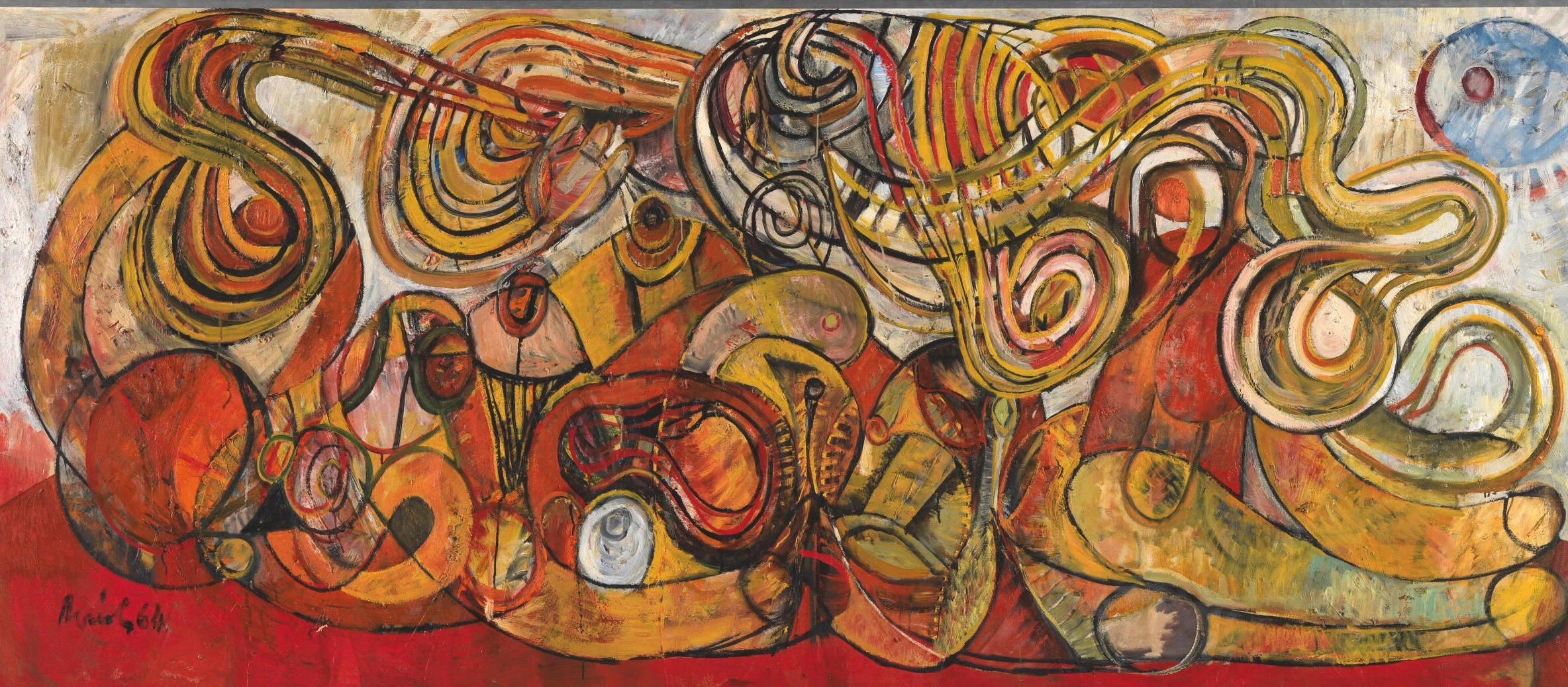
Textile Gallery, Whitworth Art Gallery, Manchester
The most memorable scene in the BBC dramatisation of Elizabeth Gaskell's North and South was the first glimpse of a Manchester textile mill with its deafening machinery and impoverished workers engulfed in a snowstorm of cotton fibres. This was 'Cottonopolis', England's second largest city and the world centre of cotton manufacturing in the 19th century.
The Whitworth Art Gallery is part of the legacy of Manchester's role in the development of the clothing industry and was set up in 1889 to improve the city's textile design and production. Today, its textile gallery holds the largest collection of fabrics outside London and it has recently been renovated.
The Whitworth was originally intended to be a museum of industrial art and design - a northern Victoria and Albert Museum - and was called the Whitworth Institute until it was taken over by the University of Manchester in 1958 and renamed the Whitworth Art Gallery.
The new name reflected a shift towards fine art, as local collectors donated British watercolours and European prints to the gallery. But this change made the presence of a textile collection within an art gallery questionable and has recently been the catalyst for an emphasis on aesthetics.
The textile collection is located in Darbishire Hall, the first gallery across from the entrance hall with its shop and cafe. This is a prime position for access and visitor throughput, but it is also problematic because of the low lighting levels needed to preserve the delicate fabrics on display. The lighting in this gallery has been improved, but the long-term plan is to rehouse textiles on the first floor to allow the hall to become lighter and more open.
The textiles are organised into four themes, which integrate different histories, geographies and cultures. These include techniques for making patterns; sources of inspiration for design and the impact of trade and empire; the meaning of textiles in terms of power, identity and ritual; and issues relating to decay, recycling and conservation.
Although the exhibits are attractive, the floor-to-ceiling display cases are not ideal because they force visitors to crouch down to examine the small objects at floor level.
On the day I visited, interpretative material had not been fully installed and only the colour-coded themed labels were in situ. Brief object descriptions will be placed next to the display cases, and there will be an opportunity to access additional information through the online database or in the Fact Files located at workstations in the gallery.
The two workstations also contain handling samples, craft materials and dressing-up clothes for children. Jennifer Harris, the curator of the textiles gallery and the deputy director and head of programming at the Whitworth, says the aim is to satisfy the needs of browsers, schoolchildren and families as well as serious researchers.
The diversity of the textile collection is emphasised by the contrast between the 15th century altar frontal at one end of the gallery and Sally Freshwater's 3D Blue Pewter (2004) created from laminated Lycra at the other. The transitional spaces between the textile and fine art galleries are occupied by work that cuts across the boundaries of different creative practices including a rug by artist Peter Blake and textile art by Alice Kettle.
As part of the refurbishment, the walls of the textile gallery and its display cases have been painted in the same neutral tones as the rest of the gallery. The Whitworth neatly avoids accusations of divorcing textiles from their cultural context by displaying textiles as art, while conveying ethnographic, historical and critical information through its layered interpretation.
The issue of different display techniques is the subject of a small exhibition in the North Mezzanine Gallery called The Object of Encounter: Resonance and Wonder. Visitors are asked to consider whether their appreciation of The Whitworth Tapestry (1968), an artist-designed textile by Eduardo Paolozzi, is influenced by their knowledge of the artist and his work.
Textiles are also the subject of the temporary exhibition Clothing Culture: Dress in Egypt in the First Millennium AD, which ends on 10 September. The fragility of these garments means they are shown in glass cases with strict lighting and temperature control.
The Whitworth Art Gallery's reopened textile space manages to reanimate the permanent collection through improved lighting, regularly changing displays and increased interactivity. Textiles have been reunified with the fine art collection by using a similar backdrop and style of presentation and by emphasising aesthetics above context. In doing so, the gallery is returning to its original aim of being a model of good design and a key source of inspiration to local designers, students and manufacturers.
Nicky Ryan is a senior lecturer in visual culture and theory, London College of Communication, University of the Arts, London
Project data
Cost: £86,000
Funders: Museums, Libraries and Archives North West, The Foyle Foundation, The Clothworkers' Foundation, The Zochonis Charitable Trust, DCMS/Wolfson Museums and Galleries Improvement Fund
Curator: Jennifer Harris
Workstations: 24 Design
Lighting: Museum and Gallery Lighting
Signage: Epigram
The most memorable scene in the BBC dramatisation of Elizabeth Gaskell's North and South was the first glimpse of a Manchester textile mill with its deafening machinery and impoverished workers engulfed in a snowstorm of cotton fibres. This was 'Cottonopolis', England's second largest city and the world centre of cotton manufacturing in the 19th century.
The Whitworth Art Gallery is part of the legacy of Manchester's role in the development of the clothing industry and was set up in 1889 to improve the city's textile design and production. Today, its textile gallery holds the largest collection of fabrics outside London and it has recently been renovated.
The Whitworth was originally intended to be a museum of industrial art and design - a northern Victoria and Albert Museum - and was called the Whitworth Institute until it was taken over by the University of Manchester in 1958 and renamed the Whitworth Art Gallery.
The new name reflected a shift towards fine art, as local collectors donated British watercolours and European prints to the gallery. But this change made the presence of a textile collection within an art gallery questionable and has recently been the catalyst for an emphasis on aesthetics.
The textile collection is located in Darbishire Hall, the first gallery across from the entrance hall with its shop and cafe. This is a prime position for access and visitor throughput, but it is also problematic because of the low lighting levels needed to preserve the delicate fabrics on display. The lighting in this gallery has been improved, but the long-term plan is to rehouse textiles on the first floor to allow the hall to become lighter and more open.
The textiles are organised into four themes, which integrate different histories, geographies and cultures. These include techniques for making patterns; sources of inspiration for design and the impact of trade and empire; the meaning of textiles in terms of power, identity and ritual; and issues relating to decay, recycling and conservation.
Although the exhibits are attractive, the floor-to-ceiling display cases are not ideal because they force visitors to crouch down to examine the small objects at floor level.
On the day I visited, interpretative material had not been fully installed and only the colour-coded themed labels were in situ. Brief object descriptions will be placed next to the display cases, and there will be an opportunity to access additional information through the online database or in the Fact Files located at workstations in the gallery.
The two workstations also contain handling samples, craft materials and dressing-up clothes for children. Jennifer Harris, the curator of the textiles gallery and the deputy director and head of programming at the Whitworth, says the aim is to satisfy the needs of browsers, schoolchildren and families as well as serious researchers.
The diversity of the textile collection is emphasised by the contrast between the 15th century altar frontal at one end of the gallery and Sally Freshwater's 3D Blue Pewter (2004) created from laminated Lycra at the other. The transitional spaces between the textile and fine art galleries are occupied by work that cuts across the boundaries of different creative practices including a rug by artist Peter Blake and textile art by Alice Kettle.
As part of the refurbishment, the walls of the textile gallery and its display cases have been painted in the same neutral tones as the rest of the gallery. The Whitworth neatly avoids accusations of divorcing textiles from their cultural context by displaying textiles as art, while conveying ethnographic, historical and critical information through its layered interpretation.
The issue of different display techniques is the subject of a small exhibition in the North Mezzanine Gallery called The Object of Encounter: Resonance and Wonder. Visitors are asked to consider whether their appreciation of The Whitworth Tapestry (1968), an artist-designed textile by Eduardo Paolozzi, is influenced by their knowledge of the artist and his work.
Textiles are also the subject of the temporary exhibition Clothing Culture: Dress in Egypt in the First Millennium AD, which ends on 10 September. The fragility of these garments means they are shown in glass cases with strict lighting and temperature control.
The Whitworth Art Gallery's reopened textile space manages to reanimate the permanent collection through improved lighting, regularly changing displays and increased interactivity. Textiles have been reunified with the fine art collection by using a similar backdrop and style of presentation and by emphasising aesthetics above context. In doing so, the gallery is returning to its original aim of being a model of good design and a key source of inspiration to local designers, students and manufacturers.
Nicky Ryan is a senior lecturer in visual culture and theory, London College of Communication, University of the Arts, London
Project data
Cost: £86,000
Funders: Museums, Libraries and Archives North West, The Foyle Foundation, The Clothworkers' Foundation, The Zochonis Charitable Trust, DCMS/Wolfson Museums and Galleries Improvement Fund
Curator: Jennifer Harris
Workstations: 24 Design
Lighting: Museum and Gallery Lighting
Signage: Epigram