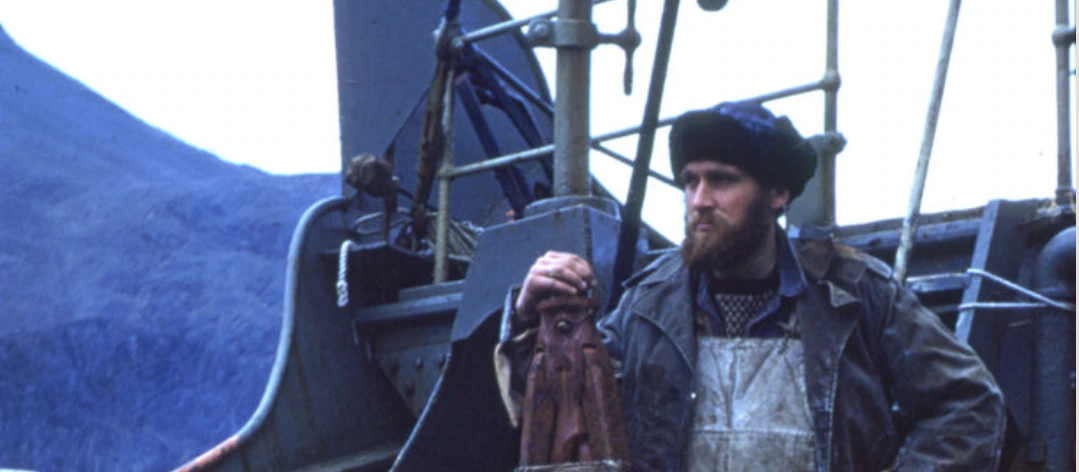
Helle Sailor! is the first exhibition at the Maritime Museum in Liverpool about the experiences of gay men in the merchant navy, predominantly those on passenger liners.
In the period between the end of the second world war and the 1980s, when the popularity of liners declined, passenger ships were considered 'gay heavens' by men who faced hostility and discrimination on land.
This exhibition shines a light on a little-known aspect of maritime history (except, of course, to the sailors working in this period). It makes a fascinating tale, and an interesting - if temporary - addition to a gallery that focuses on more orthodox stories such as the sailors who manned the cargo ships during the Battle of the North Atlantic.
The exhibition is based on a scholarly book, Hello Sailor! The Hidden History of Gay Life at Sea, which accompanies the show. It has been written by two lecturers from Lancaster University: Jo Stanley, a writer on women, gender and the sea; and Paul Baker, a linguistics scholar with a particular interest in Polari, the 'gay language' that emerged in the 1950s.
Stanley is the curator of the exhibition, and she has done an admirable job in simplifying the show to 10 panels, with accompanying audio and video diaries.
It tells the story by mixing historical background with the experiences of a handful of men, several of whom have donated objects including postcards, mementos, navy-related romances and, from a later period in their lives, civil-partnership invitations.
It describes the many roles gay men took at sea, and the way that 'camp' and dressing-up entertainment were widely accepted onboard, by straight crew members and passengers alike. Many were stewards, and apart from being charming to passengers, they were also responsible for organising social events.
In the short section on Polari, visitors learn that it is a semi-secret language with its roots, according to Baker, stretching back to Thieves' Cant. It was used by criminals between the 16th and 18th centuries. Polari came to prominence in London's docks at the turn of the last century and was widely used on land until the 1950s.
At sea, it lasted until the 1980s, but perhaps its most famous expression was in the BBC radio comedy Round the Horne, on which it was frequently used by openly gay actors, Julian and Sandy, played by Hugh Paddick and Kenneth Williams.
This is a fascinating section of the exhibition, particularly in terms of the number of words that have entered mainstream language, such as cruise, trade and mince. The book is even more illuminating; I will never think of the word 'naff' - 'not available for fucking' - in the same way again.
One or two elements of the exhibition may make some visitors feel a little uncomfortable, particularly the calm acceptance of the widespread use of pornography, some crew members trying on female passengers' clothes without permission, and the image of crew members entertaining guests in shared cabins with only a curtained-off bunk for privacy.
But most of the exhibition focuses on the stories of individuals having fun, doing their jobs well, meeting new people and falling in love in a way that most would have found impossible at home. In a moving section, two now later-middle-aged men talk on video about meeting each other onboard as young men in the 1970s.
They have just celebrated their civil partnership. It also touches on the difficulties many men faced when they were forced by changing employment conditions and recession to return to the constraints of home.
Exhibitions such as this, and the accompanying historical research, are an important step in the ongoing correction of histories, and museum displays, that are male, heterosexual, able-bodied and middle to upper class. It is right, in a civil rights and representational sense, that museums and historians reflect a more truthful, multi-faceted version of the past.
And it is important that these hidden histories become part of mainstream, permanent galleries (as has happened at Brighton Museum), and not simply reserved for the odd temporary exhibition to salve creaking consciences.
The danger, of course, is that exhibitions on 'difficult' or non-traditional subjects can be preachy or feel worthy. This exhibition avoids such a trap. It is clearly trying to be informative and fun, as well as delivering a serious, museological point.
Its only real defect is the general quality of its presentation. While the text is admirably clear, and explains words such as 'camp' for the benefit, presumably, of the more sheltered visitor, the exhibition is small and rather thin.
There are few real objects among the graphic panels. Surely, we are past the time when anyone believes graphic panels on their own make a great museum show? As for the design, the shocking pink and blue panels with curly headlines make an obvious contrast with the surrounding galleries. Much of the Maritime Museum now looks old-fashioned, conservative and drab.
The exhibition was a little too Barbara Cartland for my taste, although the museum says it was aiming for a young and lively appearance and many visitors have apparently welcomed the exhibition's design.
Liverpool is conscious of the limitations of producing a small, one-off, cheap exhibition - this one cost £25,000 and clearly not all of that was on the installation - and says this is an early step.
In conjunction with Jack Gilbert of Proud Heritage, it is setting up a Subject Specialist Network on lesbian, gay, bisexual and transgender history and heritage issues. No doubt this will ultimately translate into a more permanent treatment.
Meanwhile, Liverpool is to be congratulated on taking this step, particularly as it is not a city known for a liberal tolerance
to social 'transgression'. This may explain the absence of Liverpudlian voices in the exhibition. Despite its extensive naval and merchant navy history, it seems that there are still many in the city for whom there is a love that even now dares not speak its name.
Jane Morris is an arts writer and editor, and a judge of the European Museum of the Year Award
Project data
Cost: £25,000
Funder: National Museums Liverpool (NML)
Curators: Jo Stanley, Tony Tibbles, Charlotte Stead
Exhibition design: NML
Exhibition ends: 25 March
In the period between the end of the second world war and the 1980s, when the popularity of liners declined, passenger ships were considered 'gay heavens' by men who faced hostility and discrimination on land.
This exhibition shines a light on a little-known aspect of maritime history (except, of course, to the sailors working in this period). It makes a fascinating tale, and an interesting - if temporary - addition to a gallery that focuses on more orthodox stories such as the sailors who manned the cargo ships during the Battle of the North Atlantic.
The exhibition is based on a scholarly book, Hello Sailor! The Hidden History of Gay Life at Sea, which accompanies the show. It has been written by two lecturers from Lancaster University: Jo Stanley, a writer on women, gender and the sea; and Paul Baker, a linguistics scholar with a particular interest in Polari, the 'gay language' that emerged in the 1950s.
Stanley is the curator of the exhibition, and she has done an admirable job in simplifying the show to 10 panels, with accompanying audio and video diaries.
It tells the story by mixing historical background with the experiences of a handful of men, several of whom have donated objects including postcards, mementos, navy-related romances and, from a later period in their lives, civil-partnership invitations.
It describes the many roles gay men took at sea, and the way that 'camp' and dressing-up entertainment were widely accepted onboard, by straight crew members and passengers alike. Many were stewards, and apart from being charming to passengers, they were also responsible for organising social events.
In the short section on Polari, visitors learn that it is a semi-secret language with its roots, according to Baker, stretching back to Thieves' Cant. It was used by criminals between the 16th and 18th centuries. Polari came to prominence in London's docks at the turn of the last century and was widely used on land until the 1950s.
At sea, it lasted until the 1980s, but perhaps its most famous expression was in the BBC radio comedy Round the Horne, on which it was frequently used by openly gay actors, Julian and Sandy, played by Hugh Paddick and Kenneth Williams.
This is a fascinating section of the exhibition, particularly in terms of the number of words that have entered mainstream language, such as cruise, trade and mince. The book is even more illuminating; I will never think of the word 'naff' - 'not available for fucking' - in the same way again.
One or two elements of the exhibition may make some visitors feel a little uncomfortable, particularly the calm acceptance of the widespread use of pornography, some crew members trying on female passengers' clothes without permission, and the image of crew members entertaining guests in shared cabins with only a curtained-off bunk for privacy.
But most of the exhibition focuses on the stories of individuals having fun, doing their jobs well, meeting new people and falling in love in a way that most would have found impossible at home. In a moving section, two now later-middle-aged men talk on video about meeting each other onboard as young men in the 1970s.
They have just celebrated their civil partnership. It also touches on the difficulties many men faced when they were forced by changing employment conditions and recession to return to the constraints of home.
Exhibitions such as this, and the accompanying historical research, are an important step in the ongoing correction of histories, and museum displays, that are male, heterosexual, able-bodied and middle to upper class. It is right, in a civil rights and representational sense, that museums and historians reflect a more truthful, multi-faceted version of the past.
And it is important that these hidden histories become part of mainstream, permanent galleries (as has happened at Brighton Museum), and not simply reserved for the odd temporary exhibition to salve creaking consciences.
The danger, of course, is that exhibitions on 'difficult' or non-traditional subjects can be preachy or feel worthy. This exhibition avoids such a trap. It is clearly trying to be informative and fun, as well as delivering a serious, museological point.
Its only real defect is the general quality of its presentation. While the text is admirably clear, and explains words such as 'camp' for the benefit, presumably, of the more sheltered visitor, the exhibition is small and rather thin.
There are few real objects among the graphic panels. Surely, we are past the time when anyone believes graphic panels on their own make a great museum show? As for the design, the shocking pink and blue panels with curly headlines make an obvious contrast with the surrounding galleries. Much of the Maritime Museum now looks old-fashioned, conservative and drab.
The exhibition was a little too Barbara Cartland for my taste, although the museum says it was aiming for a young and lively appearance and many visitors have apparently welcomed the exhibition's design.
Liverpool is conscious of the limitations of producing a small, one-off, cheap exhibition - this one cost £25,000 and clearly not all of that was on the installation - and says this is an early step.
In conjunction with Jack Gilbert of Proud Heritage, it is setting up a Subject Specialist Network on lesbian, gay, bisexual and transgender history and heritage issues. No doubt this will ultimately translate into a more permanent treatment.
Meanwhile, Liverpool is to be congratulated on taking this step, particularly as it is not a city known for a liberal tolerance
to social 'transgression'. This may explain the absence of Liverpudlian voices in the exhibition. Despite its extensive naval and merchant navy history, it seems that there are still many in the city for whom there is a love that even now dares not speak its name.
Jane Morris is an arts writer and editor, and a judge of the European Museum of the Year Award
Project data
Cost: £25,000
Funder: National Museums Liverpool (NML)
Curators: Jo Stanley, Tony Tibbles, Charlotte Stead
Exhibition design: NML
Exhibition ends: 25 March