One of the most touching artefacts in the new galleries at the Croydon Museum and Heritage Service, in Croydon Clocktower, is a 1981 poster that reads: 'Museum in Croydon -- Do you Care…?' The Croydon Natural History & Scientific Society had been campaigning and collecting for a local museum since 1870.
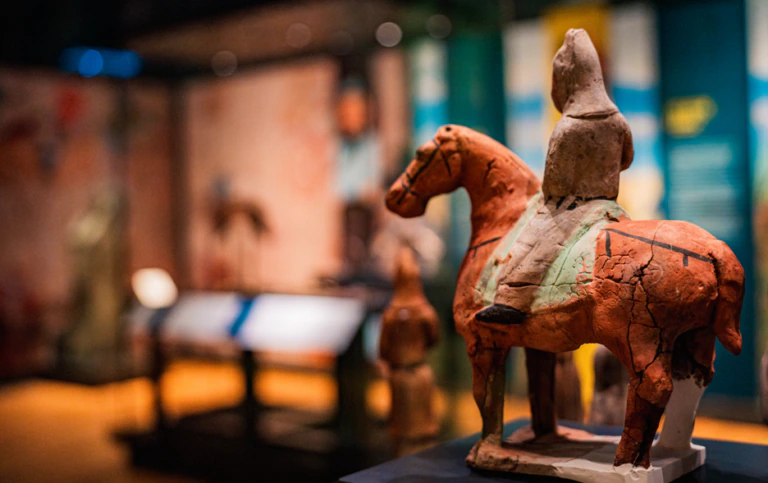
In 1995, the 125 years of pressure paid off when the Lifetimes Exhibition opened to the public, together with the Riesco Gallery of Chinese Pottery, a gift from a local donor. A decade on and these spaces have been redesigned in an innovative and intriguing way.
The Croydon collections are a fascinating melange of this and that, whatsits, and thingummyjigs - the ephemera of daily life, the very stuff of social history. What makes them special is the style of presentation, which is a modern version of the 18th-century 'cabinet of curiosities'. Each object has its own miniature showcase linked to others from the same period.
A touchscreen invites visitors to discover more. An image of the object appears with four headings: 'show', 'tell', 'explain' and 'more'. These offer access to detailed information, a brief oral history where appropriate, a suggestion of other sources and an invitation for the visitor to supply their own experiences. The system, although sophisticated, is easy-to-use, even for a technophobe such as me.
One of the first exhibits is a marine iguana collected from the Galapagos Islands in 1835 by Robert Fitzroy, the captain of Charles Darwin's ship, HMS Beagle, which stares defiantly at visitors. It opens up a series of narratives on scientific exploration and the controversy over Darwin's book, the Origin of the Species.
We learn that Fitzroy, a devout Christian, was so distressed in later life by what he saw as 'Darwinian heresy', that he committed suicide. Suggestions are made for visitors to research local parish records and the archives of the Natural History Museum.
Stories unfold and people are identified from other simple artefacts. A piece of wooden grave marker introduces 24-year-old John Lock, who died from hepatitis in 1856. Scratched into the faded wood and just visible are the words: 'When passing, stop and drop a tear, think of one a'sleeping here, and pray be kind to my children dear.'
I learned that a brass bugle with a red, yellow and blue cord was presented to Charles Epps for his faithfulness in sounding the 'all clear' in the streets of Croydon during the first world war. The supplementary information tells of children hiding under tables during Zeppelin raids.
An unexploded bomb and a twisted piece of shrapnel from a V1 rocket that fell locally illustrate the increased savagery of the second world war. The cold statistics record that more than 5,000 people in the Croydon area were killed during the bombings, while more than 6,000 houses were damaged or destroyed.
I was intrigued to see a Trojan Bubble Car, which was one of 6,000 made in Croydon in the early 1960s. Did buyers know that the design was developed by Heinkel in Germany?
Other objects acknowledge the existence of ethnic and religious groupings: a synagogue clock with Yiddish rather than Roman numerals, and a Kathakali dance mask imported from Kerala in India for a festival.
Sport and popular culture are represented by exhibits such as a ten-year season ticket for Crystal Palace Football Club; Hell's Angels jackets; and a collection of Bay City Rollers jumpers, scarves and berets.
A wooden and metal toy figure, Bozo the Caveman, bought by a five-year-old on holiday abroad, heralds the start of continental travel for the masses.
This museum is defiantly about people, illustrating Thomas Carlyle's definition of history as 'the essence of innumerable biographies'. Displays are provocatively juxtaposed. A photographic tribute to local celebrity and golden boy, CB Fry - international cricketer and footballer, politician and potential king of Albania - shares a screen with Len Saunders.
Len was an infant when he was sent to the Croydon Workhouse. His display is blank. There are no photographs or ephemera relating to his time there, only eloquently spoken memories of the physical and sexual abuse he suffered. 'One of the staff would help us - though I suppose he had to be careful. Most of them, they were cruel.'
There are other touching artefacts. Derek Bentley was hanged in 1953 for his part in the murder of a Croydon policeman. A rosary gifted by an elderly man who Derek once bought a cup of coffee instigates the story of the Bentley family's long battle for a posthumous pardon.
The scholarship and style that underlies this exhibition is admirable.
The Heritage Lottery Fund grant of less than £1m has been spent wisely. The displays, including those prepared by the young people of Croydon, are complemented by the mezzanine gallery, the Memory Room, where computer terminals provide access to all the exhibition's content and archives.
At a time when local authorities are under financial pressure, this museum is a major innovation and one that will need investment to keep the exhibitions flexible and adequately staffed.
Fellow curators and archivists would do well to visit Croydon, although some sense of its quality can be experienced on its website. My only worry is the accessibility of the displays within the extraordinary building in which they are located.
Croydon Clocktower is a complicated edifice that also houses the town hall, cinema, theatre, library and cafe. Visitors will find the entrance is bewildering and the interior signing sparse.
Similarly, the promotional material for the building places the museum at the bottom of a list of events or tucked away at the back of a leaflet. This achievement deserves much more positive and aggressive marketing. Feathers in caps are made to be seen. Perhaps it is the council that needs to take heed of the slogan on that 1980s poster.
Peter Lewis is a writer and a past director of Beamish, the North of England Open Air Museum
Project data
Cost: £1m
Main funders: Heritage Lottery Fund (£933,500), London Borough of Croydon
Main contractor: Clements & Street (managed by The Hub)
Low-tech interactives and timeline: Paragon Creative
Exhibition design: Fashion
Architecture Taste (FAT)
Graphics: Apfel (a practice for Everyday Life)
Project management: Huntley Cartwright
Quantity surveyor: Greenway Associates
ICT consultant: Culture Works
Software: System Simulation
Hardware: Network Maintenance
In 1995, the 125 years of pressure paid off when the Lifetimes Exhibition opened to the public, together with the Riesco Gallery of Chinese Pottery, a gift from a local donor. A decade on and these spaces have been redesigned in an innovative and intriguing way.
The Croydon collections are a fascinating melange of this and that, whatsits, and thingummyjigs - the ephemera of daily life, the very stuff of social history. What makes them special is the style of presentation, which is a modern version of the 18th-century 'cabinet of curiosities'. Each object has its own miniature showcase linked to others from the same period.
A touchscreen invites visitors to discover more. An image of the object appears with four headings: 'show', 'tell', 'explain' and 'more'. These offer access to detailed information, a brief oral history where appropriate, a suggestion of other sources and an invitation for the visitor to supply their own experiences. The system, although sophisticated, is easy-to-use, even for a technophobe such as me.
One of the first exhibits is a marine iguana collected from the Galapagos Islands in 1835 by Robert Fitzroy, the captain of Charles Darwin's ship, HMS Beagle, which stares defiantly at visitors. It opens up a series of narratives on scientific exploration and the controversy over Darwin's book, the Origin of the Species.
We learn that Fitzroy, a devout Christian, was so distressed in later life by what he saw as 'Darwinian heresy', that he committed suicide. Suggestions are made for visitors to research local parish records and the archives of the Natural History Museum.
Stories unfold and people are identified from other simple artefacts. A piece of wooden grave marker introduces 24-year-old John Lock, who died from hepatitis in 1856. Scratched into the faded wood and just visible are the words: 'When passing, stop and drop a tear, think of one a'sleeping here, and pray be kind to my children dear.'
I learned that a brass bugle with a red, yellow and blue cord was presented to Charles Epps for his faithfulness in sounding the 'all clear' in the streets of Croydon during the first world war. The supplementary information tells of children hiding under tables during Zeppelin raids.
An unexploded bomb and a twisted piece of shrapnel from a V1 rocket that fell locally illustrate the increased savagery of the second world war. The cold statistics record that more than 5,000 people in the Croydon area were killed during the bombings, while more than 6,000 houses were damaged or destroyed.
I was intrigued to see a Trojan Bubble Car, which was one of 6,000 made in Croydon in the early 1960s. Did buyers know that the design was developed by Heinkel in Germany?
Other objects acknowledge the existence of ethnic and religious groupings: a synagogue clock with Yiddish rather than Roman numerals, and a Kathakali dance mask imported from Kerala in India for a festival.
Sport and popular culture are represented by exhibits such as a ten-year season ticket for Crystal Palace Football Club; Hell's Angels jackets; and a collection of Bay City Rollers jumpers, scarves and berets.
A wooden and metal toy figure, Bozo the Caveman, bought by a five-year-old on holiday abroad, heralds the start of continental travel for the masses.
This museum is defiantly about people, illustrating Thomas Carlyle's definition of history as 'the essence of innumerable biographies'. Displays are provocatively juxtaposed. A photographic tribute to local celebrity and golden boy, CB Fry - international cricketer and footballer, politician and potential king of Albania - shares a screen with Len Saunders.
Len was an infant when he was sent to the Croydon Workhouse. His display is blank. There are no photographs or ephemera relating to his time there, only eloquently spoken memories of the physical and sexual abuse he suffered. 'One of the staff would help us - though I suppose he had to be careful. Most of them, they were cruel.'
There are other touching artefacts. Derek Bentley was hanged in 1953 for his part in the murder of a Croydon policeman. A rosary gifted by an elderly man who Derek once bought a cup of coffee instigates the story of the Bentley family's long battle for a posthumous pardon.
The scholarship and style that underlies this exhibition is admirable.
The Heritage Lottery Fund grant of less than £1m has been spent wisely. The displays, including those prepared by the young people of Croydon, are complemented by the mezzanine gallery, the Memory Room, where computer terminals provide access to all the exhibition's content and archives.
At a time when local authorities are under financial pressure, this museum is a major innovation and one that will need investment to keep the exhibitions flexible and adequately staffed.
Fellow curators and archivists would do well to visit Croydon, although some sense of its quality can be experienced on its website. My only worry is the accessibility of the displays within the extraordinary building in which they are located.
Croydon Clocktower is a complicated edifice that also houses the town hall, cinema, theatre, library and cafe. Visitors will find the entrance is bewildering and the interior signing sparse.
Similarly, the promotional material for the building places the museum at the bottom of a list of events or tucked away at the back of a leaflet. This achievement deserves much more positive and aggressive marketing. Feathers in caps are made to be seen. Perhaps it is the council that needs to take heed of the slogan on that 1980s poster.
Peter Lewis is a writer and a past director of Beamish, the North of England Open Air Museum
Project data
Cost: £1m
Main funders: Heritage Lottery Fund (£933,500), London Borough of Croydon
Main contractor: Clements & Street (managed by The Hub)
Low-tech interactives and timeline: Paragon Creative
Exhibition design: Fashion
Architecture Taste (FAT)
Graphics: Apfel (a practice for Everyday Life)
Project management: Huntley Cartwright
Quantity surveyor: Greenway Associates
ICT consultant: Culture Works
Software: System Simulation
Hardware: Network Maintenance