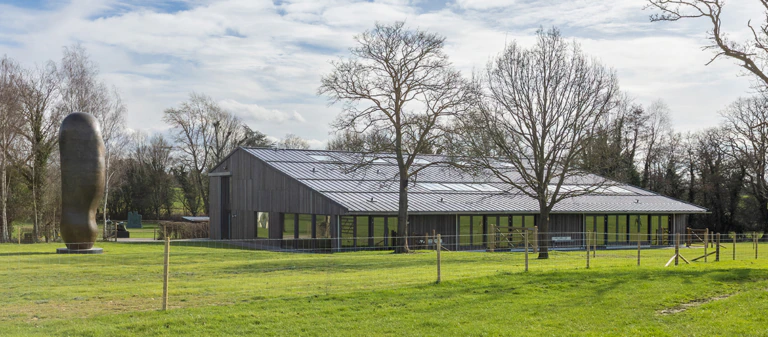
Gazing across the rolling green Limpley Stoke Valley in deepest Somerset it's easy to imagine Mr Darcy striding over the horizon, dripping with water. But a Jane Austen period drama is not the story that is being told here at Claverton Manor in Bath.
Instead, the neo-classical manor house is home to the American Museum in Britain, which showcases decorative arts from the US and hopes to further understanding of the country's culture.
Up until last month that was done through a series of period rooms detailing different domestic styles from the 17th- to the 19th-century. Now there is a new exhibition in the basement of the house that gives some historical context to the rooms above.
The American Heritage exhibition packs a lot into a relatively small space. America is a big country with a correspondingly large history and diverse population and the exhibition begins with Israel Zangwill's idea that the country is a 'melting pot'.
Next is a lengthy timeline covering major moments in American history. In front of it is a display of chairs illustrating the changing tastes and influences in American design. A third layer of information and objects are squeezed in front of the chairs, making for a visually confusing display.
After this bombardment of information, objects and audiovisuals (AVs), the rest of the display is thematically organised and easier to navigate. Difficult Journeys focuses on the pioneers and a well-designed touchscreen game encourages visitors to choose what they would take and what they'd leave behind on their voyage to the New World.
The low ceilings and many alcoves in the basement make it a problematic space to fit an exhibition into, but the many nooks and crannies have been put to good use. An example is a small recess that originally held the wine cellar, which now houses a series of 'What is it?' boxes, where visitors are challenged to guess the purpose of the object, many of which have a simple linear beauty that belies their original use.
Next is Homesteading and the frontier story of the Wild West. Myths and legends are explored - and debunked. The museum has not shied away from telling the difficult parts of American history. In reality the frontier was a dividing line between conquered and unconquered lands and Losing the West: the Native American Experience tells this part of American history from a very different perspective.
The Rinehart and Muhr photography collection is used to illustrate the decimation of the Native American tribes. In 1898 the photographers were commissioned by the government to document the Omaha Congress of Native Americans. In effect it was a government elegy to what it thought was a dying race. Stories of massacres, battles, land grabs and broken treaties cover the walls.
The timeline from 1834, when the federal government decreed that the Great Plains were owned by all Indian tribes 'as long as the stars shine and the rivers flow', to 1890 and the Wounded Knee Massacre, when the government declared that the Frontier no longer existed, is tellingly short.
The exhibition is strongly based around objects from the collection and there is a compelling display of Native American decorative arts following on from the narrative. Costume, headdresses and domestic ephemera are displayed to good effect and are interspersed with contemporary art.
Legacies and Ongoing Stories outlines the impact of the persecution and forced removals of Native Americans and also the loss of material culture that they suffered. The museum also tackles the thorny subject of repatriation, explaining that in the US the Native American Graves Protection and Repatriation Act has allowed for the return of some items from museums.
Other stories are told, too: slavery, the civil war and civil rights are all huge topics that are well handled and illustrated with objects such as the headscarf of freed slave Nancy Burns and the Chalices Quilt produced by slaves on the eve of the civil war.
The museum was founded in 1961 by Dallas Pratt and John Judkyn who wanted to share their love of Americana with the British. They were inspired by American historic houses such as Colonial Williamsburg and set about shipping furniture and domestic objects, even floorboards, over from the US.
They wanted to show that there was more to America than the Hollywood version that the British were familiar with. In the new exhibition, objects and stories that didn't fit into the existing period rooms have been allowed to tell their often contentious stories, which should add an extra dimension to visitors' understanding of America's complex history.
Instead, the neo-classical manor house is home to the American Museum in Britain, which showcases decorative arts from the US and hopes to further understanding of the country's culture.
Up until last month that was done through a series of period rooms detailing different domestic styles from the 17th- to the 19th-century. Now there is a new exhibition in the basement of the house that gives some historical context to the rooms above.
The American Heritage exhibition packs a lot into a relatively small space. America is a big country with a correspondingly large history and diverse population and the exhibition begins with Israel Zangwill's idea that the country is a 'melting pot'.
Next is a lengthy timeline covering major moments in American history. In front of it is a display of chairs illustrating the changing tastes and influences in American design. A third layer of information and objects are squeezed in front of the chairs, making for a visually confusing display.
After this bombardment of information, objects and audiovisuals (AVs), the rest of the display is thematically organised and easier to navigate. Difficult Journeys focuses on the pioneers and a well-designed touchscreen game encourages visitors to choose what they would take and what they'd leave behind on their voyage to the New World.
The low ceilings and many alcoves in the basement make it a problematic space to fit an exhibition into, but the many nooks and crannies have been put to good use. An example is a small recess that originally held the wine cellar, which now houses a series of 'What is it?' boxes, where visitors are challenged to guess the purpose of the object, many of which have a simple linear beauty that belies their original use.
Next is Homesteading and the frontier story of the Wild West. Myths and legends are explored - and debunked. The museum has not shied away from telling the difficult parts of American history. In reality the frontier was a dividing line between conquered and unconquered lands and Losing the West: the Native American Experience tells this part of American history from a very different perspective.
The Rinehart and Muhr photography collection is used to illustrate the decimation of the Native American tribes. In 1898 the photographers were commissioned by the government to document the Omaha Congress of Native Americans. In effect it was a government elegy to what it thought was a dying race. Stories of massacres, battles, land grabs and broken treaties cover the walls.
The timeline from 1834, when the federal government decreed that the Great Plains were owned by all Indian tribes 'as long as the stars shine and the rivers flow', to 1890 and the Wounded Knee Massacre, when the government declared that the Frontier no longer existed, is tellingly short.
The exhibition is strongly based around objects from the collection and there is a compelling display of Native American decorative arts following on from the narrative. Costume, headdresses and domestic ephemera are displayed to good effect and are interspersed with contemporary art.
Legacies and Ongoing Stories outlines the impact of the persecution and forced removals of Native Americans and also the loss of material culture that they suffered. The museum also tackles the thorny subject of repatriation, explaining that in the US the Native American Graves Protection and Repatriation Act has allowed for the return of some items from museums.
Other stories are told, too: slavery, the civil war and civil rights are all huge topics that are well handled and illustrated with objects such as the headscarf of freed slave Nancy Burns and the Chalices Quilt produced by slaves on the eve of the civil war.
The museum was founded in 1961 by Dallas Pratt and John Judkyn who wanted to share their love of Americana with the British. They were inspired by American historic houses such as Colonial Williamsburg and set about shipping furniture and domestic objects, even floorboards, over from the US.
They wanted to show that there was more to America than the Hollywood version that the British were familiar with. In the new exhibition, objects and stories that didn't fit into the existing period rooms have been allowed to tell their often contentious stories, which should add an extra dimension to visitors' understanding of America's complex history.