The dead rat says it all. Or does it? The rodent was found during the renovation of Fulham Palace in the roof space of the Grade I listed building. Its age is uncertain and it's probably best to not know - that way visitors can imagine it nosing around the site from Neolithic times to the present.
The desiccated rodent is one of a range of eclectic objects on display at the recently refurbished Fulham Palace Museum in west London. The palace is on an ancient site - excavations have shown evidence of Neolithic and Roman occupation - and it was a residence of the bishops of London from 704 to 1975. All of this makes for long and varied history with lots of stories to tell.
The building is the product of centuries of change. As it stands now there are elements of Tudor, Georgian, Gothic and Victorian architecture; evidence that each bishop in residence wanted to make his mark with either an addition or a demolition - the bishops were wealthy men of status and were expected to have good taste in interior decor and to entertain in style.
The museum was recently revamped as part of the first phase of the restoration of the whole palace and now for the first time there is access to the Great Hall, the oldest part of the palace, dating back to 1495.
The result of all the Changing Rooms activity over the years means that the palace is a jumble of building styles that make for a rather strangely configured building. To make sense of all this there is a simple model of the palace layout in the Great Hall that manages to convey the layers of the building as well as giving clues to the labyrinthine orientation.
After the hall comes Bishop Sherlock's Dining Room, which has been restored and now provides space for school groups. Work on the room revealed the original rococo ceiling. Bits of the plasterwork came away during renovation and a chunk remains on display enabling closer inspection of the detailed scrolls and illustrating the restoration process.
Bishop Howley's drawing room is home to the main museum displays, which have the unenviable task of trying to cover the long history of the palace and gardens, the archaeology of the site and also tell the stories of the bishops who lived there. Despite the minimal space this is done well. The displays follow the broad themes and what would otherwise be a random bunch of disparate objects begin to make sense.
Over the years, building works and archaeological excavations have revealed everything from Neolithic axe-heads to Roman coins as well as a very 20th-century condom tin (found in the west pantry of Bishop Stopford's dining room).
The different ages of the palace are neatly shown by a dolls' house with Tudor, Georgian and Victorian storeys. This, and fragments of hand-stencilled wallpaper from the 1750s, oak linenfold panelling, and a sash-window cord give clues to the interior designs over the ages.
Next door is Bishop Porteus's library. The walls are still floor-to-ceiling bookshelves, although not with the bishop's originals, as he donated his collection to the University of London.
Later bishops did leave behind books and any gaps in the shelves have been filled with 'suitable-looking' replacements, which perhaps explains why a book on alcoholism snuggles next to the Catholic Dictionary of Theology - unless there's something that the bishops are not telling us.
The displays and objects here tell the story of the palace from the first world war to the present and the range of artefacts becomes even more eclectic: a case of Victorian objects and ephemera; a Bakelite phone; the house exchange system with the names of each room; Bishop Stopford's travelling bag and Bishop Winnington Ingram's clothes brush.
There are some nice touches, such as the mirror set into a bookshelf so the stained-glass window opposite is reflected and its coat of arms are explained.
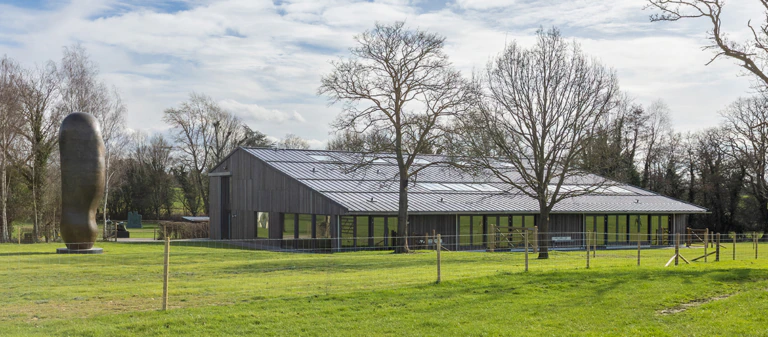
Aside from the museum there is also now a contemporary gallery space that will exhibit work that is inspired by the palace and its grounds. There is also a wonderful cafe, laid out to resemble a bishop's drawing room and dotted with photographs of previous inhabitants, which has great views of the surrounding parkland.
The one drawback is the limited opening hours, something that will hopefully be addressed if the second phase of fundraising is successful.
Fulham Palace Museum deserves a wider audience; the historical and architectural richness of the site makes it worth a visit alone and the redisplay uses the rich collection to let the story unfold. If the story lacks anything it is a sense of drama.
There are plenty of elements that could provide it in the history of the palace - visiting kings and queens; a bishop burned at the stake; rumours of the ghosts of tortured prisoners roaming the corridors - there's even a secret door in the library to add to the intrigue.
Some of this history is revealed by the diligent and knowledgeable volunteers, but if only that rat could talk.
The desiccated rodent is one of a range of eclectic objects on display at the recently refurbished Fulham Palace Museum in west London. The palace is on an ancient site - excavations have shown evidence of Neolithic and Roman occupation - and it was a residence of the bishops of London from 704 to 1975. All of this makes for long and varied history with lots of stories to tell.
The building is the product of centuries of change. As it stands now there are elements of Tudor, Georgian, Gothic and Victorian architecture; evidence that each bishop in residence wanted to make his mark with either an addition or a demolition - the bishops were wealthy men of status and were expected to have good taste in interior decor and to entertain in style.
The museum was recently revamped as part of the first phase of the restoration of the whole palace and now for the first time there is access to the Great Hall, the oldest part of the palace, dating back to 1495.
The result of all the Changing Rooms activity over the years means that the palace is a jumble of building styles that make for a rather strangely configured building. To make sense of all this there is a simple model of the palace layout in the Great Hall that manages to convey the layers of the building as well as giving clues to the labyrinthine orientation.
After the hall comes Bishop Sherlock's Dining Room, which has been restored and now provides space for school groups. Work on the room revealed the original rococo ceiling. Bits of the plasterwork came away during renovation and a chunk remains on display enabling closer inspection of the detailed scrolls and illustrating the restoration process.
Bishop Howley's drawing room is home to the main museum displays, which have the unenviable task of trying to cover the long history of the palace and gardens, the archaeology of the site and also tell the stories of the bishops who lived there. Despite the minimal space this is done well. The displays follow the broad themes and what would otherwise be a random bunch of disparate objects begin to make sense.
Over the years, building works and archaeological excavations have revealed everything from Neolithic axe-heads to Roman coins as well as a very 20th-century condom tin (found in the west pantry of Bishop Stopford's dining room).
The different ages of the palace are neatly shown by a dolls' house with Tudor, Georgian and Victorian storeys. This, and fragments of hand-stencilled wallpaper from the 1750s, oak linenfold panelling, and a sash-window cord give clues to the interior designs over the ages.
Next door is Bishop Porteus's library. The walls are still floor-to-ceiling bookshelves, although not with the bishop's originals, as he donated his collection to the University of London.
Later bishops did leave behind books and any gaps in the shelves have been filled with 'suitable-looking' replacements, which perhaps explains why a book on alcoholism snuggles next to the Catholic Dictionary of Theology - unless there's something that the bishops are not telling us.
The displays and objects here tell the story of the palace from the first world war to the present and the range of artefacts becomes even more eclectic: a case of Victorian objects and ephemera; a Bakelite phone; the house exchange system with the names of each room; Bishop Stopford's travelling bag and Bishop Winnington Ingram's clothes brush.
There are some nice touches, such as the mirror set into a bookshelf so the stained-glass window opposite is reflected and its coat of arms are explained.
Aside from the museum there is also now a contemporary gallery space that will exhibit work that is inspired by the palace and its grounds. There is also a wonderful cafe, laid out to resemble a bishop's drawing room and dotted with photographs of previous inhabitants, which has great views of the surrounding parkland.
The one drawback is the limited opening hours, something that will hopefully be addressed if the second phase of fundraising is successful.
Fulham Palace Museum deserves a wider audience; the historical and architectural richness of the site makes it worth a visit alone and the redisplay uses the rich collection to let the story unfold. If the story lacks anything it is a sense of drama.
There are plenty of elements that could provide it in the history of the palace - visiting kings and queens; a bishop burned at the stake; rumours of the ghosts of tortured prisoners roaming the corridors - there's even a secret door in the library to add to the intrigue.
Some of this history is revealed by the diligent and knowledgeable volunteers, but if only that rat could talk.