Is the glass half full, or half empty? This is the question begged by the new Middlesbrough Institute of Modern Art, also known as Mima. Comments in the visitor book one week on from its opening in January were more mixed than you might expect.
Many thought it amazing, and just what the town needed, while others seemed ever so slightly underwhelmed by how much art museum and surrounding landscaping you get for £19.2m these days.
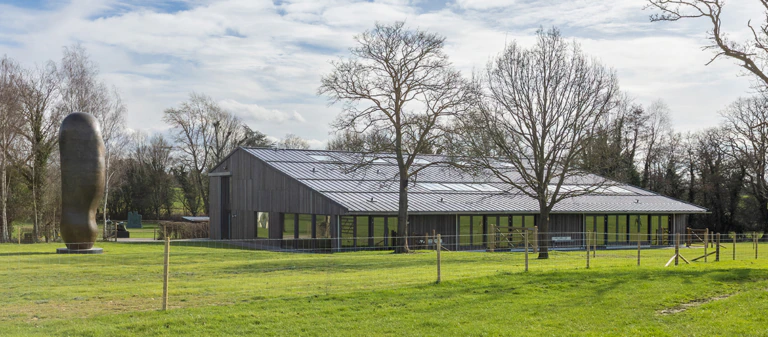
In 1993, the year the National Lottery Act made civic improvements on this scale possible, Middlesbrough Council was unveiling Bottle of Notes, a super piece of public art by Claes Oldenburg and Coosje van Bruggen. The 35-foot high sculpture now bobs at its jaunty angle at one end of a park featuring dancing fountains at the other, and patterned steel stepping stones in between.
You can admire the ensemble, and the Cleveland Hills in the distance, from Mima's rooftop terrace, which alone justifies a visit, and repays the steep climb up to reach it.
Behind Mima's all-glass facade is a long, narrow lobby, which rises the full height of the building. The lobby faces due north, so, hopefully, visitors and staff will not be toasted on a sunny day sandwiched between the glass and the museum's white cliff of limestone walling.
And maybe the row of vertical steel cables in front of the windows will be enough to warn birds flying south to take evasive action.
Whoever stocked the shop seems to have gone to the Zen school of retail or was unable to bear cluttering their artist-designed shelves. Anyone for a £600 teapot?
The cafe, however, was doing good trade, thanks to a great position facing the square, sleek interior design and very reasonable prices: mains about £5.
Beyond the largely bare shelves is a welcome desk, which, thanks it its friendly staff, lives up to its name. They need to be friendly, because the museum has a rather chilly, hard-edged feel, probably because of the acres of white-painted surfaces and grey, stone floors.
The galleries, which are found on two floors, are artificially lit, feature-free white boxes, reminiscent of the galleries in Tate Modern, except the floors are polished wood rather than rough timber. The first gallery is double height and used to good effect for showing DJ Simpson's huge Extension 3 (2006). Using a handheld router, Simpson has chiselled abstract lines into laminated birch plywood, creating an electric-powered drawing. It shares the space with two small Jackson Pollock drip-drawings.
The inaugural show is entirely devoted to drawing, filling the galleries on the ground floor and the big L-shaped space on the second floor. On the plus side, this means that visitors can admire original works by artists such as Pablo Picasso and Henri Matisse as well as Andy Warhol and Pollock.
But it asks a lot of smallish works on paper to look their best hung in a straight line on big, white walls. And pairing them with drawings by contemporary artists such as Damien Hirst and Chantal Joffe does the latter no favours.
The opening show is called Draw: Conversations around the Legacy of Drawing. Ultimately the matchmaking is as awkward as the museum's syntax. Only the twinning of Matisse's sinuous charcoal portraits with Chris Ofili's meticulous and controlled work seems to work in juxtaposition.
Wall texts provide potted biographies, and labels give dates and titles, but visitors are never privy to why, in the curators' opinions, each artist has something to say to their colleagues. Draw is an undeniably ambitious project in terms of national and international loans, and it is accompanied by a well-illustrated publication, but ultimately it feels a bit of an excuse to drop some names.
The exhibition talks a lot about 'what it is to draw' and the importance of 'drawing in artists' practice', but on a Saturday afternoon there was surprisingly no encouragement to put pencil to paper yourself other than on a worksheet designed for young children. Visitors could glimpse into the museum's rather sterile looking education space (more white walls and grey flooring), but the door was locked. The events programme did not kick off until mid-February, which seemed rather late in the day.
Mima's marketing efforts also seem to have got off on the
back foot, although its website has now been expanded to
include more than just a homepage. To spend £19.2m on a
modern art museum in a town not previously on the modern art map, the Oldenburg notwithstanding, seems incredible.
Mima's printed brochure boasts that the museum 'brings together the town's art collections for the first time.' Well, not to start with. There was no sign of the 3,000 works Mima has inherited from its predecessors, which includes a David Hockney, Ben Nicholson and Bridget Riley, plus works on paper purchased through the Contemporary Art Society's Special Collection Scheme, and a craft collection.
The Northern Rock Building Society must be wondering where its annual £30,000 acquisition grant is going. Straight into state-of-the art storage in Mima's basement seems to be the answer. An online database of the collection would be welcome, better still behind-the-scenes tours of the stores.
Back to the visitor book: you could find for every 'better than Baltic' in Gateshead (which will be Mima's closest geographical and spiritual rival), a few 'totally disappointeds', presumably referring to the town's hidden collection. After the Draw exhibition, Mima promises an exhibition that will use more of its collection. What happens beyond that seems rather vague.
Hopefully, ideas and lending agreements are in place for exciting shows, because Mima, like its big brother on the Tyne, will succeed or falter on the quality of its exhibition programme.
Caroline Worthington is the curator of art at York Museums Trust
Many thought it amazing, and just what the town needed, while others seemed ever so slightly underwhelmed by how much art museum and surrounding landscaping you get for £19.2m these days.
In 1993, the year the National Lottery Act made civic improvements on this scale possible, Middlesbrough Council was unveiling Bottle of Notes, a super piece of public art by Claes Oldenburg and Coosje van Bruggen. The 35-foot high sculpture now bobs at its jaunty angle at one end of a park featuring dancing fountains at the other, and patterned steel stepping stones in between.
You can admire the ensemble, and the Cleveland Hills in the distance, from Mima's rooftop terrace, which alone justifies a visit, and repays the steep climb up to reach it.
Behind Mima's all-glass facade is a long, narrow lobby, which rises the full height of the building. The lobby faces due north, so, hopefully, visitors and staff will not be toasted on a sunny day sandwiched between the glass and the museum's white cliff of limestone walling.
And maybe the row of vertical steel cables in front of the windows will be enough to warn birds flying south to take evasive action.
Whoever stocked the shop seems to have gone to the Zen school of retail or was unable to bear cluttering their artist-designed shelves. Anyone for a £600 teapot?
The cafe, however, was doing good trade, thanks to a great position facing the square, sleek interior design and very reasonable prices: mains about £5.
Beyond the largely bare shelves is a welcome desk, which, thanks it its friendly staff, lives up to its name. They need to be friendly, because the museum has a rather chilly, hard-edged feel, probably because of the acres of white-painted surfaces and grey, stone floors.
The galleries, which are found on two floors, are artificially lit, feature-free white boxes, reminiscent of the galleries in Tate Modern, except the floors are polished wood rather than rough timber. The first gallery is double height and used to good effect for showing DJ Simpson's huge Extension 3 (2006). Using a handheld router, Simpson has chiselled abstract lines into laminated birch plywood, creating an electric-powered drawing. It shares the space with two small Jackson Pollock drip-drawings.
The inaugural show is entirely devoted to drawing, filling the galleries on the ground floor and the big L-shaped space on the second floor. On the plus side, this means that visitors can admire original works by artists such as Pablo Picasso and Henri Matisse as well as Andy Warhol and Pollock.
But it asks a lot of smallish works on paper to look their best hung in a straight line on big, white walls. And pairing them with drawings by contemporary artists such as Damien Hirst and Chantal Joffe does the latter no favours.
The opening show is called Draw: Conversations around the Legacy of Drawing. Ultimately the matchmaking is as awkward as the museum's syntax. Only the twinning of Matisse's sinuous charcoal portraits with Chris Ofili's meticulous and controlled work seems to work in juxtaposition.
Wall texts provide potted biographies, and labels give dates and titles, but visitors are never privy to why, in the curators' opinions, each artist has something to say to their colleagues. Draw is an undeniably ambitious project in terms of national and international loans, and it is accompanied by a well-illustrated publication, but ultimately it feels a bit of an excuse to drop some names.
The exhibition talks a lot about 'what it is to draw' and the importance of 'drawing in artists' practice', but on a Saturday afternoon there was surprisingly no encouragement to put pencil to paper yourself other than on a worksheet designed for young children. Visitors could glimpse into the museum's rather sterile looking education space (more white walls and grey flooring), but the door was locked. The events programme did not kick off until mid-February, which seemed rather late in the day.
Mima's marketing efforts also seem to have got off on the
back foot, although its website has now been expanded to
include more than just a homepage. To spend £19.2m on a
modern art museum in a town not previously on the modern art map, the Oldenburg notwithstanding, seems incredible.
Mima's printed brochure boasts that the museum 'brings together the town's art collections for the first time.' Well, not to start with. There was no sign of the 3,000 works Mima has inherited from its predecessors, which includes a David Hockney, Ben Nicholson and Bridget Riley, plus works on paper purchased through the Contemporary Art Society's Special Collection Scheme, and a craft collection.
The Northern Rock Building Society must be wondering where its annual £30,000 acquisition grant is going. Straight into state-of-the art storage in Mima's basement seems to be the answer. An online database of the collection would be welcome, better still behind-the-scenes tours of the stores.
Back to the visitor book: you could find for every 'better than Baltic' in Gateshead (which will be Mima's closest geographical and spiritual rival), a few 'totally disappointeds', presumably referring to the town's hidden collection. After the Draw exhibition, Mima promises an exhibition that will use more of its collection. What happens beyond that seems rather vague.
Hopefully, ideas and lending agreements are in place for exciting shows, because Mima, like its big brother on the Tyne, will succeed or falter on the quality of its exhibition programme.
Caroline Worthington is the curator of art at York Museums Trust