With so much talk of museums' role in what policymakers call placemaking and community building, the opening of a new museum in rural Powys might well present a real opportunity for all those interested in seeing just how a museum can place itself at the heart of a community.
The oldest town in Mid-Wales, Rhayader is situated more than 75 miles from the Welsh capital, deep in the Cambrian Mountains. The opening of this new museum is the result of the efforts of a local community arts trust, Community Arts Rhayader & District (Carad), which was set up in 1998.
With the closure of an existing folk museum in the town, local people set about creating a new facility to tell the story of their own community. What has followed is almost a textbook exercise in developing a really inclusive community-based museum.
After extensive local consultation and some successful fundraising, including money from the Heritage Lottery Fund and local authorities, displays were created by members of the local community themselves.
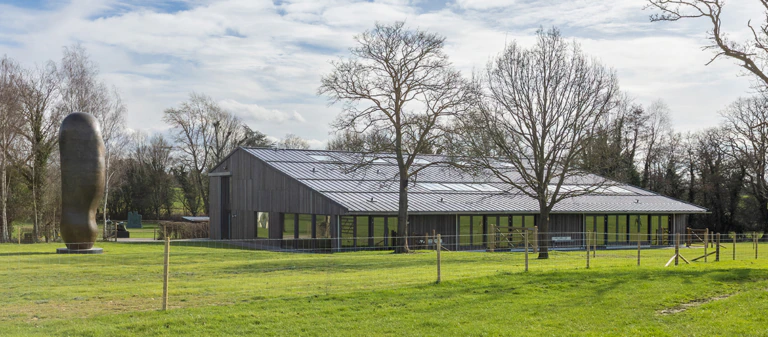
The new museum is housed in a fairly anonymous modern building, but stepping inside is a revelation.
Much attention has clearly been paid to the design of the interior, with an airy reception area and shop leading to displays upstairs, and a large temporary exhibition gallery on the ground floor.
The building is stylishly decorated, with artwork produced by local people, and the overall finish is excellent. An example of attention to detail is the spiral stairway leading to the first floor decorated with glass tiles featuring pictures of local people, past and present.
Local strengths
The Carad website argues that local people have a strong sense of place and community, and that oral and folk tradition are part of everyday conversations.
The layout does not follow the usual local history gallery route, but instead highlights themes identified by local people as being a key part of their community.
The displays begin with a section called Where We Come From, a central showcase flanked by two vertical timelines that draws together 4,000 years of history. A glass panel in the floor reveals some prehistoric axe heads and tools, contrasting strongly with the more recognisable social history items in the case.
The gallery is not big, but it crams in a lot of history. Large floor-to-ceiling windows give views to the exhibition gallery below, but the visitor has only fleeting views since the windows feature striking stained-glass-effect paintings that match the display themes.
Poachers and bailiffs
For a museum in such a rural setting, it is hardly surprising that the surrounding landscape features strongly in the displays.
The section titled The Land includes material about the activities of local farmers past and present and the impact of the building of the Elan Valley Reservoirs in the 1890s, which were created to supply fresh water to the City of Birmingham.
The tourism that followed the construction of the dams and more recent pony trekking and walking activities feature in excellent audio clips that allow visitors to listen to local people talking about issues linked to the objects on display, including the conservation needs of the changing local landscape.
The title graphic of the Home section concludes that warmth, food and comfort, the things we need, do not change, but "how we get them does".
A conventional room set displays a mix of objects gathered around a Welsh hearth, but context is supplied through another audio clip, accessed through a replica 1940s telephone.
Dialling a number allows visitors to hear a range of voices, including Vincent Lewis remembering the arrival of his first television in 1969.
One of themes chosen by local people was Salmon Poaching. Dodging the bailiff on dark nights to poach fish on the Wye was an activity that, as the text notes, "has been going on as long as we can remember".
In the 19th century, the introduction of a close season for fishing by local landowners triggered riots in Rhayader at this infringement of an ancient right.
More oral history and video tell the story, with one resident recounting the night she and her father were caught by bailiffs. Another contributor ruefully reflects that although the river is said to be far cleaner today, the salmon seem in shorter supply.
Most local museums display objects telling the story of community activities and at Rhayader the section titled Coming Together contains material from many groups, including the local chapel and temperance society and theatrical and music organisations.
Further cases show material from local Cub and Scout groups as well as sports teams and a pop band, the Dambusters.
The final section, Talking Rhayader, once again emphasises the local oral and folk traditions. Cases containing objects are complemented by more audio clips, all concisely edited. A final touch is a computer database containing images from the museum collection.
In 2009 alone, Rhayader people gave more than 6,000 hours of volunteer time towards the opening of their museum. Their efforts have resulted in a fantastic achievement: an accessible museum that tells the story of their community, and reflects the culture and identity of the place.
Tim Bryan is the head of collections and interpretation at the Heritage Motor Centre, Gaydon
Cost £780,000
Main funders Heritage Lottery Fund £483,500, Welsh Assembly Government £90,000, local fundraising and donations £104,000, Birmingham City Council £20,000, Spirit 2 Ysbryd £10,000, Severn Trent £10,000
Architect Charles Cowan
Main contractor MD Broxton
Quantity surveyor Bowen Consultants
Exhibition design (Pitchpots and Swallowforks) Peter Canham, Design Stable
Graphic design (museum gallery) Glyn Turner, TBK Design
Building Development Coordinator Richard Taylor, Prospectus