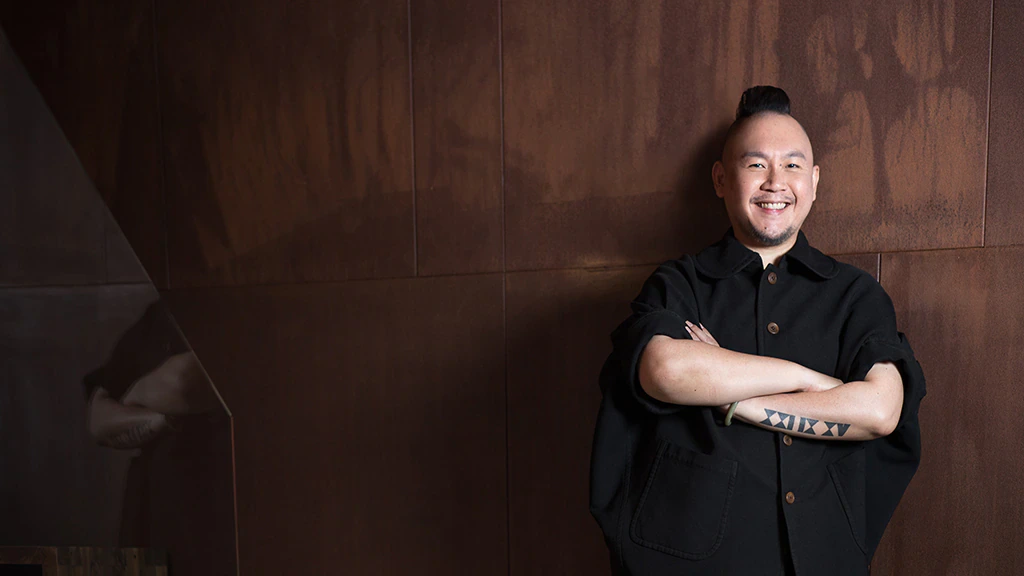
Low Kee Hong has been creative director of Factory International art studios in Manchester since 2022, and the major Ai Weiwei exhibition on until 6 September been in the pipelines practically since he began there.
Previously, Low was head of theatre and performing arts at West Kowloon Cultural District in Hong Kong, where he was responsible for formulating its artistic direction and strategies for contemporary performance, dramatic and theatre arts. His previous roles include artistic director and general manager of Singapore Arts Festival and founding director and general manager of the Singapore Biennale.
He has also won awards for his work in lighting design and performed on the international arts festival circuit touring extensively in Europe, Japan, Hong Kong, Australia and Indonesia.
Museums Journal caught up with him and ask what it's been to work with such an esteemed artist on Ai Weiwei: Button Up! (closes 6 September).
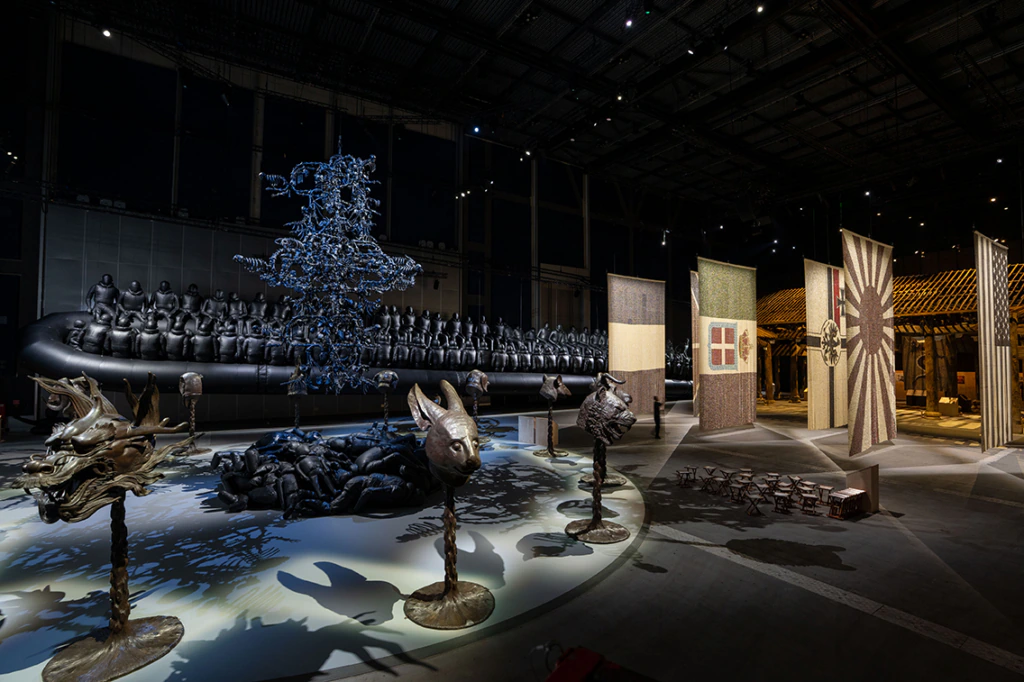
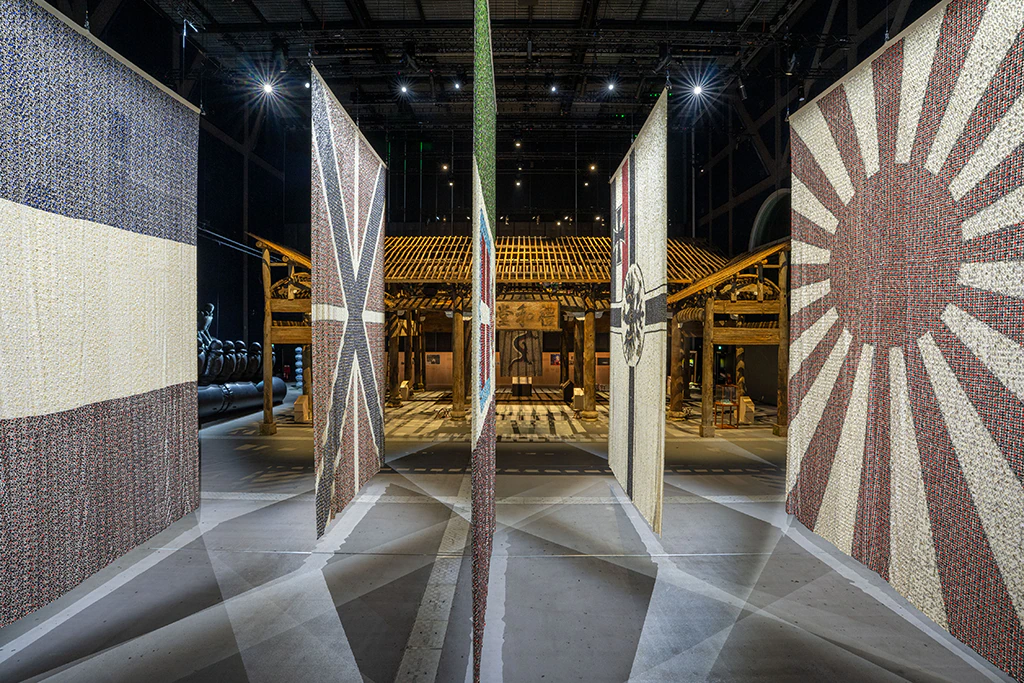
The exhibition is not a retrospective, but instead responds to the warehouse-like space of the Factory with major monumental works from the artist's career, as well as the new work, Eight-Nation Alliance Flags. This artwork comprises eight massive hanging flags embroidered entirely with buttons and refers to early 20th-century conflict in China.
Did you have a professional relationship with Ai Weiwei prior to this show?
Yes we've crossed paths before because I was based in Asia as head of theatre and performing arts at the West Kowloon Cultural District Authority, which includes Hong Kong’s M+ Museum of Contemporary Art.
Advertisement
They have a big collection of Weiwei’s work there, primarily from the Swiss collector Uli Sigg’s collection. Sigg was the Swiss ambassador to China from 1995 to 1998 and was collecting a lot of contemporary art during that time. After the 1997 handover of Hong Kong [to China], Sigg decided to donate a big chunk of his collection.
Before M+ opened in 2021, there were definitely some challenges with local politicians trying to demonstrate their allegiance to the Beijing government, saying, "why is Hong Kong taxpayers' money being used to collect this kind of work that criticises the Chinese government?".
So, at the time before M+ opened, I think the decision was to remove Weiwei's works, as they are politically sensitive. They did not remove them from the collection, but they could not show them.
How did the Ai Weiwei exhibition at Factory International come about?
In summer 2022, we managed to get Weiwei to come to see the venue, which was still in construction at the time.
He lives in Cambridge because his son studies there, so one day he came and was impressed with how unusual this venue is. He was very curious about the technical capabilities of the space and excited to respond to it.
Advertisement
Later on, he said he couldn't stop thinking about it. In December 2022, I went to Cambridge to see him, we sat down for coffee and then he shared with me that he had bought 30 tonnes of buttons from a South London family business, A Brown and Co, which closed down in 2019.
He had responded to a tweet that tagged him saying these buttons were up for sale, and they were now all sat in his studio in Berlin.
These are the buttons he used in his new work Eight Nation Alliance Flags?
Yes, but only four million, which is roughly 500,000 buttons per flag. He still has boxes and boxes of them.
His studio team in Berlin spent about two and a half years just sorting out the buttons, and counted 9,000 different types. So Weiwei started thinking how he could approach a work as pixels.
He is very interested in Manchester's history as the birthplace of the Industrial Revolution, which kick-started global trade that has led to war and conflict.
Advertisement
Buttons are also quite central to his personal life, because when his elder brother was leaving for New York to study, his cousins and friends ran after the train and passed his brother a handful of buttons through the train window, which are practical and remind you of family.
When Weiwei was in exile with his family, over a period of 19 years [1958-1977], because his poet father was labelled “rightist” under Chairman Mao, losing a button was a big issue because there's no access to anything.
So, the buttons he acquired relate to manufacturing, global trade and his personal life.
He has told me that the flags are his first work where he's been able to coalesce the ideas of history and politics, everyday objects and artisanal work, into one visual statement.
He likes to work with a lot of artisans, because it maintains skills but also maintains livelihoods.
So, the buttons opened a new relationship a group of women who used to run a textile factory in Shandong that shut down. When Weiwei was building this exhibition, he remembered meeting her and said 'I need help to make these big ass flags with lots of buttons', and she said, 'I think I can do it'.
She assembled the women and the whole process took about six months.
How creative would you say your role as creative director is?
I really have great joy in working with artists to realise the visions that they have. We function a bit like dramaturges, here to help clarify and think about things.
With Eight Flags, I had some push back about something and Weiwei joked saying “maybe we should credit you”. I obviously said no, but we were in constant conversation about how everything works in the space and he can be very jokey sometimes.