This time last year it was all just beginning – Bradford City of Culture 2025 was off to a flying start, with a fit-to-bursting arts and cultural programme taking place across the district, sold-out merch and the warming glow of positive press attention.
Of course, for the area’s cultural institutions, 2025 brought affirmation that, despite its often maligned reputation, their city had it going on. Recognising that this was a key opportunity, they tapped into the celebrations as part of a district-wide partnership approach. But the question now that 2026 has arrived is “what next?”.
Jo Quinton Tulloch, director of the National Science and Media Museum, says the measure of success for Bradford 2025 will be in seeing to what extent engagement with arts and culture in the city has increased among residents and those from further afield.
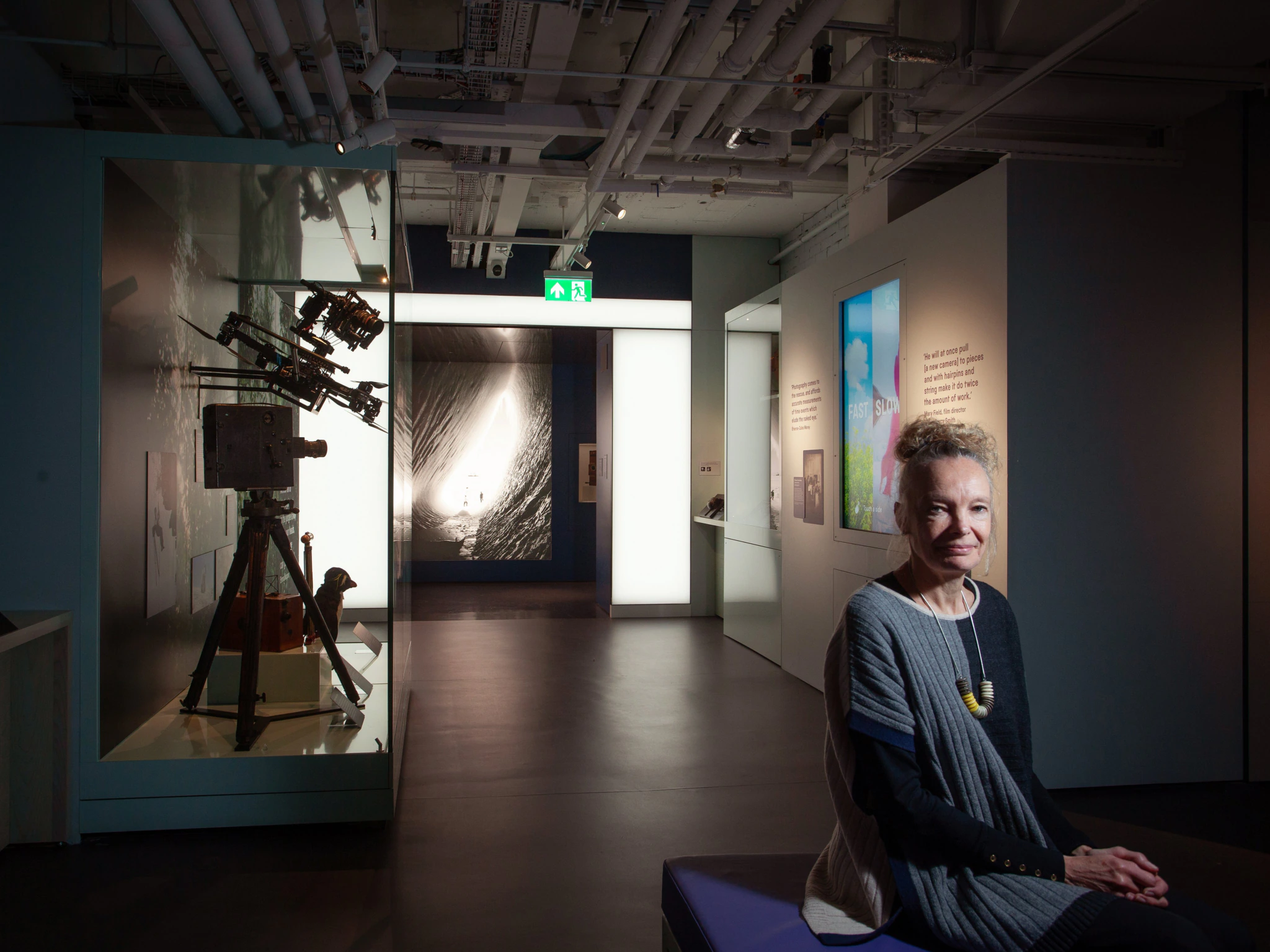
Jo Quinton Tulloch
Jo Quinton Tulloch started her career as an explainer at the Science Museum in London, following a degree in science communication at Imperial College London.
In 2000, she moved to Falmouth to join the development team of the then new National Maritime Museum Cornwall. The project was a partnership between the National Maritime Museum in Greenwich, which was looking to redisplay its small boat collection, and a volunteer-run maritime heritage museum in the Cornish harbour.
In 2004, she returned to London’s Science Museum as head of exhibitions, remaining until 2012, when she was offered a two-year secondment at Bradford Science and Media Museum following the departure of director Colin Philpott.
Before the two years was up, she was promoted to director. Among her other memberships and duties, Quinton is a fellow of the Royal Society for the Arts.
“One of my roles as director is to talk about the future and explore how we can maximise the momentum and the love for Bradford,” she says.
“We’ve been here since 1983 and we are still here now the temporary activities have ended, but I’m hopeful that Bradford 2025 will have lifted people’s confidence and interest in coming to museums or other cultural events. Now it’s about how we tap into that new market of people who have awakened their interest in arts and culture.”
Advertisement
The National Science and Media Museum, which is part of the Science Museum Group, is well positioned to do this, having recently enjoyed a £6.8m redevelopment.
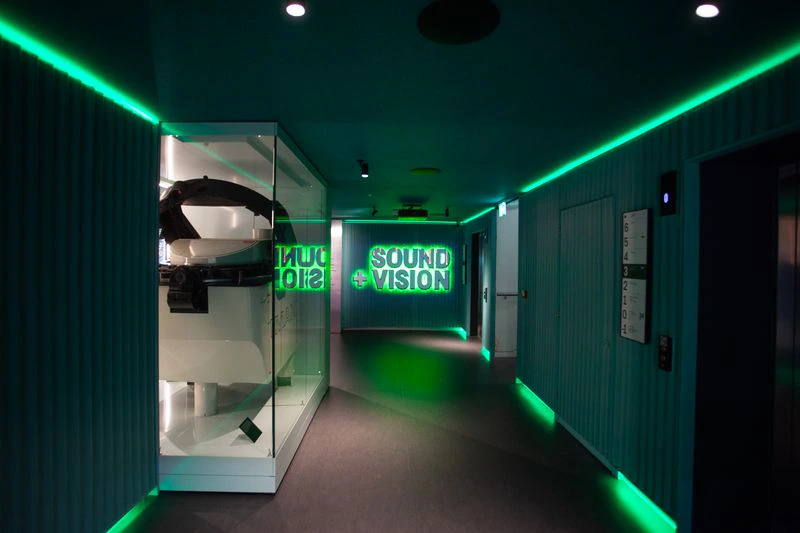
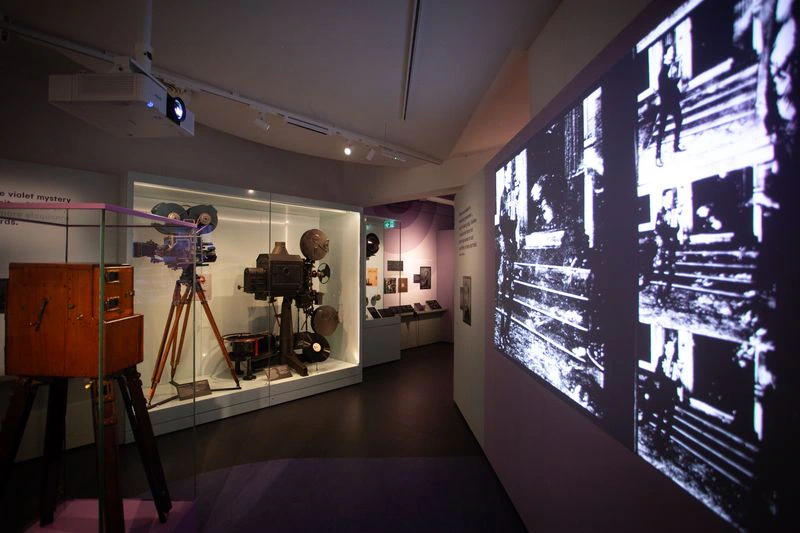
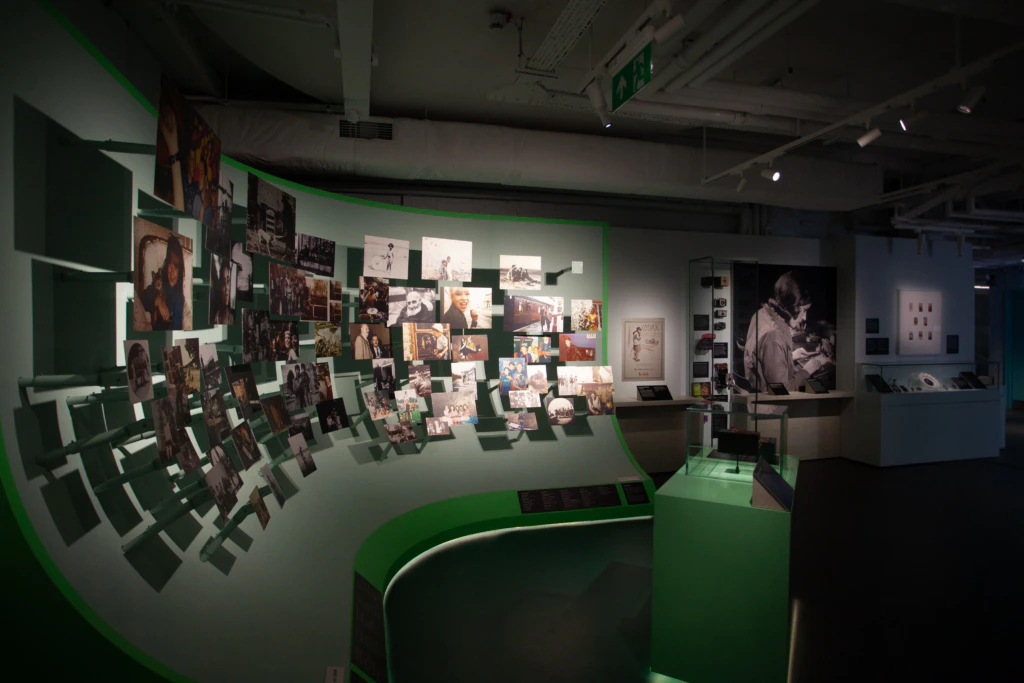
This included a new entrance foyer and the new Sound and Vision galleries displaying its permanent collection of photography, film, television animation, video game and sound technologies.
There are new practical elements that will support the museum into the future – another lift, for example, a welcome desk where visitors are given their free ticket and invited to donate, and a flexible foyer space that is available for corporate hire.
The new galleries, meanwhile, have been designed by AOC Architecture to create atmospheric and immersive spaces that respond to the objects on display and bring a sense of fun and quirkiness to this national museum that manages to feel very Bradford.
Balancing art and science
Quinton Tulloch originally came to Bradford in 2012 on a two-year secondment, tasked to tackle falling visitor numbers.
Advertisement
“There were two strategic drivers that underpinned our forward vision,” she says.
“The first was Stem [science, technology, engineering, and mathematics]. Our collections are a beautiful juxtaposition between art and science, because all their output or purpose is to create content of aesthetic or entertainment value. We can do both, but we needed to reassert the Stem side of our offer to make sure we were fully aligned with the Science Museum Group’s mission and vision.”
The second driver was recognising another juxtaposition, that of being a national museum with a strong association with London, but based in a post-industrial northern city.
“We needed to become a museum that was more open, engaged and connected to its communities – a museum of place,” she says. “We have collections of national importance and we’re here to make sure people can access, enjoy and research them, but we had to think differently about how we engaged with people.”
Her work since 2012 has been just that – thinking differently about the way the museum curates and shares its collections, expertise, resources and buildings.
“We’re not a satellite site for a London museum, so we have to play into the strengths of our sites,” Quinton Tulloch says.
Advertisement
“For us in Bradford, that’s our location slap-bang in the middle of a city with audiences that you might not get in Manchester, York or London. We’ve been working hard to become a museum that is welcoming and tells stories that local people want to see, expect to see and are relevant.”
The new entrance plays into this work, because for the first time visitors have a space to sit and relax, plan their trip or just hang out with family or friends.
“This is critical because for a lot of our audiences, this might be their first visit to a museum – they might not be comfortable or confident about crossing our threshold,” Quinton Tulloch says.
So, what made her stay in Yorkshire after the two years was up?
“Bradford gets under your skin in a really good way,” she says. “It’s a fabulous place to live. And, while science communication is my passion and the reason I came to museums, what I have found here is an ability to make a difference, more so than I had in London.
“You can tangibly see it as you walk around the galleries, the rich mix of people and families enjoying our spaces, especially as a free museum in an area where people struggle financially. If there was ever a case for free museums, it’s now more than ever.”
The new galleries are open and the City of Culture has ended. But the cost-of-living crisis and saturated leisure market means the museum cannot afford to sit still.
Plans to redevelop its Kodak Gallery are already afoot, as many of its photography collections have been moved to the Sound and Vision galleries.
“Our previous model was photography on display in one gallery, television in another and film and animation in another,” says Quinton Tulloch. “With Sound and Vision, we’ve brought them all together to draw more and better connections between the disciplines over two floors.
“Photography and television have fundamentally changed because of new technology, but you can’t even begin to try to tackle current developments in a permanent gallery. For me, this museum would now benefit from a space that explores the impact of digital technologies. How do you do that? I don’t know yet.”
Then there is the question of money. “It doesn’t matter what kind of museum you are, the financial situation means we are all having to make difficult choices,” says Quinton Tulloch. “We are starting to think about different ways to generate income, as well as being smarter with what we do.”
Donations have a role to play, as do paid-for elements. The museum runs an Imax cinema, as well as a shop and cafe that have always contributed financially to its bottom line, but for the first time it is experimenting with charging small amounts for some exhibitions.
It trialled a pay-as-you-feel model for its David Hockney exhibition (15 January- 18 May 2025), but quickly realised that people preferred the certainty of a fixed cost – in this case, a £2 minimum charge.
“This is how we’ve generated extra income without creating barriers for people, and in the future I do think we will have to have a mix of paid and free exhibitions,” says Quinton Tulloch.
“We get a lot of repeat visitors, but they aren’t going to pay to see the same exhibition twice so we’re also exploring introducing annual tickets.”
So, what role does Quinton Tulloch see the museum playing in Bradford’s future fortunes?
“It sounds cliched, but the world is very fragmented right now. I believe museums are places where people can come together and have a shared experience that is, in the modern world, less common,” she says.
“One of my favourite stories in the new galleries is a piece of adaptive technology that’s used by a gamer who was paralysed from the neck down in a surfing accident. He uses a bespoke piece of kit that he controls mainly through his mouth, so he can continue to play online with his friends to an amazingly high standard.
“Technology can bring people together, but it can also isolate people in other ways. For me, a museum is the antidote to that.
“It’s a physical experience of connection, it gives people a sense of place in the world and locally. And for that reason, I believe museums will always have a really important role to play.”
National Science and Media Museum timeline
The National Museum of Photography, Film and Television opens in Bradford. Later that year, Britain’s largest Imax cinema screen is unveiled at the museum.
The museum opens two new TV-themed galleries, marking the 50th anniversary of the first public television service.
The Kodak gallery, on popular photography, opens.
The Library Theatre is converted into a 306-seat cinema.
The Experience TV gallery opens.
The museum rebrands as the National Media Museum.
The foyer is redesigned to introduce a Games Lounge, shop and box office.
Life Online, the world’s first gallery dedicated to the impact of the internet, opens.
The museum opens the Wonderlab interactive gallery and is renamed the National Science and Media Museum.
As Bradford celebrates its year as UK City of Culture, the museum unveils a new foyer area and the Sound and Vision galleries.