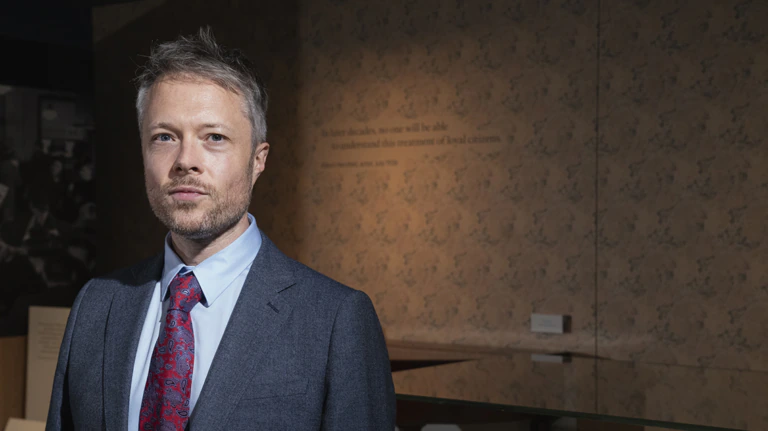
Since 2008, a pioneering funding model with the whisky company Glenmorangie has paid for my academic research post.
We are nearing the end of a three-year phase of research focused on the role and significance of silver in Scotland during the first millennium AD. This is a time when silver was not second best. Although today we talk about “gold standard”, silver was valued above other precious metals in Scotland for a thousand years.
Much of our research centres on how this precious resource was managed. Scotland’s earliest silver arrived with the Roman army in the first century AD. It was soon used as a political tool, with payments – first in coin, later in hacked-up bullion – sent north of the frontier to buy influence and allies.
But with the end of the empire, fresh silver supplies dried up. Scotland’s own deposits would not be discovered for another thousand years, so recycling old metal became important.
Our newest find is a hoard of four chopped up Roman silver vessels in Fife. They date to the late-third century AD and are the earliest hacksilver found anywhere beyond the frontier in Europe – the first evidence of a significant change in Roman foreign policy.
We have also learned a lot by returning to 19th-century discoveries, including two poorly understood hoards from Fife and Aberdeenshire. Revisiting these fragmentary finds means that we can show, for the first time, that the practice of hacking old objects for bullion outlasted Roman influence in Scotland.
Thanks to this work, we created an Arts & Humanities Research Council network, bringing together scholars from across northern Europe to shed light on the transition from the late Roman empire to early medieval kingdoms through silver.
Alice Blackwell is the Glenmorangie research fellow at National Museums Scotland. Scotland’s Early Silver is on show at the National Museum of Scotland until 25 February 2018.
We are nearing the end of a three-year phase of research focused on the role and significance of silver in Scotland during the first millennium AD. This is a time when silver was not second best. Although today we talk about “gold standard”, silver was valued above other precious metals in Scotland for a thousand years.
Much of our research centres on how this precious resource was managed. Scotland’s earliest silver arrived with the Roman army in the first century AD. It was soon used as a political tool, with payments – first in coin, later in hacked-up bullion – sent north of the frontier to buy influence and allies.
But with the end of the empire, fresh silver supplies dried up. Scotland’s own deposits would not be discovered for another thousand years, so recycling old metal became important.
Our newest find is a hoard of four chopped up Roman silver vessels in Fife. They date to the late-third century AD and are the earliest hacksilver found anywhere beyond the frontier in Europe – the first evidence of a significant change in Roman foreign policy.
We have also learned a lot by returning to 19th-century discoveries, including two poorly understood hoards from Fife and Aberdeenshire. Revisiting these fragmentary finds means that we can show, for the first time, that the practice of hacking old objects for bullion outlasted Roman influence in Scotland.
Thanks to this work, we created an Arts & Humanities Research Council network, bringing together scholars from across northern Europe to shed light on the transition from the late Roman empire to early medieval kingdoms through silver.
Alice Blackwell is the Glenmorangie research fellow at National Museums Scotland. Scotland’s Early Silver is on show at the National Museum of Scotland until 25 February 2018.