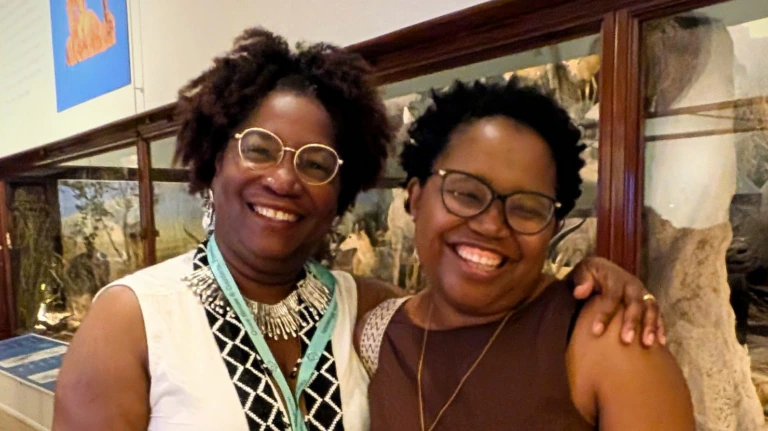
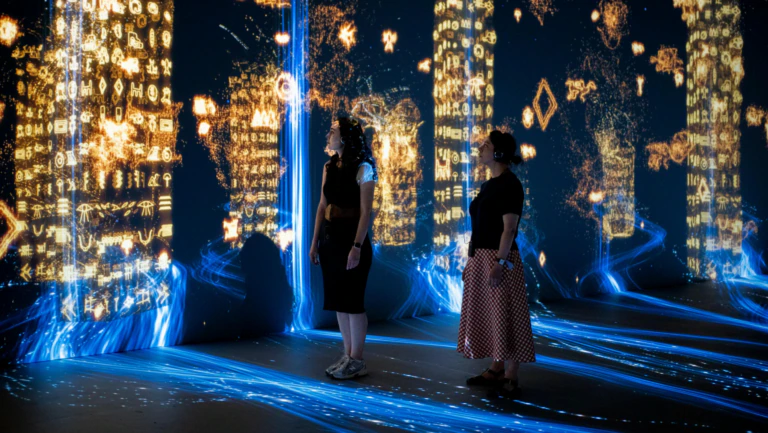
Sarah Brown is the principal keeper at Leeds Art Gallery, which reopens to the public on 13 October after extensive renovation work.
What’s new about the place?
During the reglazing of the original Victorian roof, we took down a suspended ceiling that was installed in the 1960s and a beautiful barrel-vaulted, double-height space with original porticos and columns was revealed. Even regular visitors won’t have seen it before. And light now floods in to the galleries on the first floor.
Did all the work go according to plan?
Many gallery revamps are about adding things, but this was all about stripping back to the original architecture and the project grew exponentially as a result. In 1916, it was noticed that the roof was leaking, so mending that has been on the agenda for a century, but we also ended up putting in new lighting and underfloor heating. A lot of plasterwork also had to be restored. Each decision taken revealed a new challenge.
Did you learn new skills in the process?
Yes. I’ve spent hours looking at environmental control systems, considering UV filters for glass, how scaffolding works and ramps are constructed, and finding out how concrete is polished. I spent time looking around buildings of a similar age that went through the investment of the 1980s and 1990s when there was a desire to hermetically seal galleries. Nowadays, people are more interested in a sense of the original so we have, for example, installed seating around the edge of the new gallery. It’s part of the structure for the first time, not just temporary furniture.
Were you always going to be a curator?
If I hadn’t failed my maths A-level, I would have liked to have done architecture as I’ve always been fascinated by space and how objects fit into it. I wasn’t academic even though I grew up in Cambridge with a mother who was an anthropologist and a physicist father. I became aware of people who were seemingly brilliant in their fields but who could not operate a toaster. As a result, I developed an interest in how you could apply knowledge and expertise to everyday things. That’s what interests me as a curator.
And when you’re not curating?
I spend Sundays cheering on my two young boys on muddy sidelines of football pitches. They are not keen on museums but I enjoy seeing things through their eyes. It tells me a lot about what can make an impact.
What’s new about the place?
During the reglazing of the original Victorian roof, we took down a suspended ceiling that was installed in the 1960s and a beautiful barrel-vaulted, double-height space with original porticos and columns was revealed. Even regular visitors won’t have seen it before. And light now floods in to the galleries on the first floor.
Did all the work go according to plan?
Many gallery revamps are about adding things, but this was all about stripping back to the original architecture and the project grew exponentially as a result. In 1916, it was noticed that the roof was leaking, so mending that has been on the agenda for a century, but we also ended up putting in new lighting and underfloor heating. A lot of plasterwork also had to be restored. Each decision taken revealed a new challenge.
Did you learn new skills in the process?
Yes. I’ve spent hours looking at environmental control systems, considering UV filters for glass, how scaffolding works and ramps are constructed, and finding out how concrete is polished. I spent time looking around buildings of a similar age that went through the investment of the 1980s and 1990s when there was a desire to hermetically seal galleries. Nowadays, people are more interested in a sense of the original so we have, for example, installed seating around the edge of the new gallery. It’s part of the structure for the first time, not just temporary furniture.
Were you always going to be a curator?
If I hadn’t failed my maths A-level, I would have liked to have done architecture as I’ve always been fascinated by space and how objects fit into it. I wasn’t academic even though I grew up in Cambridge with a mother who was an anthropologist and a physicist father. I became aware of people who were seemingly brilliant in their fields but who could not operate a toaster. As a result, I developed an interest in how you could apply knowledge and expertise to everyday things. That’s what interests me as a curator.
And when you’re not curating?
I spend Sundays cheering on my two young boys on muddy sidelines of football pitches. They are not keen on museums but I enjoy seeing things through their eyes. It tells me a lot about what can make an impact.