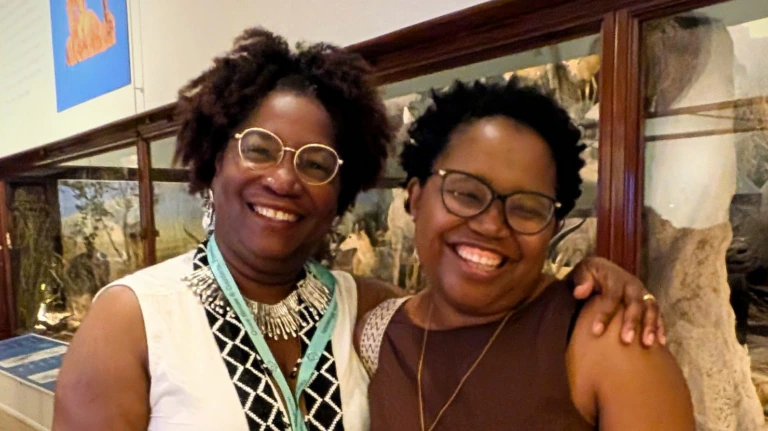
James Etherington is the visitor services team manager at the Ashmolean Museum in Oxford.
What do you look for in a good museum guide?
Enthusiasm and customer skills. We don’t ask for any knowledge of art history. It’s easier to train a good customer services person about museums than to train a museum person to give excellent customer service.
Where did your career begin?
I worked at the checkout at Tesco while at college but I really wanted to do something connected with history. York Museums Trust offered me more retail work but at least it was a museum shop.
I became involved in gallery guiding and education and soon found myself working with kids on a series of Roman activities. I was always the first to the dressing-up box. There was a hat I liked and they gave it to me when I left. I still pop it on when I feel a bit down.
Is the customer always right?
They believe so and it’s my job to delicately correct that misapprehension. We’re there to enable the greatest number of people to have the greatest amount of fun safely with the objects. Other museum staff see it differently, of course; if your main job is to preserve an artefact, you might think the best way to do that is not to let anyone see it at all.
What else do people do that they shouldn’t?
I once had a man changing his baby in the middle of a heaving gallery among interactive exhibits and picnic tables. When I suggested he use the proper facilities, some 20 feet away, he called me a fascist for limiting his rights. When I was locking up after a late-night event at the Ashmolean, I saw two figures pressed tightly together against the front door.
I called out and gave them time to adjust themselves. People engage in such activities in museum toilets and, at a previous place where I worked, a security guard caught a couple up a tree in the botanical gardens. I think there might be a thesis on the effects museums can have on certain people.
Can staff misbehave, too?
At another previous job, there was a bloke who thought books were evil. One day he announced that he had hidden souvenir rubber frogs around the gallery, saying: “They can see you. Can you find them?”
What do you look for in a good museum guide?
Enthusiasm and customer skills. We don’t ask for any knowledge of art history. It’s easier to train a good customer services person about museums than to train a museum person to give excellent customer service.
Where did your career begin?
I worked at the checkout at Tesco while at college but I really wanted to do something connected with history. York Museums Trust offered me more retail work but at least it was a museum shop.
I became involved in gallery guiding and education and soon found myself working with kids on a series of Roman activities. I was always the first to the dressing-up box. There was a hat I liked and they gave it to me when I left. I still pop it on when I feel a bit down.
Is the customer always right?
They believe so and it’s my job to delicately correct that misapprehension. We’re there to enable the greatest number of people to have the greatest amount of fun safely with the objects. Other museum staff see it differently, of course; if your main job is to preserve an artefact, you might think the best way to do that is not to let anyone see it at all.
What else do people do that they shouldn’t?
I once had a man changing his baby in the middle of a heaving gallery among interactive exhibits and picnic tables. When I suggested he use the proper facilities, some 20 feet away, he called me a fascist for limiting his rights. When I was locking up after a late-night event at the Ashmolean, I saw two figures pressed tightly together against the front door.
I called out and gave them time to adjust themselves. People engage in such activities in museum toilets and, at a previous place where I worked, a security guard caught a couple up a tree in the botanical gardens. I think there might be a thesis on the effects museums can have on certain people.
Can staff misbehave, too?
At another previous job, there was a bloke who thought books were evil. One day he announced that he had hidden souvenir rubber frogs around the gallery, saying: “They can see you. Can you find them?”