
Unesco has condemned a Russian attack on Odesa that damaged buildings within the city’s world heritage site.
The 18 November attack, which killed at least four people in the city, fell within the boundaries of the Unesco-listed Historic Centre of Odesa. Several heritage buildings there were reportedly damaged, including Kalio Palace, a monument of national importance.
In a statement issued last week, Unesco expressed its condolences to the families of the people killed and support for those affected.
“Unesco condemns attacks against cultural property, educational institutions, students, education personnel and media professionals protected under international law,” it said.
“Damage to such institutions deprives communities of access to culture, education and shared spaces that are essential for recovery and social cohesion.”
The organisation said it stood ready to support the relevant authorities in assessing damage to cultural and educational institutions and identifying urgent measures within its mandate.
Advertisement
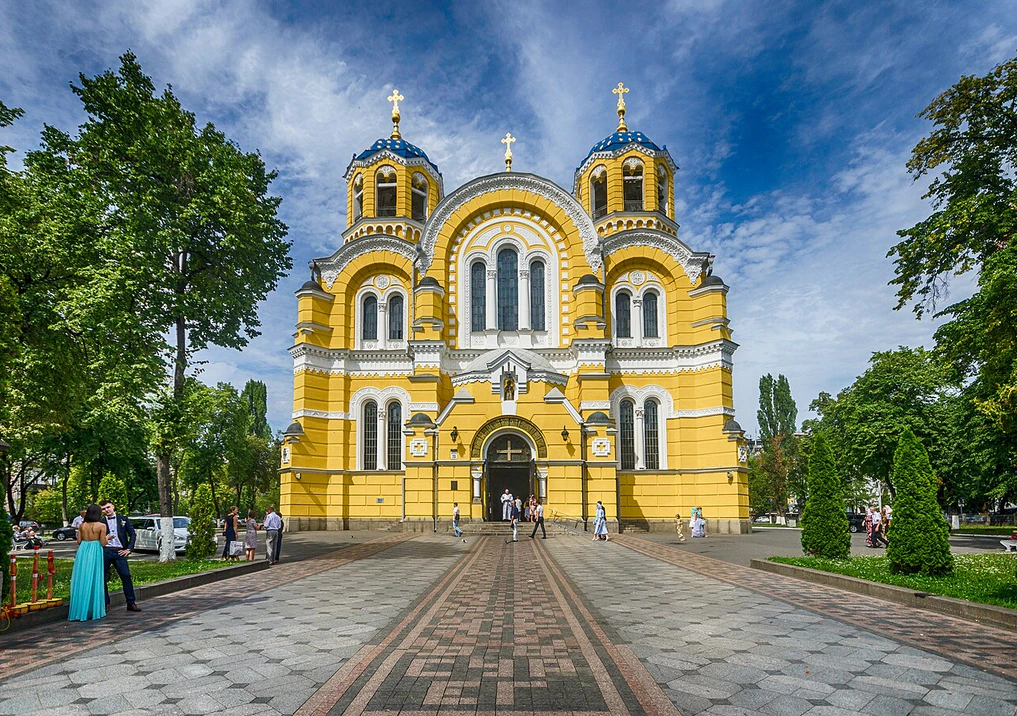
Further damage was reported in Kyiv, where Russian drone strikes hit St Volodymyr’s Cathedral, a nationally protected heritage site.
In a post on Facebook, Tetyana Berezhna, Ukraine’s deputy prime minister and minister of culture, said that one of the cathedral’s domes, which are decorated with paintings by prominent Ukrainian artists, had been damaged.
A preliminary assessment found that windows and frames had been broken, alongside damage to carvings and structural elements. The damage to the paintings and structural elements was initially assessed as minimal, although specialists were continuing to establish the full extent of the impact.
Berezhna said the cathedral had been built and decorated over several decades and had been an important place of worship for Kyiv residents for more than a century.
“We document the destruction so that Russia is held accountable for crimes against Ukrainian culture,” she said.
An inventory issued by Kyiv’s Municipal Cultural Heritage Department this month also recorded damage to the National Museum of the History of Ukraine in the Second World War, including its entrance and Hall of Glory, and St Michael’s Golden-Domed Cathedral, among other sites.
Advertisement
According to figures cited by Berezhna, the number of Ukrainian monuments damaged by Russian strikes has increased by more than a third since the beginning of 2026, reaching almost 2,200 by the end of October, while almost 2,700 cultural institutions have been affected.
Damaged sites include the Dormition Cathedral within the Kyiv-Pechersk Lavra monastery complex, one of the country’s most important heritage sites, which was struck in June in an attack widely condemned by the international heritage community, including Unesco and the International Council on Monuments and Sites.
There is also growing scrutiny of the role played by Russian cultural and academic institutions in the occupied territories.
On 13 November, BBC Russian reported that Ukraine had accused seven Russian archaeologists and a museum director of war crimes over their work in Russian-occupied Crimea.
Those facing charges reportedly include specialists associated with the State Hermitage Museum in St Petersburg, the Pushkin State Museum of Fine Arts in Moscow and the Russian Academy of Sciences.
Believed to be the first of its kind, the case relates to archaeological work carried out over a period of decades in the occupied peninsula.