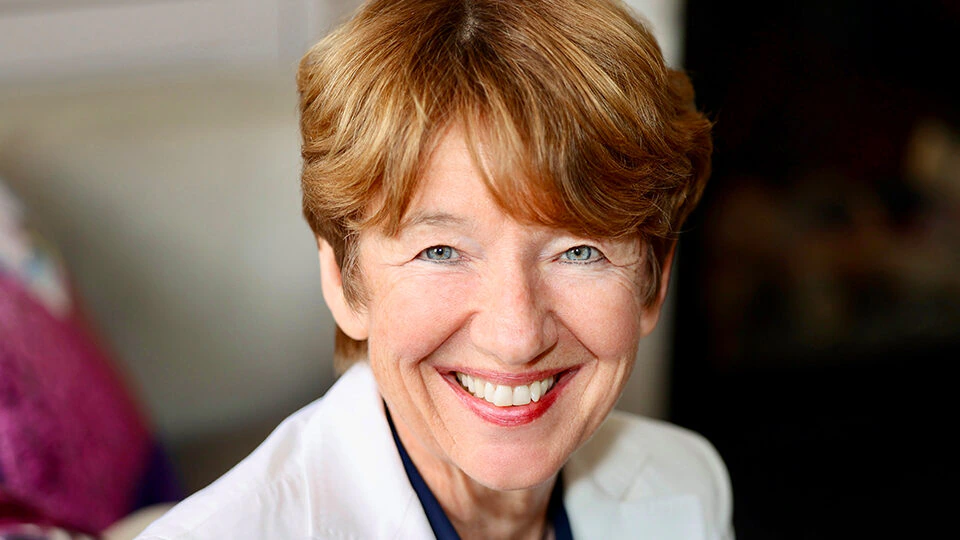
The new chair of Arts Council England (ACE), Dawn Airey, has pledged to increase investment in diverse-led cultural organisations.
Speaking in her first public address since taking up the role in August, Airey said that inequalities in funding and representation remain entrenched across the sector.
She said current levels of investment in diverse-led organisations “cannot – and must not – be a high-water mark” and promised that ACE would build on and grow its existing commitments.
“We won't just protect them or sustain them. We will build on them and grow them,” she said.
Airey was speaking at a national gathering in Leicester marking 50 years since the publication of The Arts Britain Ignores, a landmark 1976 report by the late journalist, activist and cultural historian Naseem Khan on the exclusion of Black artists and culturally diverse communities from Britain’s cultural establishment.
Airey committed to improving cultural equity during her tenure. She said that while Khan’s report had made a tangible difference, the inequalities it identified had not disappeared.
Advertisement
“I’m not going to stand here and tell you that the two-tier sector [Khan] found in 1976 – one half properly resourced and visible, the other surviving on goodwill, volunteer labour and sheer resourcefulness – has gone. It hasn’t,” she said.
Airey said ACE would be ambitious for organisations across the sector, from smaller, community-rooted groups to institutions with the largest budgets.
She added that the diversity of the arts council’s own workforce, governing council and decision-making must reflect the country it serves.
Recognition
Airey said representation was not simply a question of diversity targets, but a failure to recognise the quality and significance of work already being produced by Black artists and culturally diverse communities.
She said the cultural establishment had overlooked work of outstanding quality because of a narrow understanding of British cultural life.
Advertisement
“The establishment had thought diversity was something to be encouraged. Khan made clear it was already there. It didn’t need encouragement, it needed recognition,” she said.
Airey also acknowledged the discrimination experienced by people working in the cultural sector, including racism, Islamophobia and antisemitism. She called on culture professionals who did not experience such prejudice to support affected colleagues through action as well as words.
Pawlet Brookes, chief executive and artistic director of the Serendipity Institute for Black Arts and Heritage, which hosted the event, said the anniversary was an opportunity to recognise progress while confronting persistent inequalities in investment, leadership and whose histories are valued.
“Black artists, leaders and organisations have transformed Britain’s cultural landscape, yet questions of equity, investment, leadership and whose histories are valued remain,” said Brookes.