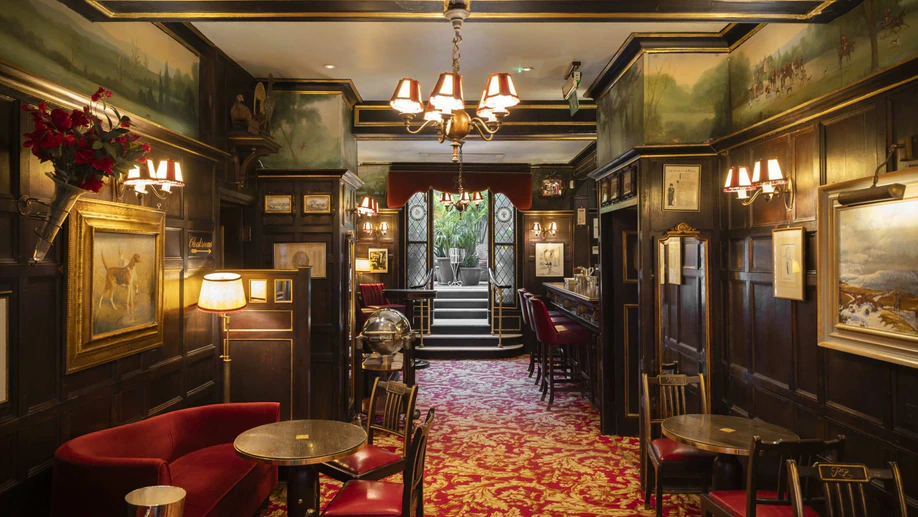
London’s oldest surviving restaurant has been donated to the National Trust in a gift valued at more than £11m.
Rules restaurant has operated continuously at 34-35 Maiden Lane in Covent Garden since 1798.
Its owner of 40 years, J-P Mayhew, announced this week that he had donated the freehold to the National Trust, making the building inalienable and preventing it from being sold or otherwise disposed of in the future.
The donation comes at a challenging time for historic buildings in central London, many of which are facing redevelopment pressures and economic challenges.
The venue will continue trading as a restaurant under its current proprietor, Ricky McMenemy, who will become a commercial tenant of the National Trust.
The gift also includes historic collection items and annual rental income, which will be put towards the trust’s conservation work.
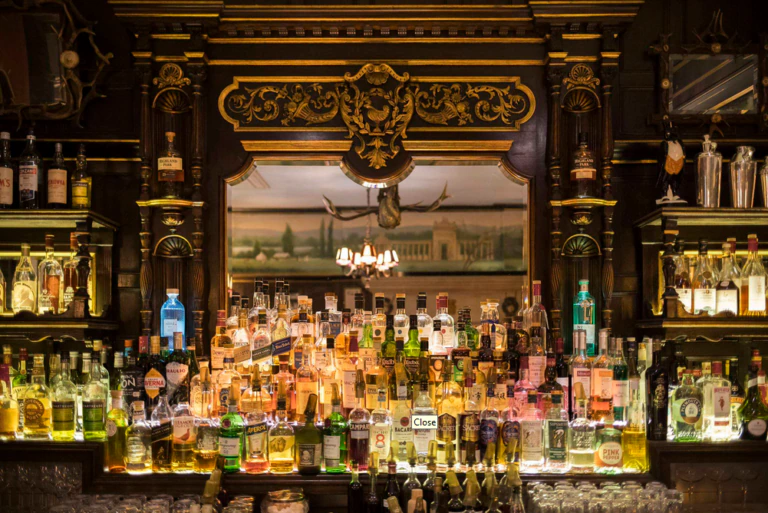
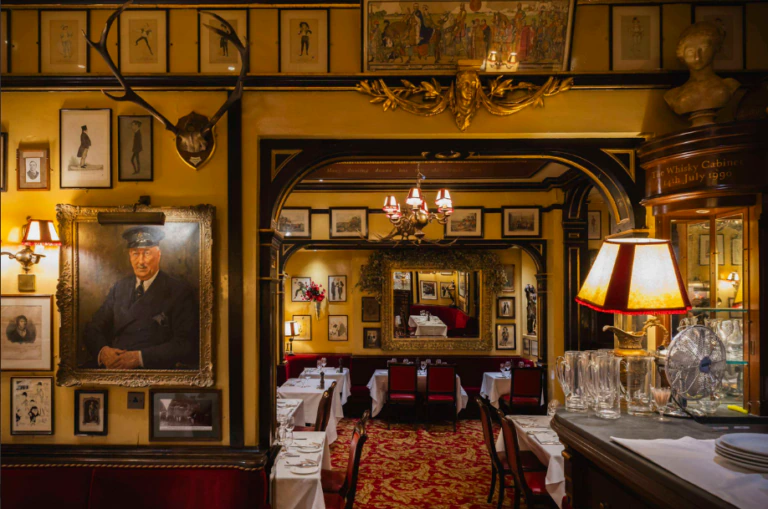
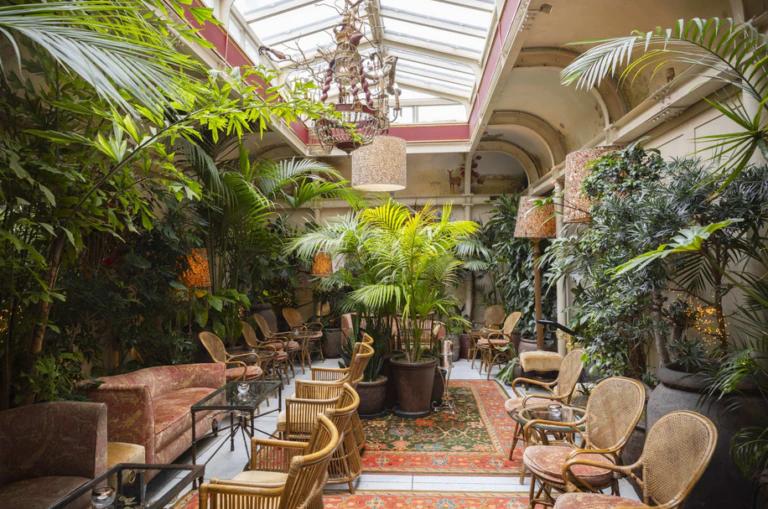
Hilary McGrady, the director-general of the National Trust, said the gift meant the building had “a future measured not in years but generations”.
Advertisement
“This place is an outstanding piece of living history, with its corners where kings dined and writers and politicians plotted, and the traditions it kept alive through wars and upheaval,” she said.
“It has defied the odds to be standing here today, doors still open and treacle sponge still on the menu.”
McGrady said the gift would ensure that “one of London’s great living institutions” remained part of the city’s cultural life, preserving its stories, traditions and character.
The National Trust said Rules was a “rare example of living heritage where both the historic structure and its original use remain intact”.
Rules
Founded by Thomas Rule as an oyster house in 1798, Rules restaurant became a meeting place for writers, actors, politicians and other prominent figures. It has played host to famous faces of the past such as Charles Dickens, Charlie Chaplin, Laurence Olivier, Ava Gardner and Liza Minnelli, as well as more recent visitors like Madonna.
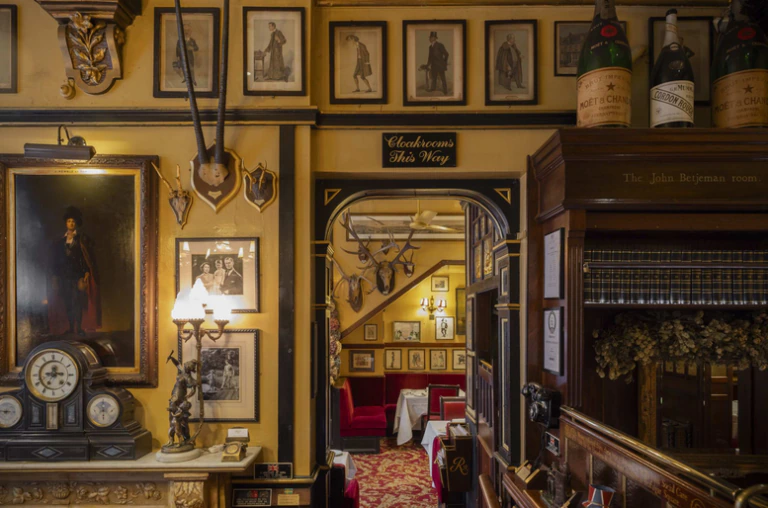
The restaurant has appeared in several works of literature. The novelist Graham Greene ate there on his birthday each year and featured it in The End of the Affair. The poet John Betjeman defended Rules in 1971, when the Greater London Council proposed turning the Strand into a dual carriageway. Both writers now have rooms named after them at the restaurant.
In the 20th century, the restaurant survived the blitz, wartime rationing and repeated redevelopment threats. It is one of the last surviving examples of a once-prominent group of London restaurants, following the loss of establishments such as the Trocadero Restaurant, the Mirabelle and Le Gavroche.
Its culinary traditions have also been preserved; the restaurant has maintained a style of English country-house cooking since the 19th century, still offering up dishes and upholding customs that became less common after the second world war.
The restaurant’s historic collection includes visitor books, menus, caricatures, photographs, stained glass and signs documenting the its history.
Mayhew said the donation is intended to safeguard not just the physical space but the atmosphere of the restaurant.
Advertisement
“There are few restaurants in the world that have endured the test of time like Rules,” he said.
“With many years of hard work, and some extraordinary strokes of luck, it has survived everything from redevelopment plans and changing tastes to the blitz.
“When [poet] John Betjeman defended Rules from the Greater London Council’s plans to turn the Strand into a dual carriageway in 1971, he spoke not only of the paintings, sculptures, stained glass and red plush seats, but of its ‘invisible atmosphere’.
“My gift to the National Trust is in answer to that appeal,” said Mayhew. “The trust will protect this place in a way that no-one else could, safeguarding its bricks and mortar, its famous interior and its invisible atmosphere too.”
Rules will be the first historic restaurant still trading to occupy a building in the charity’s care. The National Trust already cares for 39 historic pubs that remain in operation, including the George Inn in Southwark and the Crown Bar in Belfast.
McMenemy, who has worked at Rules for 35 years, said the acquisition offered the independent business security for the future.
Advertisement
“As an independent business, it gives us both the security and peace of mind that our home will be in very good hands and be protected and secure going forward,” he said.
“Having already established a very amicable working relationship with the trust, we look forward to another two centuries in this, our home.”
Other National Trust site acquisitions
22 Parkside, London
In September, the National Trust announced that it would take on 22 Parkside in Wimbledon, the modernist family home designed by Richard and Su Rogers. The house, built for Richard Rogers’s parents, served as a testing ground for ideas that later influenced major projects including the Centre Pompidou in Paris and the Lloyd’s building in London. The Rogers family donated the property to ensure its preservation and enable its architectural significance to be shared with the public.
Ironbridge Gorge, Shropshire
The National Trust took over the management of the Shropshire site’s 10 museums, 35 listed buildings and 400,000 collection items in March, one of the largest acquisitions it has undertaken in its 130-year history.
Five places within the Ironbridge Gorge estate have since reopened to the public: Blists Hill Victorian Town; Coalbrookdale Museum of Iron; Furnace Kitchen; Jackfield Tile Museum; and Iron Bridge Toll House. There will be a phased reopening of other places in the Unesco World Heritage Site over the course of the next year.
Heartlands, Cornwall
Although not yet confirmed, the National Trust is currently in talks to become the long-term operator of Heartlands, an eight-hectare mining heritage site at Pool in Cornwall. This month, Cornwall Council approved an agreement in principle for a 30-year lease; the lease negotiations are still to be completed.
The site’s previous operator closed most of its facilities in January 2024, citing financial difficulties. The National Trust says it will work with local groups and Cornwall Rural Community Charity to develop a sustainable future for the site.