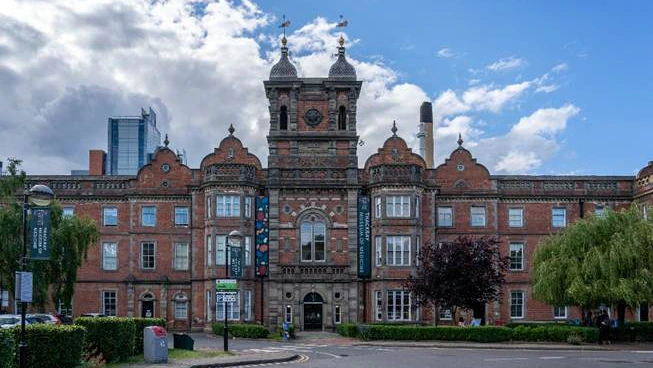
London Museum has announced the first temporary exhibition due to be staged in its underground vaults, a long-forgotten space rediscovered during the decade-long redevelopment of the museum's new Smithfield Market site.
The free exhibition will tell the story of early Roman London, presenting objects from the Bloomberg Collection of Roman artefacts that have not been previously displayed.
Londinium: The Making of a Roman City will welcome visitors in spring 2027, following the venue’s general reopening on 28 November. The museum closed its former London Wall site to the public in 2022.
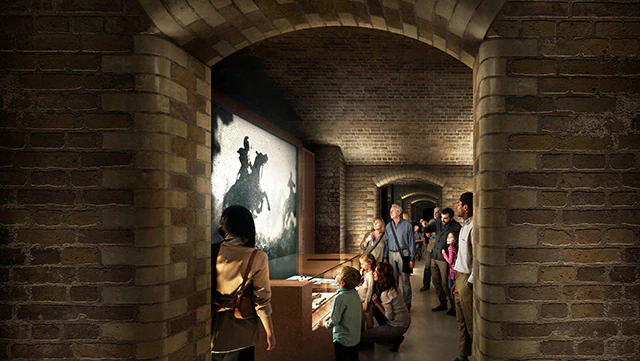
The underground vaults were found during construction work in 2019, when builders broke through a wall during the renovation of the Victorian General Market and found an 800 square-metre underground network.
Thought to have been used for storage by the market and nearby railway, the abandoned space has now been transformed to host shows and events.
The temporary exhibition will be the first opportunity for visitors to step inside the vaults, using sensory-rich displays to explore the lives and stories of some of the first Londoners.
Advertisement
Sharon Ament, director of London Museum, said: “When we rediscovered the vaults, we were determined to open them up. They are so specific, so evocative, so mysterious, we saw their potential straight away. So it makes me really rather pleased that the first exhibition inside them will be about the Londoners who created Londinium, with real artefacts from their lives from one of London’s most significant recent archaeological excavations.”
More than a decade of research into the Bloomberg Collection has pieced together a broad picture of early Roman London. Grounded in archaeological evidence, the experience will imagine the dealings of ordinary people in what would then have been a frontier settlement, as it transformed from a rural landscape into an urban centre.
“The Bloomberg Collection is an extraordinary discovery that has helped us build a picture of life in Roman London like never before,” said Jackie Keily, the lead curator of Londinium.
“Protected by the waterlogged soil from which they were unearthed, this time capsule has preserved artefacts that would otherwise have been lost. From these objects, we can begin to picture the intimate and everyday experiences of Londinium’s ancient inhabitants. This was a time of loss, upheaval and hardship, but also hope, opportunity and new beginnings.”
Among the objects going on display are Roman wax writing tablets; an infant’s feeding bottle; a coin from the reign of Emperor Nero; and Britain’s earliest known example of Eurasian cockroach eggs, discovered inside a Roman bakery oven.
The Londinium exhibition will sit alongside a broader story about Roman London told in the museum’s permanent galleries, where London’s history will be told from its earliest prehistoric inhabitants, to transformative events such as the great fire of 1666 and the blitz, as well as milestones such as the London 2012 Olympic and Paralympic Games.
The Bloomberg Collection was unearthed during excavations at Bloomberg's European headquarters in the City of London between 2012 and 2014, and offers a snapshot of early Roman Britain.
The collection of more than 14,000 artefacts was gifted to London Museum in 2025 by Bloomberg Philanthropies. It is the largest assemblage of small finds ever recovered from a single archaeological excavation site in London and the single largest archive ever received by the museum.