
Violent criminals are increasingly targeting high-value museum items such as precious metals, jewellery and Chinese artefacts, a new report from the EU crime agency Europol has warned.
Changing tactics, changing targets: the evolving nature of museum heists reveals a shift in the way thieves target museums and carry out heists – with offenders increasingly likely to use sledgehammers, explosives and firearms to breach premises and intimidate staff.
Recent cases across Europe suggest that the use of force is closely linked to targeted operations, including prior reconnaissance and planning, rather than indiscriminate looting, and is driven by a perception of lax museum security.
The objects that catch the attention of such criminals include precious metals and stones, golden artefacts, and cultural artefacts from China.
These items are likely to become preferred targets due to their increasing value, says Europol, with metals melted down and stones from jewellery removed before being sold on. High demand for cultural artefacts and the ease of illicit resale, meanwhile, enables traffickers to sell objects on the art market.
The profile of those perpetrating the attacks has also shifted, the report adds.
Advertisement
“Unlike cultural goods traffickers, who usually avoid violence and specialise in organised property crime or the theft of cultural goods, these individuals often have histories of involvement in other types of crime,” it states.
“Additionally, some thieves apprehended in recent cases appear to coordinate their efforts on an ad-hoc basis, often recruited locally through social media and instant communication channels, without prior connections to each other.
“This differs from the usual structure of criminal networks involved in cultural goods trafficking, which typically operate in a core group organised around a leader.”
In response to these shifts, Europol says its European Serious and Organised Crime Centre will support EU Member States and partners in “combatting the illegal trade in cultural goods”.
In response to the report, Ibrahim Bulut, a senior security consultant based in Belgium, posted on LinkedIn: "From a museum security perspective, this [report] has an important consequence:
We cannot protect tomorrow’s collections with yesterday’s threat assumptions. Security strategies therefore need to move beyond a predominantly static and technology-driven approach."
This includes assessing the "attractiveness and disposability" of collections as well as hostile reconnaissance and pre-attack indicators, and training staff on how to respond when offenders use violence, he added.
Recent museum heists
- February 2023 | Thieves broke into the Keramiekmuseum Princessehof in Leeuwarden, Netherlands, and stole 11 rare Chinese ceramic pieces.
- December 2024 | Four hooded suspects, equipped with baseball bats and axes, stormed into the Cognacq-Jay art museum in Paris, France, taking seven gold and diamond-adorned objects.
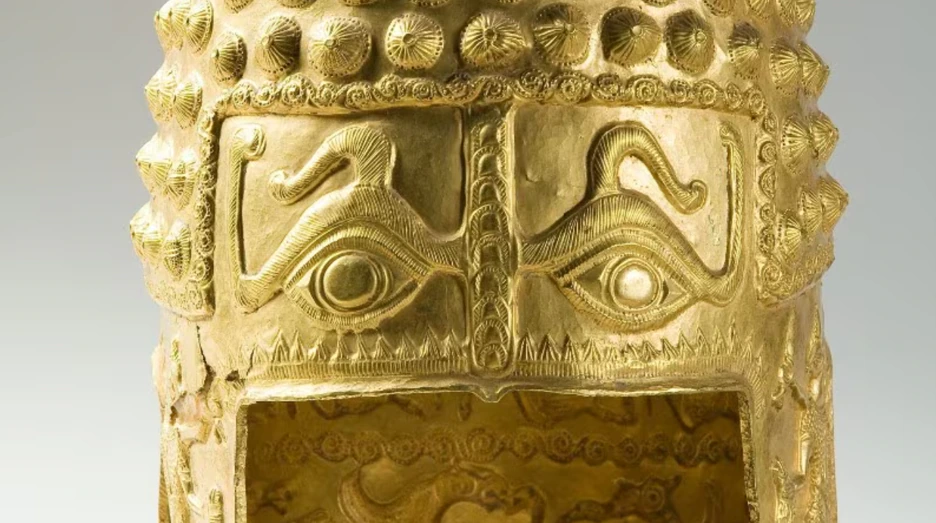
- January 2025 | Dacian archaeological artefacts, including the golden helmet of Cotofenesti, were stolen from Dutch Drents Museum, in Assen, the Netherlands, after the perpetrators detonated explosives at the door to gain entry.
- October 2025 | Several items, including Bronze Age gold jewellery, were stolen from a display case at Sain Ffagan Amgueddfa Werin Cymru – St Fagans National Museum of History near Cardiff. And the Louvre Museum in Paris, France, was targeted by criminals who threatened guards and visitors in a smash-and-grab jewel heist.
- March 2026 | Masked thieves stole three Impressionist and Modern masterpieces valued collectively at €9m from the Fondazione Magnani Rocca museum in Parma, Italy, in a night-time burglary. The paintings were recovered this month.
- July 2026 | A masked gang stole 27 rare pieces of Art Nouveau and Art Deco jewellery and art, worth around €4.5m, from the Musée Lalique in Alsace, France, in an overnight raid. And a 2,500-year-old gold torque was taken from the Musée du Pays Châtillonnais – Trésor de Vix in daylight by two men posing as visitors.
- August 2026 | A set of four rare renaissance artworks were stolen the Regional Interdisciplinary Museum of Messina in Sicily in an overnight smash-and-grab that appears to have been deliberately timed to coincide with a local festival.