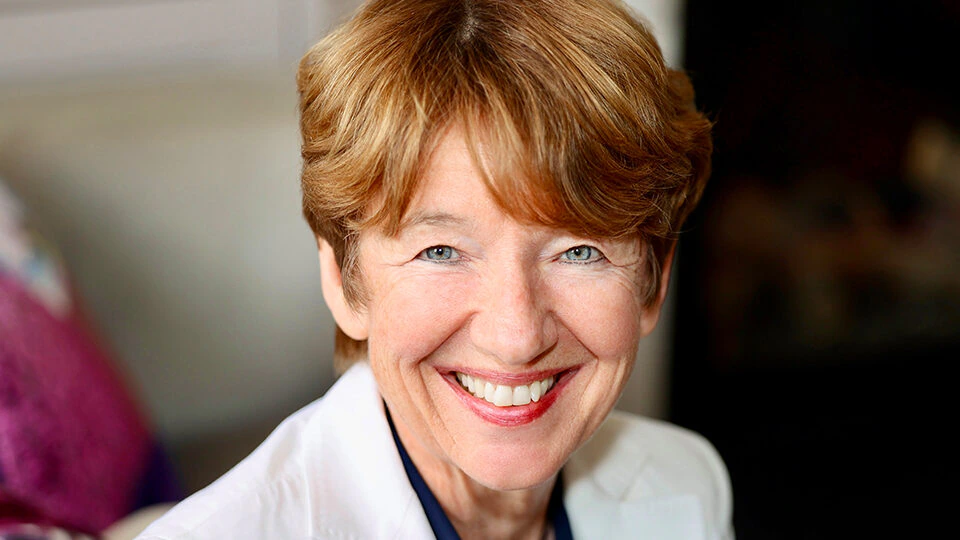
Last week's announcement that Dawn Airey is to replace Nicholas Serota as the chair of Arts Council England (ACE) signalled a big change for the organisation.
The news followed hot on the heels of the release of ACE's interim strategic framework. This will lead to a period of major change for the arm's length arts body following the independent review of the organisation published by the Labour peer Margaret Hodge earlier this year.
For museums there are lots of important issues that ACE needs to address, including the forthcoming redesign of the Accreditation scheme, improvements to the Government Indemnity Scheme and the development of a national strategy for museums.
So, with ACE about to undergo a period of upheaval, what do we know about the person that will lead the organisation from 1 August when she takes over from Serota? What will we get for the £60,000 per annum that the ACE chair receives for a time commitment of two days per week?
Firstly, she has big shoes to fill. Serota has been the ACE chair for nearly 10 years and joined the organisation with an impressive track record of leading a number of visual arts organisations, most notably Tate. Prior to working at Tate, he also headed the Museum of Modern Art, Oxford, and the Whitechapel Gallery.
Airey has had a very different career, having spent 30 years working for major broadcasters. Her roles include serving as chief executive of Channel 5 and she has also held posts at ITV and Yahoo! for Europe, Middle East and Africa. She was the chief executive of Getty Images between 2015 and 2018.
Advertisement
Airey is currently the chair of the National Youth Theatre and the educational platform Digital Theatre+. She also chairs the Barclays FA Women’s Super League and Women’s Championship board, a position she has held since 2019.
In 2021 she joined the board of Channel 4, where she acted as interim chair from 2022 - 25. She is currently deputy chair of the board.
Unsurprisingly, culture secretary Lisa Nandy, who made the appointment, gave an enthusiastic statement.
“Dawn brings more than just a wide range of experience across broadcasting, theatre and the wider arts – she brings a passion for what the arts can do for this country and all the people in it. I have no doubt that she will insist on pressing ahead with long overdue action to put people back at the centre of their own national story.
The outgoing Serota also gave a positive comment: “In Dawn, the arts council will have a leader who understands the unique role the arts play in society and the profound impact they have on individuals. I am confident that, under her stewardship, the organisation will thrive and the sector will flourish.”
A report in the Guardian on Airey’s appointment said that she was “familiar with navigating institutions under pressure”, which should come in useful.
Advertisement
The Guardian introduced its article with: “When Dawn Airey ran Channel 5, she famously described the channel’s core strengths as the three Fs: ‘films, football and fucking.’ The comment by the veteran television executive set the tone for a career defined by boldness and commercial instinct.”
A 2024 interview with Diva magazine included details about her work in the media: “Her meteoric rise in broadcasting caught the attention of the press, who relished publishing articles using snide nicknames like ‘Scary Airey’. What was that about, apart from blatant misogyny and tabloid sensationalism?
“‘I wasn’t going to fold,’ explains Dawn. ‘If they decided to give me a mouthful of invective, they occasionally would get it back. The reality is I’m a bloody pussycat. That’s my nature, but I’m resilient and I’m a fighter. If you cross me or I see an injustice, I will just not put up with it. That comes from my mum, who instilled: ‘Stand up for what you believe. Do not be bullied.’”
Commenting on her role at ACE Airey said: “The importance of the arts council in championing art and culture has never been more needed because the sector has never been more vital to our nation. In a world where Al, technology and automation are increasingly dominant, human connection, experience, imagination and creativity are the things that bring us together. They are the quintessential elements of a creative life and of a life well lived.
“The arts council has a clear new mandate, informed by the recent Independent Review – to do more to support, nurture and protect the arts, and to do so transparently, with speed and with a fairer distribution of spend.”
In the 2024 birthday honours, Airey was awarded a CBE for services to theatre and to charity. She is a vice president and Fellow of the Royal Television Society, and a fellow of the Royal Society for Arts.