A new chair of Arts Council England (ACE) has been announced following the launch of the organisation’s interim strategic framework last week.
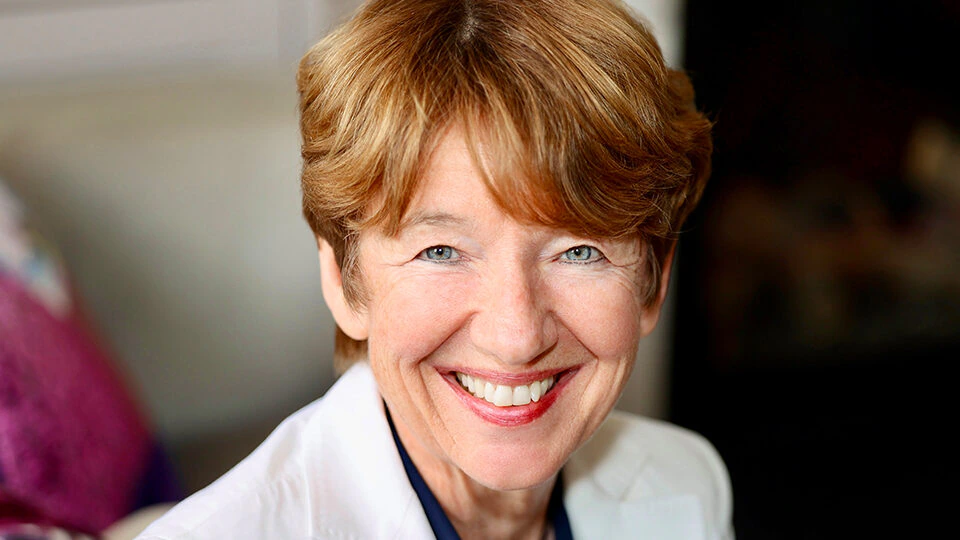
The government has appointed Dawn Airey to chair the arm’s-length body, succeeding Nicholas Serota, who will step down next month after almost 10 years in the role.
Airey has over 30 years of experience in the media and creative industries, and has held senior leadership positions across several major broadcasters. Currently the deputy chair of the board at Channel 4, she will initially serve a four-year term as chair of the arts council, starting on 1 August.
The appointment comes during a period of major change for ACE following the independent review of the organisation published by the Labour peer Margaret Hodge earlier this year.
Last week, the arts council launched a new strategic framework in response to Hodge’s recommendation to scrap its existing 10-year strategy, Let’s Create, in favour of a “less prescriptive” framework with a renewed focus on excellence.
According to the arts council, the interim strategic framework will act as a “stepping stone” while work begins on developing an new strategy in late 2026.
Advertisement
The simplified framework aims to move away from the administrative burden imposed by Let’s Create, which was criticised for its heavy reporting demands and focus on metrics and impact.
In place of the former strategy’s seven outcomes and investment principles, the new framework outlines just three principles:
- support excellence
- deliver for everybody
- reach everywhere.
The new strategic framework says the arts council “will only invest in work that we believe is, or has the potential to be, excellent”, although it makes clear that it doesn’t “expect any single artist, arts organisation, museum or library to deliver for everybody, everywhere”.
The framework has dropped references to previous priorities such as cultural democracy and co-creation, which were central funding requirements of the previous strategy.
The document also commits to changing how the arts council supports individual artists and freelancers, with work starting immediately on a new Service for Individuals, which will include a national funding programme and signposting of relevant training and skills development opportunities.
Advertisement
The strategic framework reiterates the arts council’s commitment to “the values of diversity, inclusion and equality of opportunity”, and says the body will continue to “invest to grow opportunities for Black, Asian, and ethnically diverse people, Disabled people, and people from working class backgrounds”.
The third principle promises to “balance investment and activity across the country” to redress the uneven distribution of funding for arts and culture.
While the previous strategy was criticised for its one-size-fits-all approach to funding different arts sectors, the arts council now says it will draw on external expertise “to help us understand the distinct needs and opportunities of the museums, libraries and artforms in which we invest, and to work with us in the design of our services”.
ACE also says it will produce specific guidance for each funding initiative it delivers.
The framework is realistic about the arts council’s funding limitations. “Our resources are finite and competition for them is intense: we already receive more applications for excellent work than we are able to fund,” it says. “This means we will need to make difficult judgments about how best to invest to meet our objectives."
The document emphasises the arts council’s role as an independent arm’s length body, stating that “we – and the government – see independent decision making free of political interference as central to protecting artistic freedom”.
Advertisement
However, it explicitly aligns ACE with the government’s policy priorities (see box), which the document makes clear the arts council is required to deliver through its services and development work.
The UK Government’s current priorities for the arts:
- Expanding engagement: enabling excellent arts for everyone everywhere, ensuring that the benefits of funding are felt in towns and villages as well as major cities – especially for children and young people;
- Giving agency: ensuring that Arts Council England takes full account of local voices and needs in its decision-making;
- Fostering creative diversity: fostering and developing diverse creativity, upholding our cultural heritage in its full variety, protecting and promoting freedom of expression;
- Fixing foundations: supporting the economic viability of the sector so that it thrives, and assisting organisations in caring for the cultural assets of our communities;
- Rebuilding social fabric: helping reintegrate the arts into the social fabric of our communities up and down the country.
The framework has had a cautious welcome from the culture sector.
“Personally, I don't have a problem with a public funding body supporting excellence and quality,” said Paula Orell, the national director of England Contemporary Visual Arts Network in a post on LinkedIn.
“For me, the important point is that excellence exists across the whole visual arts ecosystem from artists and studios to galleries, museums and community organisations, and that opportunity is available to people wherever they live and whatever their background.
“I'm particularly pleased to see the continued commitment to the arm's-length principle and a stronger focus on support for individual artists and freelancers.”
However, it has also been criticised for failing to define excellence, and for lacking teeth when it comes to progress in areas like diversity.
In a statement marking her appointment, incoming chair Airey said: “The importance of the arts council in championing art and culture has never been more needed because the sector has never been more vital to our nation.
“In a world where Al, technology and automation are increasingly dominant, human connection, experience, imagination and creativity are the things that bring us together. They are the quintessential elements of a creative life and of a life well lived.
“The arts council has a clear new mandate, informed by the recent Independent Review - to do more to support, nurture and protect the arts, and to do so transparently, with speed and with a fairer distribution of spend.”
Serota said that his decade as chair of ACE had “been a great honour”.
“Over the last decade, we have navigated periods of significant change and uncertainty, including a global pandemic, economic challenges and shifts in the way people engage with culture,” he said. “Through it all, the creativity, resilience and ambition of the sector have been extraordinary.”
Serota said Airey would be a leader “who understands the unique role the arts play in society and the profound impact they have on individuals”.
He added: “I am confident that, under her stewardship, the organisation will thrive and the sector will flourish.”