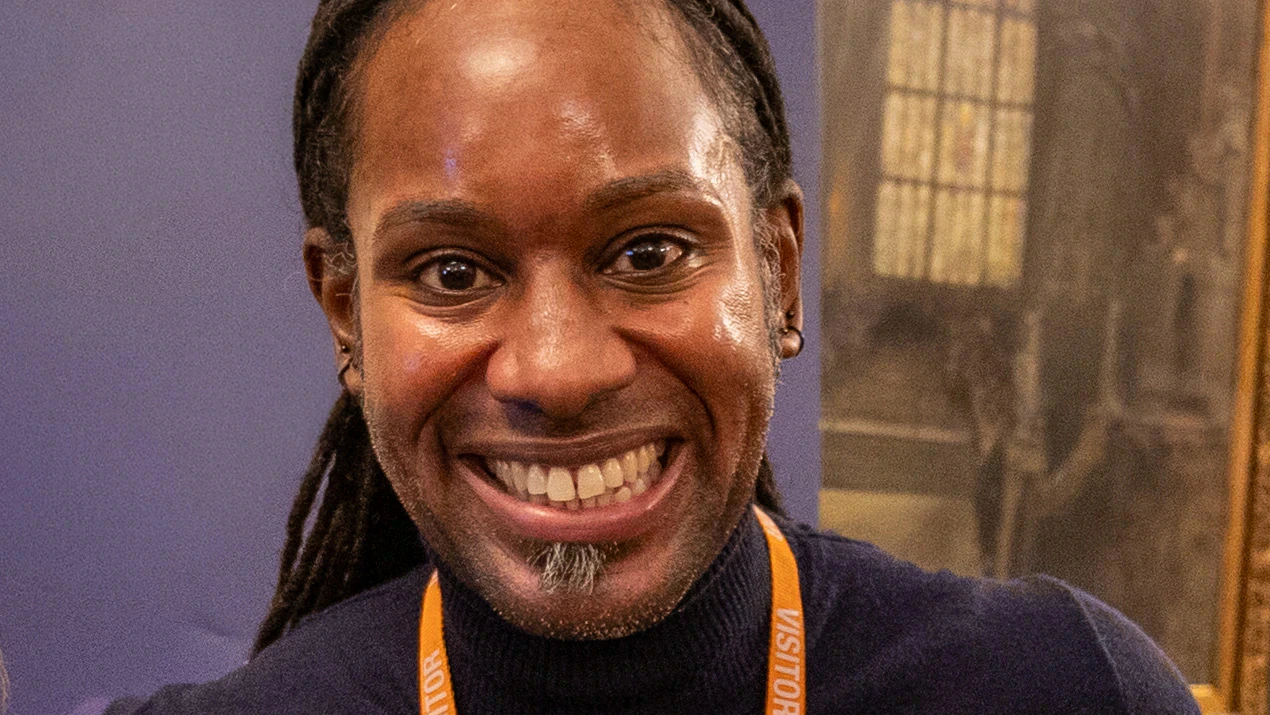
There has been an outpouring of grief and anger in the museum and culture sector following the death of Cambridge professor Jason Arday last week.
The sociologist, 41, had been the youngest Black person to hold a professorial chair at the University of Cambridge when he was appointed in 2023.
He resigned from the role earlier this month after accusations that he had plagiarised elements of his research and invented claims about his personal life and achievements. A prior investigation by Liverpool John Moores University found that the alleged plagiarism had amounted to an honest error.
Arday was found dead at an address in London last Friday after an intense press and social media storm ignited by the claims, which were circulated in July on a blog by the American “race-realist” academic Nathan Cofnas. The story was subsequently picked up by the national and international media.
Many commentators believe the level of scrutiny and opprobrium faced by Arday was disproportionate and racially motivated.
Black culture professionals and Black-led institutions have led calls for reflection and greater protection for individuals of colour in the public eye.
Advertisement
Museum X, a non-profit dedicated to establishing Britain’s first permanent museum of Black culture and history, said the tragedy highlights the risks Black professionals face when they are elevated to prominent roles by institutions.
“We talk often about the ‘parading’ of Black people in service of other people’s narratives and the way visibility can become exposure, and achievement can become a target,” said Museum X.
“What happened to Professor Arday over these past weeks sits inside that same history. The duty of care owed to him is a question society needs to sit with, not just academia and the media.”
The institution paid tribute to Arday as “one of a small number of Black academics to reach the top of British higher education”.
“His story inspired people who had never seen themselves reflected in institutions like his. His family have described him as a gentle man who always wanted to see the best in everyone. That's the person we want to hold in mind today.”
Black Cultural Archives (BCA), the archive and heritage centre in Brixton, London, called for accountability following Arday’s death.
Advertisement
The institution said: “We, as a community of racialised peoples, feel this loss so deeply, because we know that this could happen to any one of us – the violence of racism takes so many different shapes and forms.
“We know the history of the exhibition of Black people, the parading of Black people and the way that we are used in the service of other people’s agendas. The cage does not always have bars.”
BCA added that “in a world where clicks are more important than compassion, where headlines come at the expense of an individual’s mental health, and where institutional duty of care is not always afforded Black people, we demand accountability”.
“Our communities are threatened at every level, from our children being strip searched at school (a place where they have the right to feel safe), to our ‘achievers’ being publicly vilified, hounded and driven to take their own lives or else into extreme mental health crises.”
In a post on LinkedIn, Michelle Charters, the director of Liverpool’s International Slavery Museum, expressed condolences to those who knew Arday and said she had “no other words at this tragic time”.
“We need to reflect, we need to try to heal, again,” she said.
Arts Council England has reiterated its commitment to diversity and inclusion following the tragedy.
Arts council chair Darren Henley said: “Today, like many people across the country, I’ve been reflecting with Arts Council England colleagues on the tragic death of Professor Jason Arday. Our hearts go out to his wife, his children and his friends.
“We have seen racist, ableist and incessant commentary that has been deeply disturbing and must be a reason for pause and reflection. In talking to colleagues, I know that the impact of what has happened is being felt deeply across the cultural sector.
“At the Arts Council we will continue to champion and invest in equity, diversity and inclusion across our sector.”