Jewish artists and cultural practitioners in the UK say they are experiencing a “marked increase in antisemitism” in the culture sector, according to a new report.
Published by the free speech advocacy group Freedom in the Arts, the report outlines what it calls a “boycott crisis” across the UK’s arts sectors.
Its findings are based on almost 200 responses to three separate surveys of artists, cultural venues, and agents, promoters or managers, along with a roundtable discussion involving 30 senior arts leaders, all of which explored the pressures that individuals and organisations are experiencing from organised boycotting campaigns and other forms of cancellation.
Although not explicitly focused on antisemitism, the report says the surveys received a significant proportion of replies from Jewish respondents, who report being “disproportionately affected by organised pressure in ways that frequently crossed into antisemitic tropes or assumptions” since the outbreak of the Israel-Gaza conflict in October 2023.
“Antisemitism is as prominent as it is in this report for the simple reason that it was so present in the lives and stories of our respondents – across all the different data sources,” says the report.
The findings come at a time when Jewish-linked venues are operating under significantly heightened security in the wake of several antisemitic terrorist attacks, including the stabbing of two Jewish men in Golders Green, London, earlier this week.
Advertisement
Jewish respondents told the survey that they are being pre-emptively frozen out of cultural opportunities, projects and venues in a “pattern of quiet withdrawal”.
“Jewish respondents describe opportunities disappearing after 7 October 2023 – not because they expressed any particular political views, but because their Jewish identity itself was treated as a political position,” the report says.
“Jewish identity is treated as a reputational risk. Jewish themes in art are treated as inherently political and provocative, even when the work contains no reference to Israel or contemporary geopolitics. Jewish artists are advised by their own agents to remain invisible.”
In addition to more covert forms of antisemitism, Jewish respondents described a “sharp escalation in explicit antisemitic content within their professional circles”, including “the casual use of Holocaust comparisons and accusations of Nazism directed at Jewish artists purely based on their heritage”.
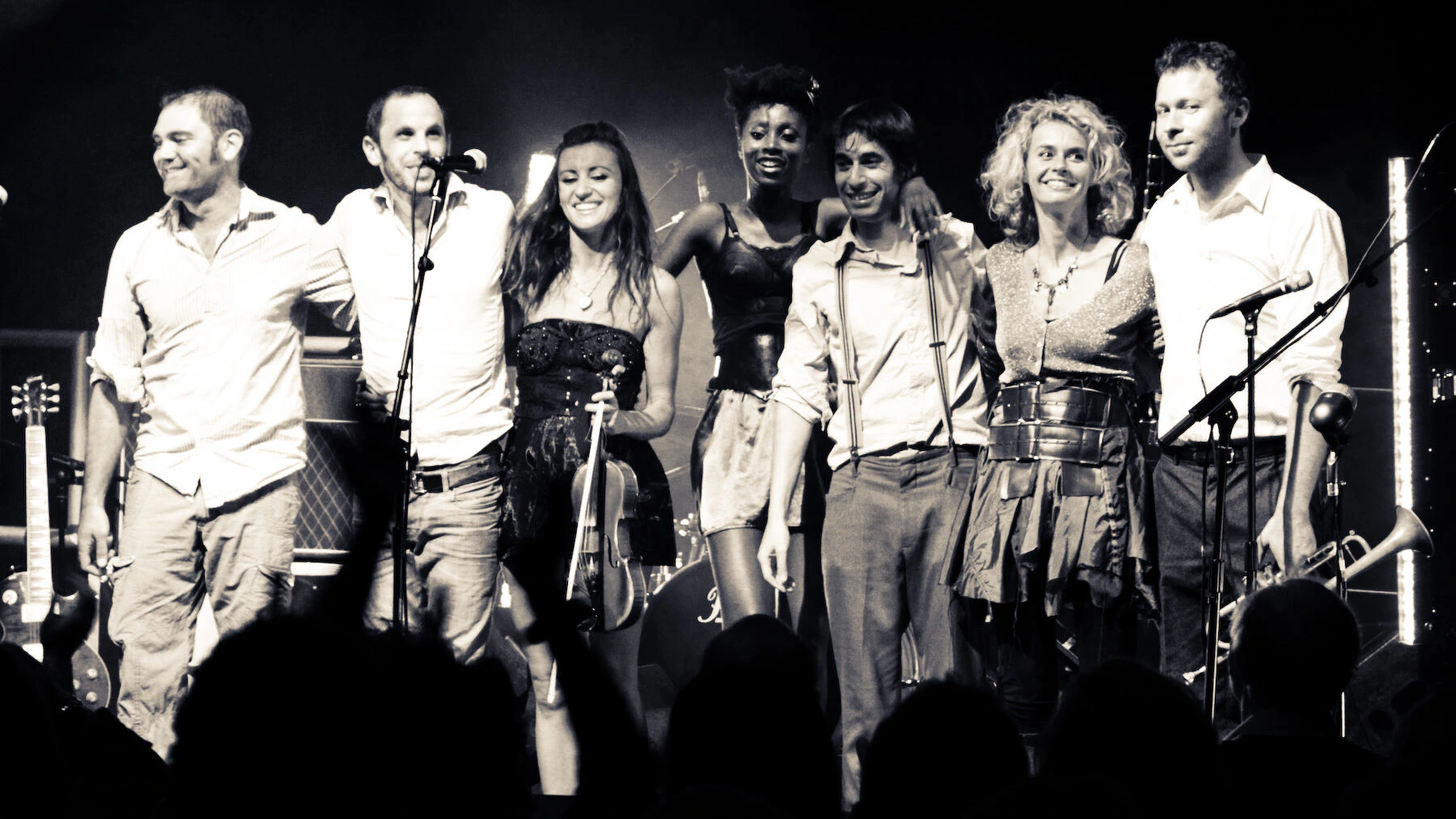
The shadow culture secretary Nigel Huddleston hosted a launch event for the report in Westminster this week, during which the British-Jewish singer Josh Breslaw spoke about his band Oi Va Voi’s experience of having gigs cancelled in Brighton and Bristol due to pressure from some campaigners.
Breslaw described boycotts as “both racist and xenophobic”, according to the Jewish Chronicle, adding: “To be Jewish in artistic spaces today means that strangers and activists believe they have the right to demand you take a position on issues that are most important to them… My band was pulled up, questioned and cancelled because of our Jewish heritage. That's racist.”
Advertisement
The report also acknowledges publicly documented instances of cancellation or exclusion on the basis of pro-Palestinian views, saying it “does not take a position on the Israel–Gaza conflict itself”.
The report says it seeks to document the “devastating role cultural boycotts are playing in shaping the arts ecology today”.
“Cultural boycotts within the arts sector tend to foster division, undermine artistic evaluation on its own terms and have limited impact on achieving meaningful political change,” it says.
Other prominent figures have also recently commented on the issue.
In her review of Arts Council England (ACE), the Labour peer Margaret Hodge called on the arm’s-length body to take a stronger stance against cancellations and boycotting in the arts.
Hodge told the Communications and Digital Select Committee last month that the arts council “ought to develop a protocol, because the cancelling has got too much and too wide and it's scary”.
Advertisement
“Some of it is cancelling for political reasons, cancelling artists and cancelling performances, and that's not right,” said Hodge.
In another recent select committee hearing, ACE chief executive Darren Henley said the arts council would do more to protect freedom of expression in the arts and represent a breadth of different backgrounds, viewpoints and audiences.
“[Freedom of expression] has got to be at the heart of it because if it's not there, then then you become censors, and we're not there to be censors,” he said, adding that the “only breech will be illegality”.
Henley described antisemitism in the arts as “abhorrent and unacceptable”.
He told the committee: “We absolutely have a policy on all forms of racism and any Jewish person of faith or ethnicity should be able to be able to be an audience member and a worker in all of our organisations.”