
There are “serious reservations” among some sector leaders over the UK Government’s plans to explore scrapping free entry for overseas visitors to England’s national cultural institutions.
The proposal is one of several transformative measures recommended by the Labour peer Margaret Hodge’s review of Arts Council England that have now been accepted by the arts council and DCMS.
In their responses to the Hodge review, published yesterday, both bodies confirmed that they will “accept or explore” all of the recommendations made by the review.
This will mean a wholesale reform of the arts council, including scrapping its 10-year strategy, Let’s Create, which launched in 2020 but has been criticised as overly prescriptive, and refreshing the National Portfolio process.
What’s changing at ACE in response to the Hodge review?
- A simpler interim strategic framework, published in May 2026, that retains the values of diversity, equality, and inclusion that powered Let’s Create, while giving clearer, less prescriptive guidance for applicants and partners.
- A refreshed National Portfolio process that cuts unnecessary administration and embeds artform expertise and citizen voice.
- A new Service for Individuals, to be rolled out in 2027/28, that combines a national funding programme with improved advice, training and support.
- A new online platform, with a phased roll-out starting in 2027, but with improvements and pilots (Touring Service, accreditation improvements, GIS simplifications, DYCP relaunch) coming earlier.
- A programme of work with DCMS, HM Treasury and sector partners to test innovative finance and fundraising models – including options such as a trading arm, strengthened philanthropy, and mechanisms to recycle returns from commercially successful work.
The arts council will also receive up to £8m to roll out a new online platform for grant applications, replacing the much-criticised Grantium portal, which has suffered serious malfunctions in recent years.
Advertisement
Regarding the museum sector specifically, the arts council confirmed it would work with DCMS and museum partners to take forward the review’s recommendation to develop a strategy and long-term plan for museums.
It also committed to going further in raising awareness and understanding of the Acceptance in Lieu and Cultural Gifts schemes.
The arts council will also undertake a programme of work to “test innovative finance and fundraising models” in order to address the funding crisis in the culture sector.
Both bodies have also committed to strengthening the arm’s-length principle, with DCMS pledging to maintain “a strong, politically impartial and independent arts council that remains a champion for freedom of expression - meaning everyone can be confident that the arts council is a home for diversity of ideas”.
However, the Hodge review’s controversial recommendation around the free entry policy – which does not fall under the remit of the arts council – has been strongly criticised by some museum sector leaders.
DCMS said in its response that it now plans to explore “the potential opportunities that charging international visitors at museums could bring”.
Advertisement
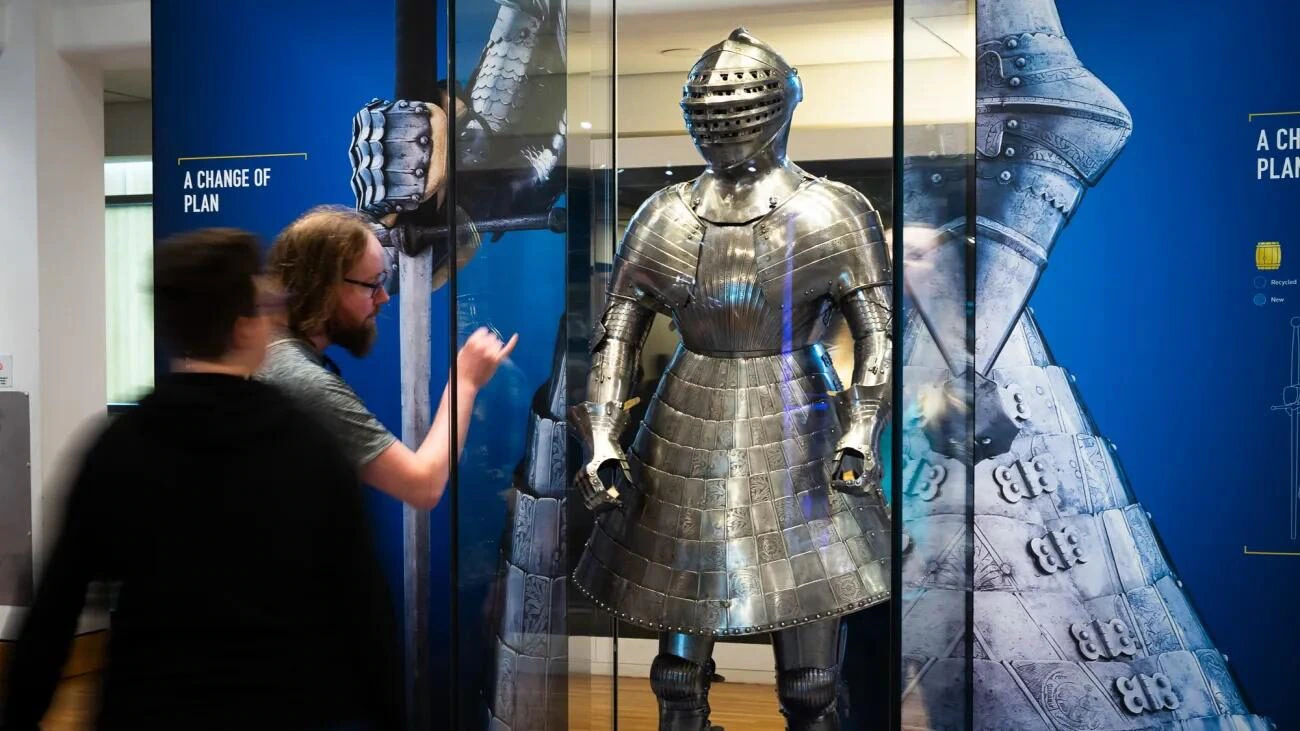
A statement released yesterday the Royal Armouries in Leeds, one of the 15 national museums and galleries in England directly sponsored by DCMS, said: “The Royal Armouries is proud to offer free access to the world's oldest collection of arms and armour to every visitor, regardless of where they come from. We hold this collection on behalf of all people, everywhere. We remain wholly committed to that principle.”
The institution added: “We must be candid: we have serious reservations about this proposal. Our museums are global spaces with international collections. Free access is not a courtesy extended to overseas visitors; it is a statement of values.”
The institution said a two-tier entry system for visitors depending on where they’re from “would fundamentally undermine our commitment to universal access, and risks projecting the United Kingdom as a nation lacking in confidence and generosity of spirit”.
Nat Edwards, the director and master of the Royal Armouries, said: "Museums like the Royal Armouries are powerful drivers of economic regeneration, pillars of soft power, and engines of national pride. This proposal is a superficial, short-term response to a deeper problem and offers considerably more challenges than benefits.
“The right answer is to make the full-throated case for properly and sustainably funding institutions that belong to everyone, and we look forward to doing exactly that during the consultation."
Sharon Heal, the director of the Museums Association (MA), warned that a tiered charging system would have significant staffing and cost implications, and said a tourist tax ringfenced for museums would be a better way to support the sector.
Advertisement
Referring to polling results on free entry published by the Art Fund yesterday, Heal said: “The Art Fund's valuable research demonstrates the public support for free admission to national museums for all. This has been a flagship policy that has opened access to our national collections.
“Introducing charges for overseas visitors would mean introducing ticketing systems and ID checks that would have ongoing staffing and costs implications. A tourism tax with ring fenced investment back into museums would be a more effective way of channelling additional funding into the sector.”
Heal said the MA welcomed other aspects of the Hodge review. She said: “We particularly welcome the reiterated commitment to the arm’s length principle, to prioritising diversity and inclusion across all activity, and to creating a strategy and long-term plan for museums.
“We are encouraged that ACE has committed to working with the sector to make changes including around improving efficiency and experience. It’s promising to see a timeline for actioning the recommendations but it is essential that the sector is kept updated with how these actions are progressing and about how the changes might impact them.”
Arts minister Ian Murray said: “We will stand alongside the arts council as they implement these reforms to revolutionise the way we fund the arts in this country and the way we work with creatives and the public to provide the access to culture that our country needs, wants and deserves.
“The accepted recommendations will support a decade of national renewal, break down barriers to the best arts and culture, and support the development of vital creative skills.”
What ACE’s response says about museums
“We are committed to strengthening our national development role with museums, and welcome the Review’s call for a strategic framework. We note that, in its response, DCMS encourages the development of a strategy and a long-term plan for all museums, and we will work with DCMS and our museums partners, including the National Museums, to take this forward. We also propose that the National Lottery Heritage Fund is invited to contribute, given their crucial work in this area. Together, we will work to devise a set of shared priorities that aim to secure collections, skills, and reach for the future. We have begun work with DCMS to identify resources and agree a timeline for this.
“And alongside this, we commit to going further in raising awareness and understanding of the Acceptance in Lieu and Cultural Gifts schemes, drawing on both the recommendations made in the paper we submitted to DCMS in May 2025, and the report commissioned from ArtTactic in December 2025. While the Government is responsible for establishing the risk appetite for the Government Indemnity Scheme, which is operated by Arts Council England on its behalf, we are currently undertaking user-led service improvements to simplify the application process, and we commit to working with DCMS colleagues to create a simpler and better experience in the month ahead.
“Taken together, these schemes deliver work that materially changes the make-up of our museums and collections, and thus the everyday experiences of members of the public, tourists, and generations of children and young people, in every corner of the country. We welcome the Review’s suggestions on how we can improve them and we are committed to making them more visible and easier to use.”


I have always been in favour of free museums for everyone – indeed if an entry charge puts me (a museum worker) off visiting then what hope have we got of encouraging new audiences. Of course charging overseas visitors seems attractive to many as a simple solution, but apart from the cost of implementation, what does it say about access to the collections that originated from other countries. Maybe it’s a positive step to repatriation?