
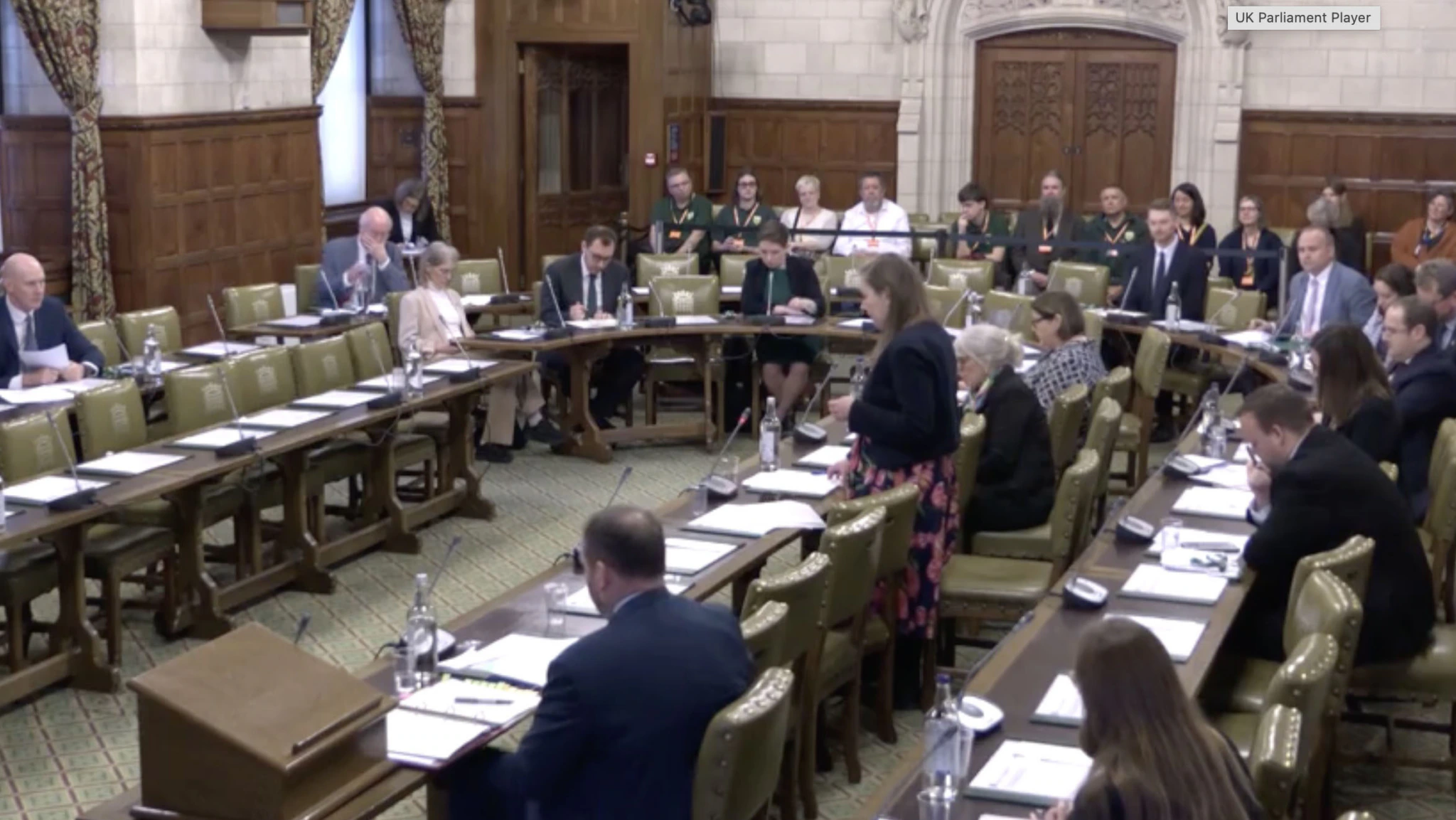
The UK Government is working on a “package of measures” to support local museums in England, the creative industries and arts minister Ian Murray has told MPs.
Appearing at a Westminster Hall debate this week on the contribution of local museums, Murray – standing in for the museums and heritage minister Baroness Twycross – was questioned on how the government is addressing the challenges facing the sector.
The well-attended debate was called by the Labour MP for Thurrock, Jen Craft, who highlighted the positive impact of her borough’s “fantastic local museums”, but also the challenges they are facing due to limited funding and the costs of maintenance. Craft welcomed the government's recently announced funding boost for the sector.
MPs from across the political spectrum used the debate to express support and praise for the sector, as well as acknowledging the severe pressures facing local museums.
One challenge cited by MPs was the disparity in time, resources and funding between large regional or national museums and smaller local ones.
Neil Coyle, the Labour MP for Bermondsey and Old Southwark, asked if councils, ministers and Department for Culture, Media and Sport (DCMS) “should ensure that resources made available by this government and at a local level can be received by smaller community museums, and not just the main national museums, which tend to take the lion’s share?”
Advertisement
Craft said small museums “do not always have the capacity to work through complex application processes, and they are up against bigger organisations that have the time and expertise to put together more competitive bids”.
She suggested that if funding bodies provided “smaller pots of money aimed at hyper-local, volunteer-run sites, perhaps the application could be simplified”.
Carla Denyer, Green MP for Bristol Central, said local authorities needed more funding from central government to support museums.
“Since many local museums are owned and run by local authorities and face the risk of closure because of severe underfunding, the government must ensure that local authorities have sufficient funding to keep those local museums open, especially given that all the research shows that they have a huge benefit in our local economies,” she said.
Craft asked the minister “how will he make sure that small museums can access government support?” and “would he consider offering more small grants with a simpler application process?”
Kieran Mullin, the Conservative MP for Bexhill and Battle, highlighted that the economic and educational contribution of local museums is “sometimes overlooked when budgets are drawn up and limited resources are available”.
Advertisement
“For example, for every £1 of revenue that Bexhill Museum receives from the government, it has to generate £8 of its own through the work of the volunteers in the shop,” he said.
Mullins said: “We need transparency on what local government actually spends in this respect. We also need to understand, at a time of local government reorganisation, how museums can sometimes fall between the cracks among the various responsibilities.
“The government need to understand that museums are not just receivers of funding but parts of local government infrastructure that contribute to the economy and to jobs.”
Labour MP Terry Jermy, who represents South West Norfolk, defended the government’s record, saying it acknowledged the “uniqueness of different areas of the UK and the importance of museums”.
Referring to Thetford’s Dad’s Army heritage, Jermy said: “Rather than, ‘We are doomed,’ as Private Frazer may say, I say, ‘Don’t panic’—be more Corporal Jones. With this government, we are supporting local museums.”
Tom Gordan, the Lib Dem MP for Harrogate and Knaresborough, highlighted the current campaign for urgent maintenance and repair works at Knaresborough Castle, and asked the minister “what steps is he taking to make the case to local authorities about the importance of our small museums?”
Advertisement
A number of other MPs, including Julie Minns, Jim Shannon and Allison Gardner, also emphasised the need to secure the long-term sustainability of the sector.
Gardner, the Labour MP for Stoke on Trent South, highlighted the challenges facing the World of Wedgwood in Staffordshire, home to the Wedgwood factory and V&A Wedgwood collection, which she said was looking at reducing production and making redundancies.
She asked the minister to meet her to discuss “support for Wedgwood to develop its business case and keep this important museum open”.
Wera Hobhouse, the Lib Dem MP for Bath, said “we all agree that local museums are cultural anchors that connect people, place and history” but said that “decades of local authority funding cuts leave local museums unable to open their doors or plan for the future”.
As non-statutory services, “museums are too often the first to go”, she added.
Later in the debate, Hobhouse said MPs “should congratulate the whole sector for making museums so much more engaging and fun”, saying they had transformed since she was young from “boring” places into “something with which everyone can engage”.
Gergory Stafford, the Conservative MP for Farnham and Bordon, highlighted that “museums are deeply valued by the public”.
Stafford said that while the sector faces real pressures, “it also shows remarkable resilience”. He defended the record of the previous Conservative government, highlighting its white paper on culture and launch of the 2017 Mendoza review, which “led directly to the establishment of the Museums Estate and Development Fund”.
He added: “I am proud of that record—the practical support, serious investment and clear commitment to protecting our cultural heritage that the previous government showed.
“Unfortunately, by contrast, Labour’s first tranche of funding, announced in summer 2024, disproportionately benefited national museums. Those institutions are already protected by grant in aid and are largely insulated from the financial pressures facing local authorities. Meanwhile, the smaller museums that form the backbone of local cultural life are left to struggle... In short, the pressures are growing, but the support is not.”
Stafford also questioned whether public money was being spent wisely, criticising the National Museum Cardiff for its exhibition featuring displays of Extinction Rebellion posters at a time when it was facing a financial deficit.
“It is entirely reasonable to ask whether institutions facing serious financial pressures should prioritise political activism over the core mission of preserving and presenting the nation’s history and heritage,” he said.
Stafford asked the minister if the government has considered ringfencing local authority funding for cultural purposes in order to safeguard local museums; what practical support is available to smaller museums to help them to navigate funding applications, manage financial risk and collaborate more effectively with national institutions; and how the government intends to encourage private and corporate philanthropy beyond the major cities, as recommended by the recent Hodge review.
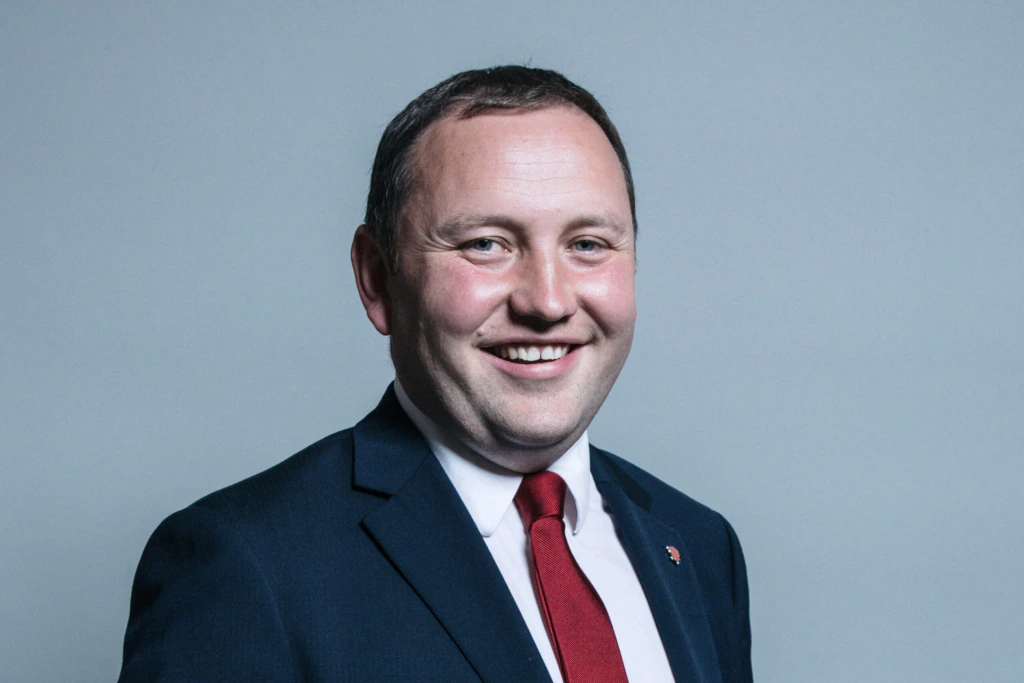
In his response to MPs, minister Murray told the room that the government is “trying to put together a package of measures for museums and for culture across the whole country, consisting of everything that is written into the Creative Industries sector plan”.
“The key part there is for the British Business Bank to look at new financial models to help museums and the cultural and creative parts of the industry, but it is also about philanthropy and making sure that we have that corporate sponsorship as well,” he said.
“There is also public funding through Arts Council England and the money that DCMS is directly putting into museums.”
Murray said local authorities had been “hollowed out” over the last 15 years.
“The honourable member for Bath was right to mention that culture—including museums—is one of the first things to fall off a local authority’s agenda when it is struggling to pay for key statutory services. Those are all things that this government are trying to fix.”
He added: “We must ensure that local authorities regularly produce plans on updating arts, culture and museums, so that the public can then hold them to account. We are actively considering that matter in response to the Hodge review.”
Referring to the questions about making grants more accesible to smaller museums, Murray said “small museums are an essential part of our national tapestry of museums and we very much recognise that as a department”.
He added: “Capital grants do require some paperwork, but the Hodge review into Arts Council England... is considering a proportionate application process for smaller museums, particularly those run by volunteers, to try to ensure that it is as easy and streamlined as possible for the very smallest museums and organisations to apply for those kinds of funds. That is very much at the forefront of our mind.”
Referring to Stafford’s remarks about “political activism” in museum displays, Murray said the sector must be able to talk about climate and other current issues.
“I think that is what museums are there to do,” he said. “They are not just there to celebrate heritage and the past; they are there to educate and inspire for the future.
“The public can decide whether they wish to attend these exhibitions. They can even ask their local museums to put on other curations. However, it is important to see that in the context of what our museums do. We might not agree with everything we see—in fact, we might agree with only a small proportion of all the stuff we see—but we should be exposed to it.”
In his final remarks, Murray reiterated the government’s commitment to the sector.
“The government will not neglect local museums,” he said. “We have committed significant new funding to the sector—historically high funding—and forthcoming publications and policies, including our response to the Hodge review, will further our commitment to the museums sector right across the country.”
Sharon Heal, the director of the Museums Association, welcomed the debate.
She said: “In the context of cuts to civic museum services across the UK, this debate was a timely and vital reminder of the transformational power of our local museums. They can help us to understand our past, debate and understand the major issues we face in the present, and shape a fairer future. However, they need strategic, long-term investment so they can continue to deliver engaging experiences with their communities.”
What you can do to advocate for your museum:
- Invite your local MP to visit your museum
- Make them aware of English Civic Museums Network’s ask for new £120m-a-year investment
- Raise your local issues
- Share the Museums Association’s survey findings on the financial pressures facing museums.

Hopefully funding for maintenance can be made more easily available to smaller museums, but I fear not. I have already been advised by our MDO that the 2026 funding is likely to be hard to get, competitive and more likely to go to bigger organisations!
I am a trustee of one of East Anglia’s 30+ “invisible” aviation museums. We attract 18,000 visitors a year but we do not appear on the radar of of any funding organisation. Our staff are all volunteers and we long ago gave up any idea that it was worth the time and effort to apply for grants. In our 45 year history we have been successful only once in gaining a grant and for that we must thank the Museums Association.